Metal Conveyor Belt vs Plastic Conveyor Belt: How to Choose

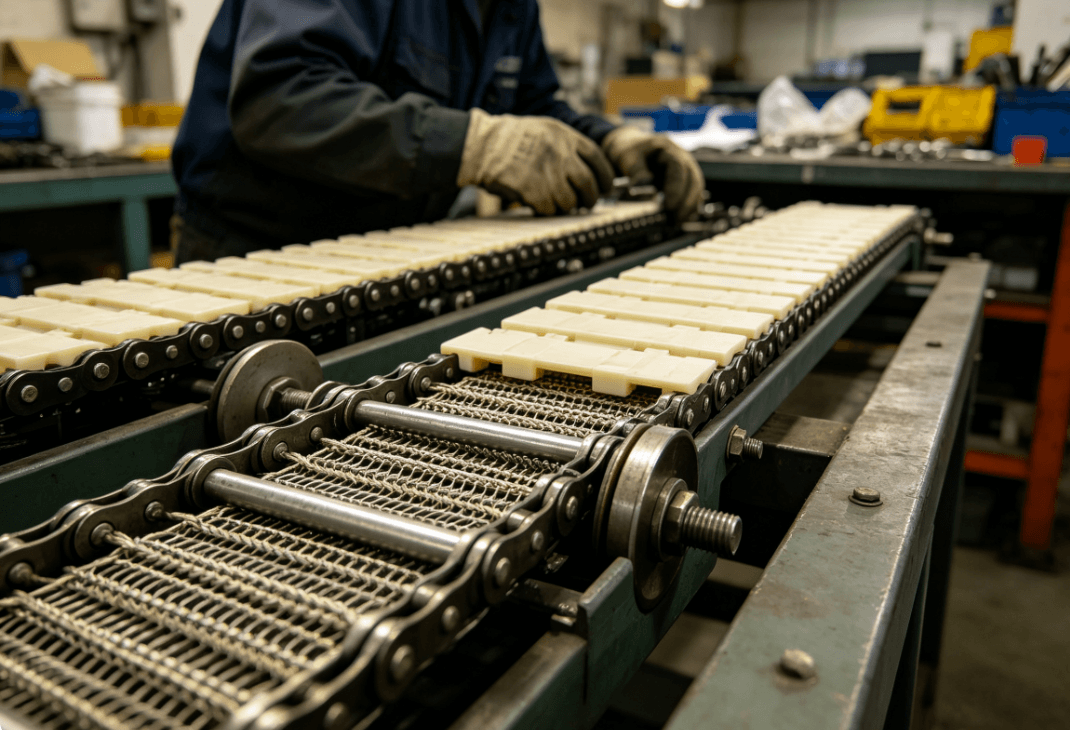
Selecting the correct belting material dictates line efficiency, maintenance schedules, and operational uptime. The decision between a metal conveyor belt vs plastic conveyor belt hinges on thermal extremes, mechanical load, and chemical exposure. Metal belts utilize stainless or carbon steel wire to withstand extreme heat and sharp impacts. Modular plastic belts rely on injection-molded polymers to provide lightweight, chemically resistant, and low-friction transport.
Both options utilize sprocket-driven mechanisms to prevent belt meandering. However, their physical thresholds and maintenance workflows vary drastically. Plant engineers must evaluate application-specific constraints before specifying a belt type for large-scale production. Misapplying a belt material leads to premature wear, catastrophic failure, or regulatory non-compliance.
How to Evaluate a Metal Conveyor Belt vs Plastic Conveyor Belt
When specifying a conveyor system, project managers must analyze environmental conditions alongside payload characteristics. The primary difference lies in how each material handles thermal shock, tensile stress, and sanitary washdowns.
Here is a baseline technical comparison for quick engineering reference:
| Specification | Metal Mesh Conveyor Belt | Modular Plastic Conveyor Belt |
| Operating Temp Limit | -40°C to 1200°C (Specialty Steel) | -40°C to 105°C (Polypropylene) |
| Tensile Strength | Exceptionally high (Steel wire/chain) | Moderate to High (Polymer links) |
| Chemical Resistance | Good (Depends heavily on alloy) | Excellent (Resists strong acids/alkalis) |
| Impact Resistance | High (Deflects sharp objects) | Moderate (Prone to surface gouging) |
| Maintenance Action | Requires tensioning, wire welding | Easy pin extraction, modular replacement |
Technical Performance and Material Engineering
The mechanical behavior of these materials dictates their operational lifespan. In large-volume production, unscheduled downtime directly impacts profitability.
Thermal Expansion and Heat Limits
Thermal environments immediately rule out specific polymers. Standard 304 stainless steel easily handles continuous operation at 920°C. For extreme applications like glass annealing furnaces, 310S or 314 stainless steel alloys withstand up to 1200°C. Plastic belts will melt or severely deform well below these thresholds. Conversely, plastic belts utilizing polyethylene (PE) perform exceptionally well in freezing chambers down to -70°C.
Friction and Drive Mechanics
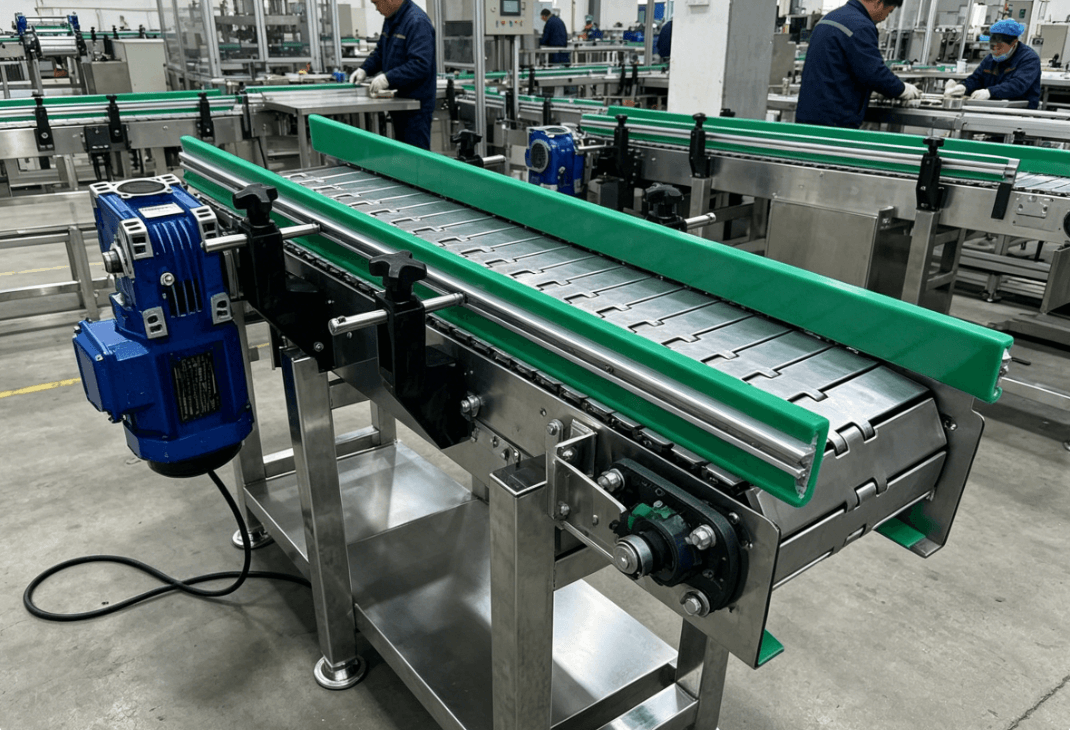
Plastic modular belts offer inherently low coefficients of friction. This makes them ideal for accumulation tables where products must slide smoothly over the surface. Acetal (POM) plastics provide the lowest friction for these scenarios. Metal belts generate higher friction and can scratch delicate products if accumulation occurs. Both systems use positive sprocket drives, eliminating the tracking issues common with friction-driven flat belts.
Sanitation and Open Area Ratios
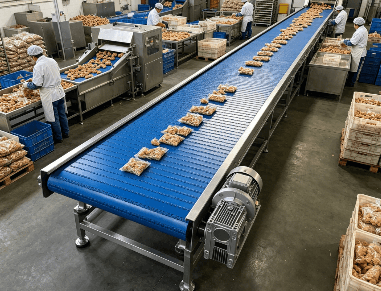
Food processing facilities require strict FDA and USDA hygiene compliance.
- Plastic modular belts feature non-porous surfaces that simplify Clean-In-Place (CIP) procedures.
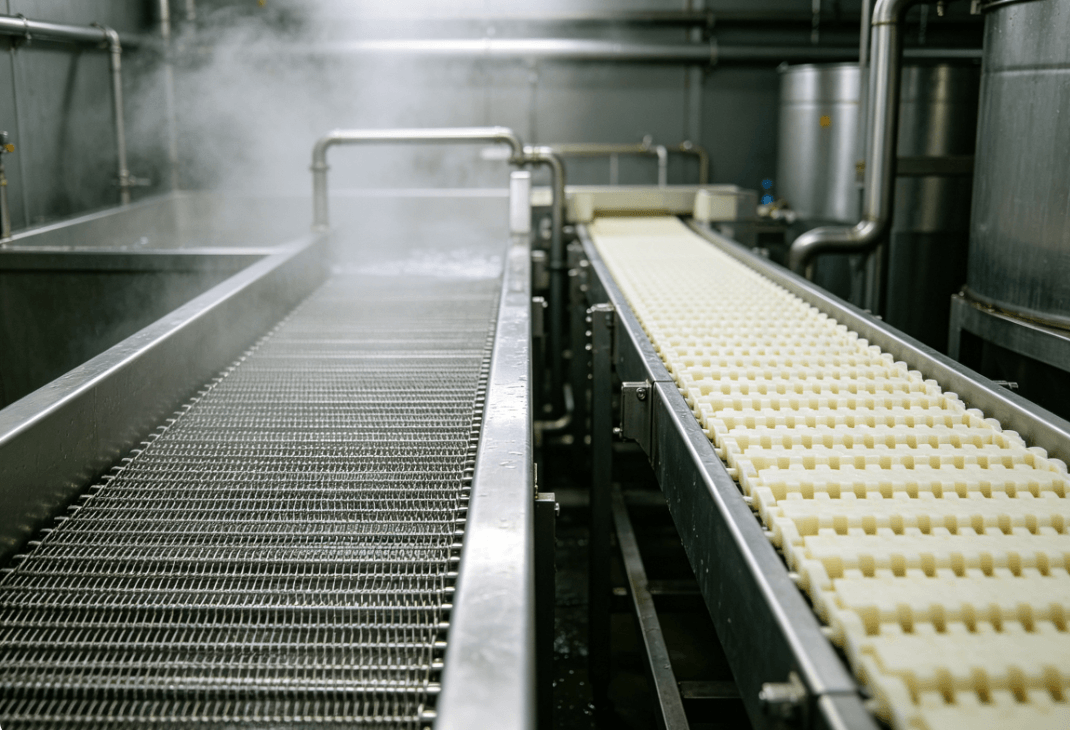
- Tightly woven metal belts allow superior airflow and liquid drainage.
- This open area is critical for deep-frying, baking, or washing applications.
Industry Application Scenarios: Where They Excel
Material selection aligns heavily with the specific industrial process. A belt designed for heavy machinery will fail in a high-speed bottling plant.
Heavy-Duty Manufacturing and Heat Treatment
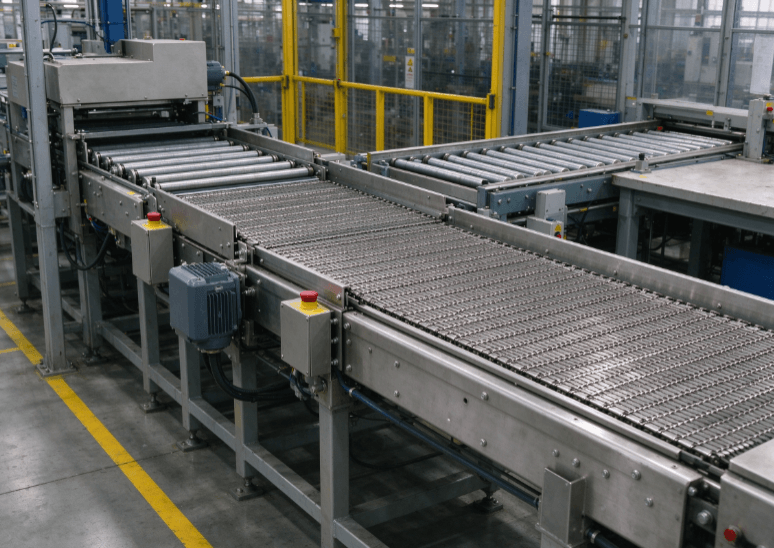
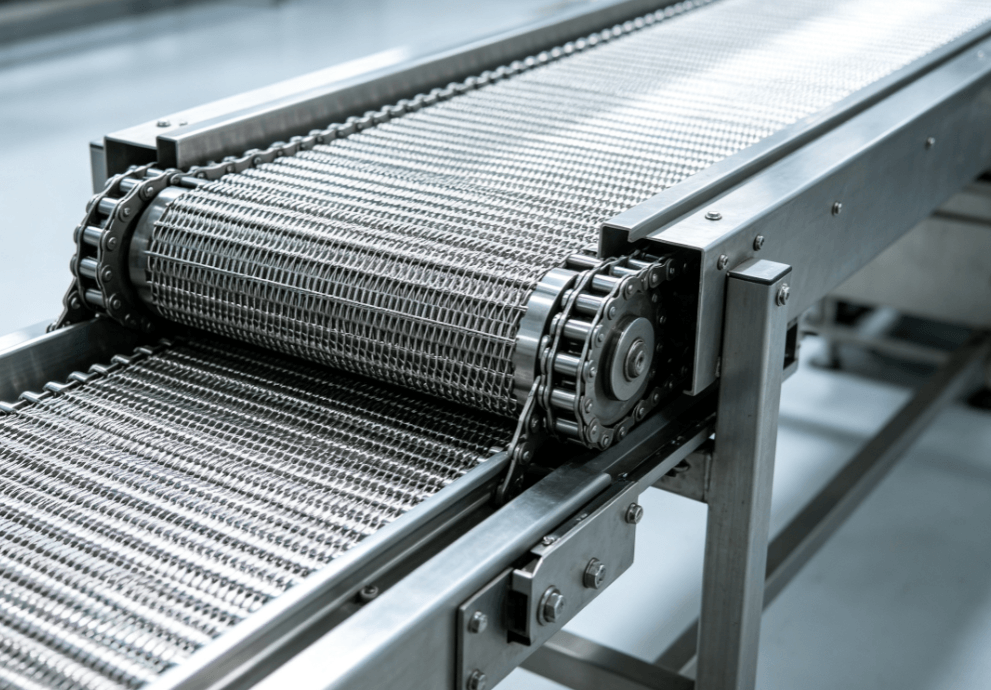
Automotive environments typically require metal belts to move sharp, heavy, or hot forgings. Chain-driven metal mesh belts bear immense structural loads without stretching. The side chains and the mesh absorb the weight independently. This prevents wire distortion under heavy payloads. Straight-axis or B-type structures are highly suitable for carrying heavy objects with smaller volumes.
Food and Beverage Bottling
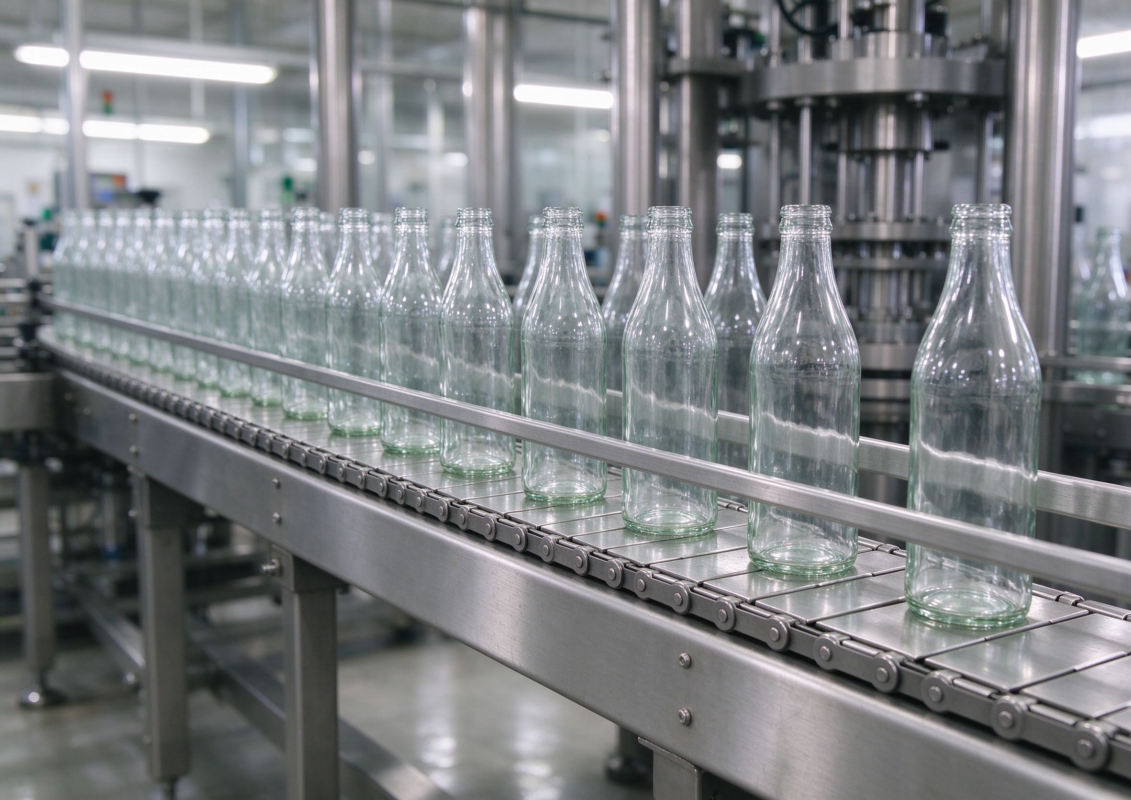
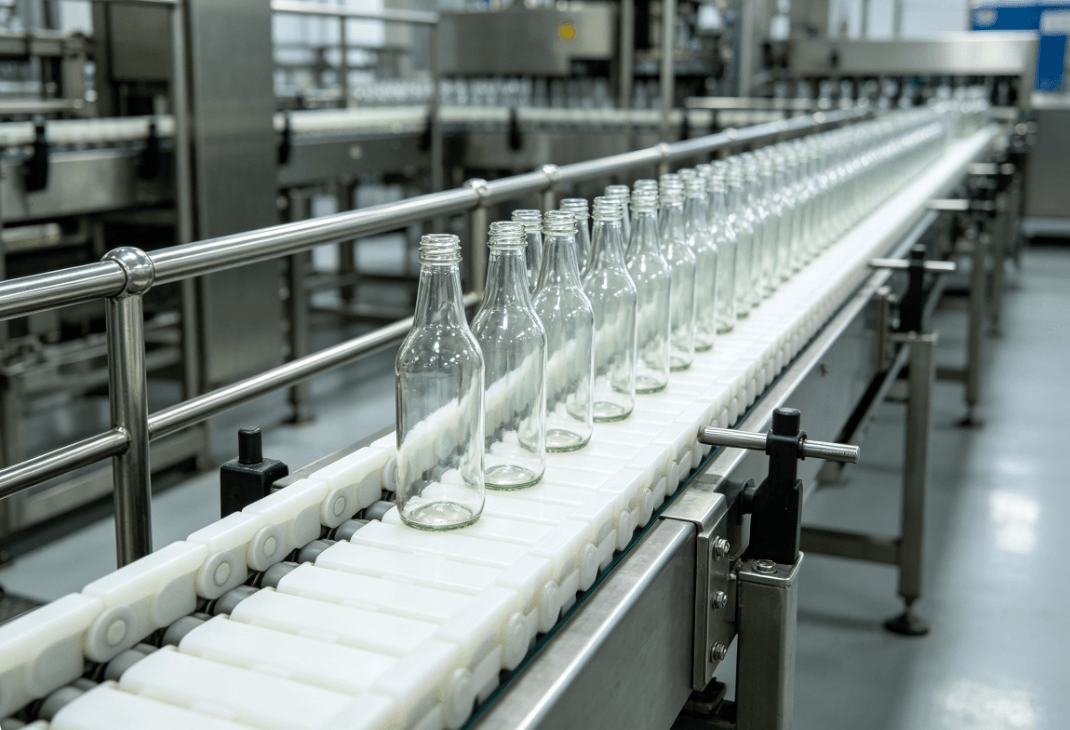
High-speed bottling lines predominantly use plastic chain belts. The smooth plastic allows glass or PET bottles to glide without tipping. Furthermore, plastic belts operate quieter than metal alternatives. This significantly reduces factory noise levels and complies with occupational safety thresholds.
Chemical and Corrosive Processing
Chemical washing lines expose belts to harsh, concentrated solvents. While 316L stainless steel offers strong resistance to intergranular corrosion, certain strong acids will degrade metal. In these highly corrosive liquid environments, polypropylene (PP) plastic belts offer superior chemical immunity.
Procurement Logic: Transitioning to Volume Production
Transitioning from engineering design to large-scale procurement requires careful supplier evaluation. Sourcing delays may occur when specifying non-standard chain pitches or rare heat-resistant alloys. Buyers should assess a manufacturer’s capacity to deliver custom drive sprockets, precise wire diameters, and verified material certificates.
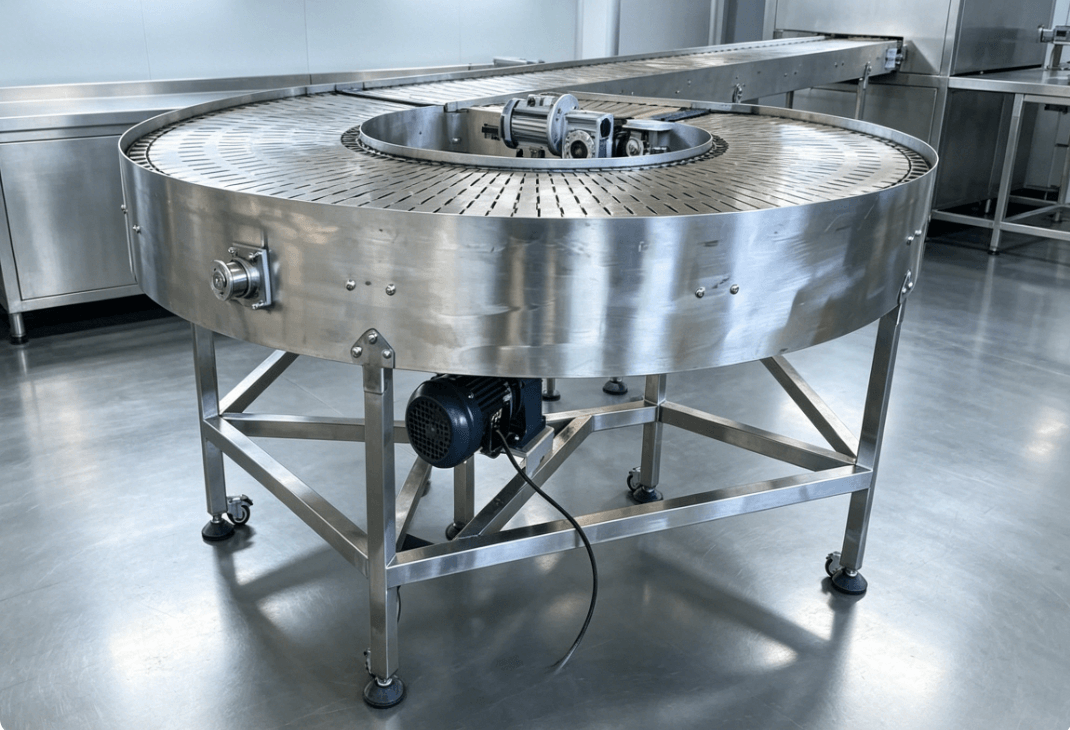
For facilities handling high-temperature or heavy-duty conveying, integrating automated systems requires exact engineering. Leyu Conveyor provides specialized metal mesh belt conveyors designed for continuous processing in food, heat treatment, and chemical sectors. Their production capabilities cover critical configurations, including balanced weave, herringbone, and rigid chain-plate structures.
When preparing a technical RFQ for customized metal mesh belts, buyers must define the following parameters to ensure accurate factory tooling:
- Exact belt width: Typically ranging from 50 mm to 8,500 mm.
- Chain pitch dimensions: Standard options include 25.4 mm, 38.1 mm, up to 101.6 mm.
- Wire and crossbar diameters: Wire thickness from 1.0 mm to 4.0 mm, with support rods up to 14 mm for heavy loads.
- Operational temperature requirements: This dictates the exact alloy choice (e.g., standard 304 vs high-heat 314 stainless).
- Operating speed: Variable speed targets, typically 0.15 to 0.50 m/min via VFD.
Working directly with an established OEM ensures the frame fabrication, drive assembly, and belt material perfectly match the production line’s tolerance constraints.
FAQ
What is the core difference between a metal conveyor belt vs plastic conveyor belt?
The core difference is thermal tolerance and structural rigidity. Metal belts withstand extreme heat (up to 1200°C) and heavy impacts. Plastic belts operate at lower temperatures but offer superior chemical resistance, low friction, and lighter overall weight.
Can plastic conveyor belts be used in industrial ovens?
No. Most modular plastic belts, such as those made from polypropylene or acetal, have a maximum continuous operating temperature of 85°C to 105°C. Industrial baking or annealing ovens require metal mesh belts woven from 304 or 310S stainless steel.
How do you repair a damaged metal mesh belt?
Repairing a metal mesh belt usually requires halting the line to cut out the damaged wire links. New wire is woven in and welded or crimped into place. Conversely, repairing a plastic belt involves simply pulling a retention pin and swapping out the broken plastic module.
What is the standard lead time for custom conveyor belting?
Lead times depend entirely on the material grade and OEM capacity. Standard modular plastic belts can often be assembled in days. Custom metal mesh belts with specific pitches or high-nickel alloys may require 3 to 6 weeks for weaving and assembly.
Do these positive-drive belts require continuous lubrication?
Plastic modular belts are generally self-lubricating, especially those formulated with acetal. Metal mesh belts operating at high temperatures often require specialized dry lubricants (like graphite) to prevent chain galling and premature sprocket wear.
Reference Sources
- ISO 858:2014 – Continuous mechanical handling equipment — Conveyor belts.
- ASTM A313 / A313M – Standard Specification for Stainless Steel Spring Wire (used in mesh belt fabrication).
- FDA CFR Title 21 – Regulations for materials and polymers intended for repeated contact with food.