Plastic Chain Plate Conveyor Guide: Structure & Applications

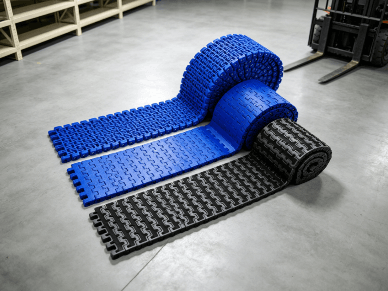
Modern automated production lines rely heavily on efficient material handling. Among the most versatile solutions is the plastic chain plate conveyor. Unlike traditional rubber belts or heavy stainless steel chains, these systems utilize interlocking modular links to create a robust, flat, and flexible conveying surface.
For engineers and production managers, choosing the right conveyor involves understanding how material science meets mechanical design. Plastic chain plate conveyors—often referred to as table top chains or modular link conveyors—bridge the gap between high-speed performance and hygienic requirements.
Technical Anatomy: What is a Plastic Chain Plate Conveyor?
At its core, a plastic chain plate conveyor is a continuous loop of molded plastic links joined together by hinge pins. This design allows the conveyor to remain rigid enough to support heavy loads while remaining flexible enough to navigate tight curves or inclines.
The system consists of several critical components:
- Modular Chain Plates: These are the surface links. They are typically injection-molded from high-performance thermoplastics. Their geometry determines the conveyor’s ability to handle specific products, such as small vials or large boxes.
- Hinge Pins: These act as the “skeleton” of the chain. While often made of the same plastic as the plates, some high-load applications utilize stainless steel pins to increase tensile strength and prevent elongation.
- Drive Sprockets: Unlike flat belts that rely on friction, chain plates are positively driven. Sprockets engage directly with the underside of the chain, preventing slippage and ensuring precise timing in automated packaging lines.
- Wear Strips and Guides: To minimize friction and extend the life of the chain, these systems run on specialized wear strips, often made of Ultra-High Molecular Weight Polyethylene (UHMW-PE).
Material Science: Why Plastic Over Metal?
The transition from metal to plastic in conveyor technology was driven by the need for chemical resistance and reduced maintenance. The choice of polymer significantly impacts the conveyor’s performance in different environments.
1. Polyacetal (POM)
POM is the industry standard for most plastic chain plates. It offers high mechanical strength, a low coefficient of friction, and excellent wear resistance. In high-speed bottling or canning lines, POM’s stiffness ensures the chain remains stable under tension.
2. Polypropylene (PP)
PP is preferred in environments involving chemical cleaning agents. It has superior resistance to acids and bases and can withstand higher temperatures than PE. However, it has lower impact strength at cold temperatures, making it less ideal for frozen food applications.
3. Polyethylene (PE)
PE is the “cold chain” specialist. It remains ductile at temperatures as low as -70°C, making it the primary choice for blast freezers and refrigerated logistics. It also offers excellent release properties for sticky products.
Key Engineering Advantages of Plastic Chain Plates
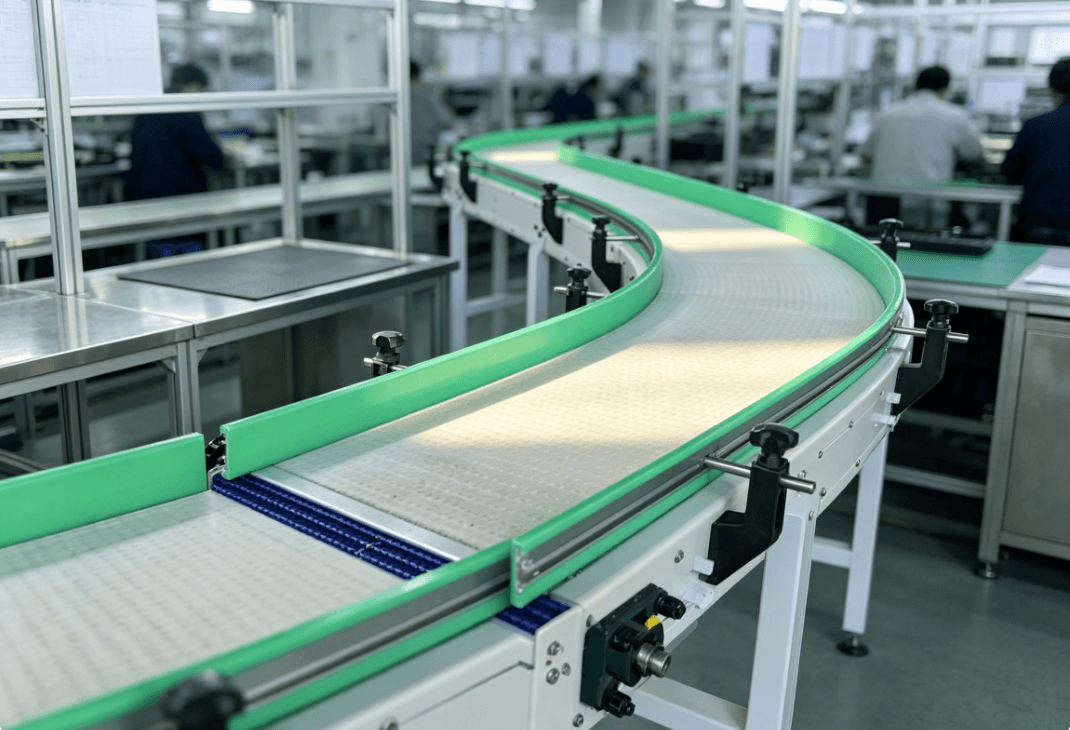
The adoption of plastic chain plate systems provides several operational benefits that directly impact a facility’s Bottom Line and OEE (Overall Equipment Effectiveness).
Reduced Noise Pollution
In large-scale manufacturing, metal-on-metal noise can exceed safe decibel levels. Plastic chains operate significantly quieter, improving the working environment and reducing the need for sound-dampening enclosures.
Corrosion Resistance
Standard steel chains are prone to rust when exposed to washdown procedures or humid environments. Plastic plates are inherently immune to oxidation and most industrial chemicals, making them essential for “clean-room” or pharmaceutical environments.
Low Friction and Energy Efficiency
The self-lubricating properties of polymers like POM reduce the torque required from the motor. This translates to lower energy consumption and less wear on the drive assembly. In many cases, these conveyors can run “dry,” eliminating the need for soap-and-water lubrication which can contaminate products.
Ease of Repair
If a traditional belt is damaged, the entire belt often needs replacement or a complex vulcanization process. With modular plastic plates, a technician can simply pop out the pins and replace a single damaged link, reducing downtime from hours to minutes.
Industrial Application Landscapes
The versatility of plastic chain plate conveyors allows them to serve diverse industries, each with specific technical demands.
Food and Beverage Processing
In this sector, hygiene is non-negotiable. Plastic chain plates designed for food contact often feature an “open hinge” design, allowing high-pressure water to reach all surfaces during CIP (Clean-in-Place) cycles. They are widely used in bread cooling lines, meat processing, and bottling.
Pharmaceutical and Cosmetic Packaging
These industries require high precision and stability. Small containers, such as vaccine vials or perfume bottles, require a perfectly flat surface to prevent tipping at high speeds. Side-flexing plastic chains allow these products to move through multi-stage filling and labeling processes without manual intervention.
Electronics and Semiconductor Manufacturing
For sensitive electronic components, Anti-Static (ESD) plastic materials are used. These specialized chain plates safely dissipate static electricity, preventing damage to microchips and integrated circuits during transport.
Automotive and Heavy Parts
While often associated with light products, heavy-duty modular plastic chains are capable of moving automotive batteries, tires, and even engine components. Their ability to handle high-impact loads makes them a durable alternative to roller conveyors.
Design Considerations: Straight-Running vs. Side-Flexing
When engineering a conveyor layout, the choice between straight-running and side-flexing chains is fundamental.
- Straight-Running Chains: Designed for linear transport. They offer the highest tensile strength and are the most cost-effective solution for long-distance transport.
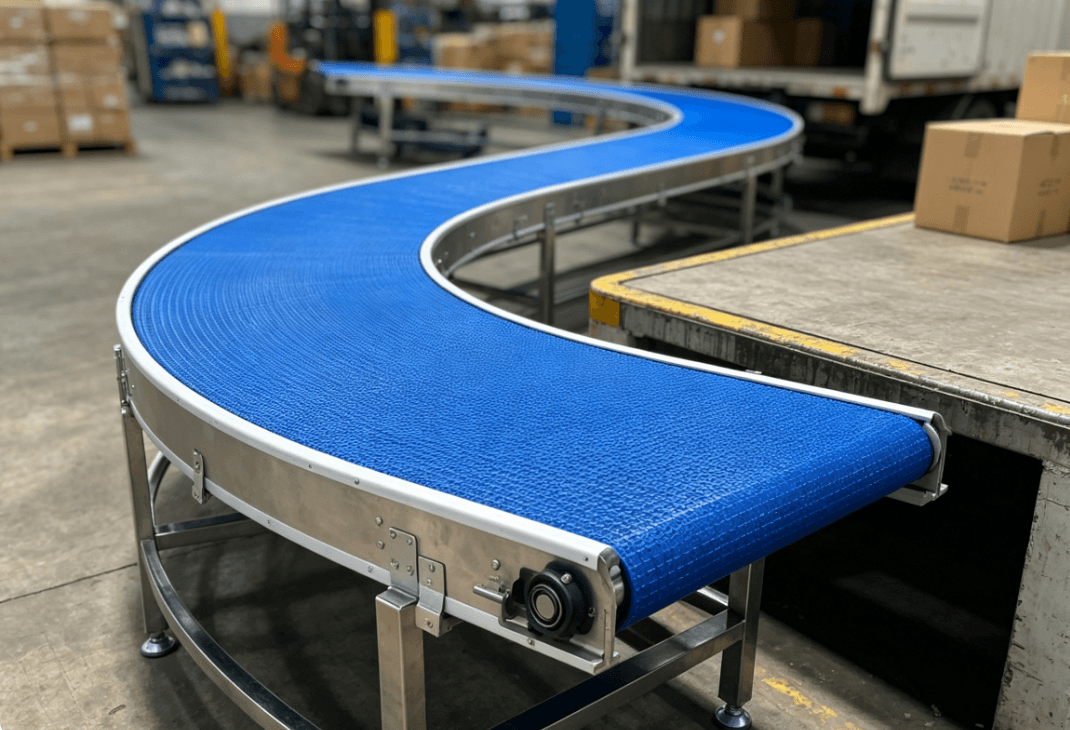
- Side-Flexing (Radius) Chains: These incorporate a unique hinge design that allows the chain to turn corners. This eliminates the need for “dead plates” or transfer points between two conveyors, significantly reducing the risk of product damage or jams during directional changes.
Maintenance and Longevity Logic
While plastic chain plate conveyors are low-maintenance, they are not “no-maintenance.” In a professional manufacturing setting, longevity depends on three factors:
- Catenary Sag Management: Because plastic expands and contracts with temperature and tension, maintaining the correct “sag” on the return side is vital to prevent the chain from jumping the sprockets.
- Wear Strip Inspection: If the UHMW-PE wear strips are allowed to wear down to the metal frame, the resulting friction will rapidly destroy the plastic chain links.
- Debris Control: In glass bottling, glass shards can embed themselves in the plastic links. Regular inspection and automated cleaning brushes help mitigate this abrasive wear.
Summary
The plastic chain plate conveyor is a cornerstone of modern industrial automation. By combining material science with modular mechanical design, it offers a hygienic, quiet, and highly adaptable solution for moving products across the factory floor. Whether handling delicate pharmaceuticals or high-volume beverages, the technical superiority of polymer-based conveying continues to drive efficiency in the global supply chain.
FAQ
Q: Can plastic chain plate conveyors handle high temperatures?
A: It depends on the material. While standard POM is rated for up to 90°C, specialized glass-filled or heat-stabilized resins can operate in environments exceeding 100°C. For extremely high temperatures, stainless steel remains the standard.
Q: Are these conveyors FDA compliant?
A: Yes, most plastic chain plates used in the food industry are manufactured from FDA-approved raw materials (Title 21 CFR) and comply with EU regulations for food contact.
Q: How do I calculate the load capacity of a plastic chain?
A: Load capacity is determined by the “Allowable Working Load” of the specific chain model, the friction coefficient of the wear strips, and the number of start-stops in the cycle. Engineers typically use the chain manufacturer’s software to ensure the tensile strength is not exceeded.
Q: Is lubrication necessary for plastic chains?
A: Many modern plastic chains are designed for “dry running.” However, in high-speed applications, food-grade lubricants or water-based sprays can be used to further reduce heat and friction, extending the life of the components.
Q: Can I mix different brands of plastic chain plates on one conveyor?
A: Generally, no. While they may look similar, different manufacturers use proprietary pitch dimensions and hinge designs. Mixing brands usually leads to sprocket engagement issues and premature failure.
Reference Sources
- CEMA (Conveyor Equipment Manufacturers Association): Standards for belt and chain conveyor design and safety.
- FDA (U.S. Food and Drug Administration): Code of Federal Regulations Title 21 regarding food-grade polymers.
- ISO 8586: General principles for the design and construction of conveyors.
- Leyu Conveyor Technical Data: Product specifications for POM and PP modular chains.
- UHMW-PE Material Standards (ASTM D4020): Standard specification for ultra-high-molecular-weight polyethylene molding and extrusion materials.