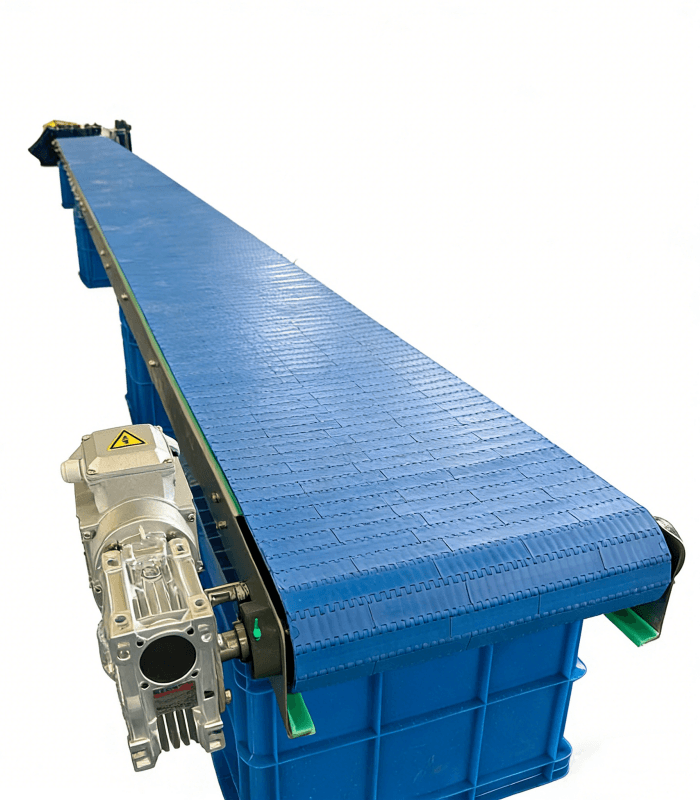
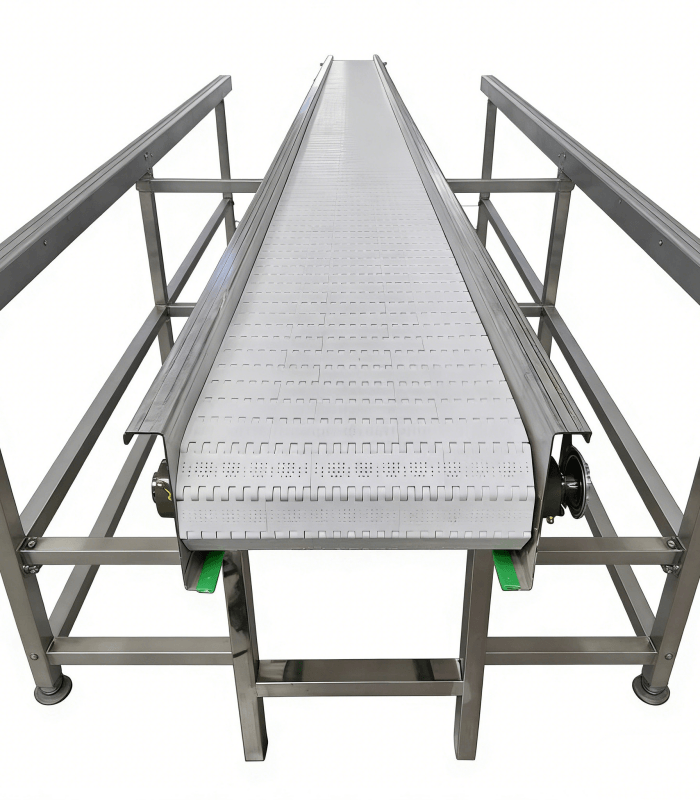
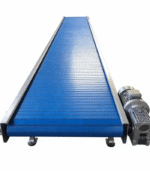
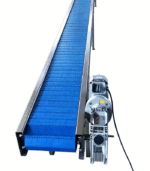
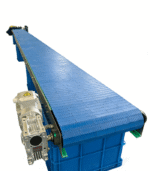
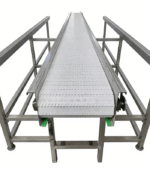
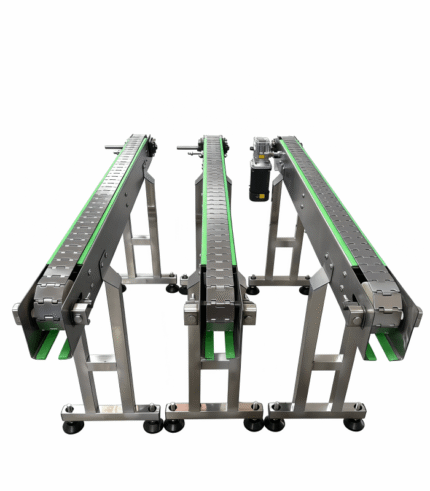
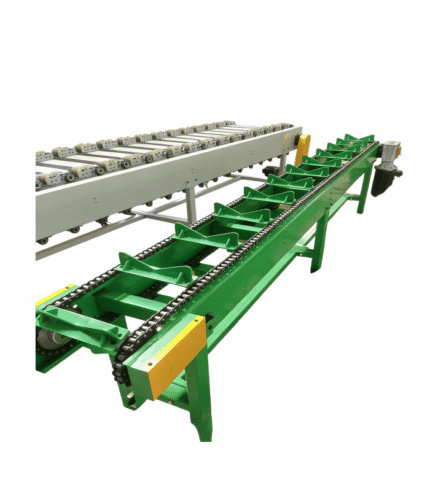
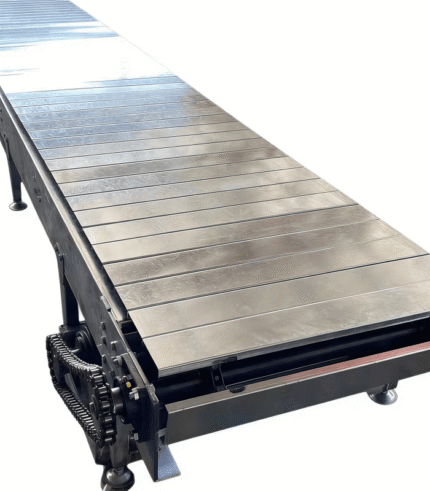
Plastic slat conveyor, plastic modular conveyor, modular conveyor belt
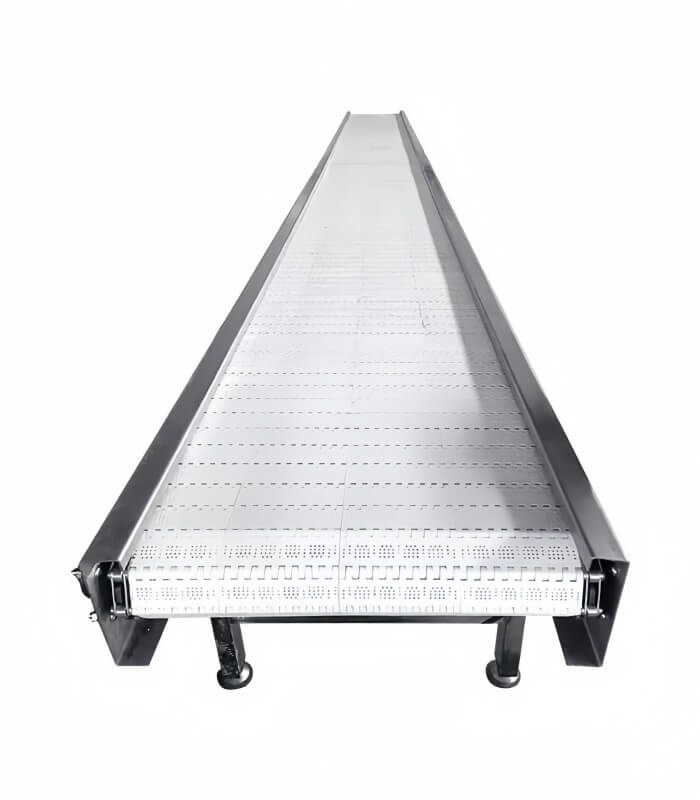
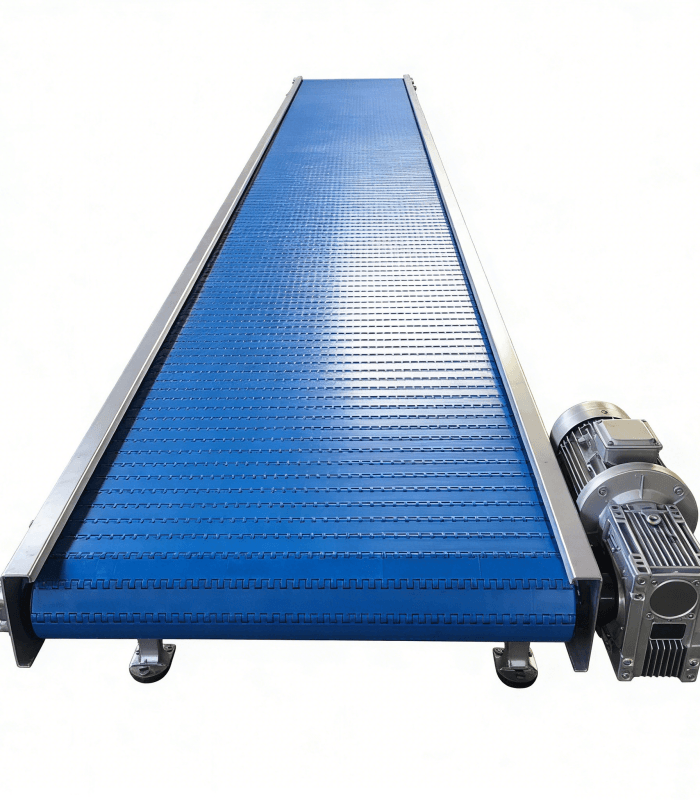
Plastic slat conveyors are light- to medium-duty conveying systems that utilize modular engineering plastic slats as the conveying surface, offering self-lubricating properties, corrosion resistance, low noise levels, and the ability to navigate curves with ease.
Plastic slat conveyors are conveying systems that utilize engineering plastic (primarily POM) slats as the load-bearing and conveying medium, offering lightweight, corrosion-resistant, self-lubricating, and modular characteristics. Below are the detailed product applications, advantages, and manufacturing processes:
—
I. Product Applications
Thanks to their hygienic, corrosion-resistant, and smooth-running properties, plastic chain plate conveyors are widely used in industries with high standards for cleanliness and product appearance:
1. Food and Beverage Industry: Conveying glass bottles, PET bottles, cans, canned goods, food packaging, etc. The conveying surface is flat and smooth, preventing bottles from tipping over, and can be directly washed with water.
2. Pharmaceutical and Personal Care Industry: Used for the automatic conveying, dispensing, and downstream packaging lines of pharmaceuticals, cosmetics, and cleaning products, complying with GMP hygiene standards.
3. Light Industry and Electronics: Conveys lightweight items such as electronic components, paper products, tobacco, machine parts, and parcels.
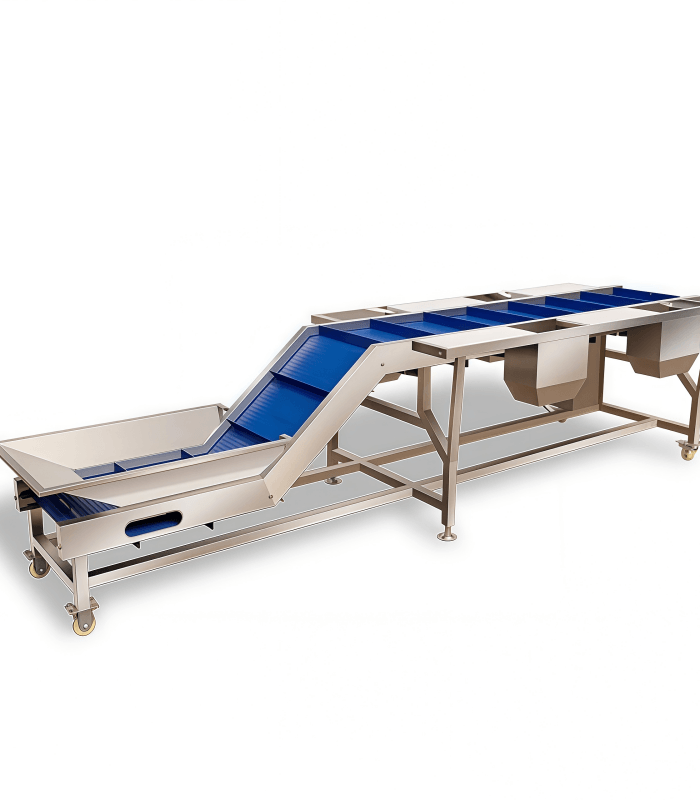
4. Complex Layout Scenarios: Can be integrated with turning and lifting devices to achieve combined conveying paths—including horizontal turns, vertical lifts, and spiral conveyors—thereby saving floor space.
II. Product Advantages
Compared to stainless steel chain conveyors or belt conveyors, plastic chain conveyors offer the following significant advantages:
1. Outstanding Material Advantages:
· POM (Polyoxymethylene): High mechanical strength, excellent rigidity, superior wear resistance, and excellent sliding properties; operating temperature range: -60°C to 100°C.
· PP (Polypropylene): Resistant to acid and alkali corrosion, suitable for chemical and humid environments.
· Food-Grade Compliance: POM/PP materials comply with FDA/EU standards; non-toxic and odorless, suitable for direct food contact.
2. Hygienic and Easy to Clean: The chain plate surface is smooth with no dead corners, allowing for direct rinsing or soaking with water; models with stainless steel frames support CIP (Clean-in-Place) washing and comply with EHEDG hygiene standards.
3. Flexible and Versatile Layout:
· Small Turning Radius: The flexible chain system easily accommodates horizontal turns and vertical lifts, featuring a compact structure that saves space.
· Modular design: Aluminum profiles or stainless steel frames can be quickly assembled, modified, and easily expanded or rearranged.
4. Smooth and quiet operation: The plastic chain plates are self-lubricating with a low coefficient of friction, resulting in low operating noise (≤65 dB), making them suitable for quiet production environments.
5. Low maintenance costs: Lubrication-free design (POM self-lubrication); modular chain plates can be replaced individually without dismantling the entire line.
6. Moderate load capacity: Maximum load capacity of up to 500 kg per meter, suitable for light to medium-duty applications.
III. Product Manufacturing Process
The core of plastic chain conveyor manufacturing lies in the injection molding of chain plates and the assembly of modular frames. The main process flow is as follows:
1. Chain Plate Injection Molding (Core Process)
· Injection Molding: Plastic pellets such as POM, PP, and PE are heated and melted in an injection molding machine, then injected into precision molds for one-step molding. Mold precision directly affects the pitch tolerance of the chain plates (which must be controlled within ±0.1 mm).
· Material Shrinkage Control: The injection molding process must account for plastic shrinkage rates (approximately 2% for POM); process parameters are adjusted to ensure dimensional accuracy of the finished product.
· Material Selection:
· POM: The mainstream material, offering wear resistance, self-lubrication, and high rigidity; suitable for high-speed, light-load applications.
· PP: Resistant to acids and alkalis, lightweight; suitable for corrosive environments.
· PE: Low-temperature resistant (-40°C); suitable for frozen food conveyance.
2. Frame Machining
· Aluminum Extrusion Frame: Assembled after cutting, drilling, and tapping; surface treated with anodizing (5–20 μm oxide layer); lightweight, aesthetically pleasing, and corrosion-resistant.
· Stainless Steel Frame: Laser-cut (accuracy ±0.05 mm), TIG-welded, and surface polished to Ra ≤ 0.8 μm to meet sanitary-grade requirements.
· Carbon steel frame: Stress-relief annealing (600–650°C) is required after welding; the surface is powder-coated or galvanized for rust prevention.
3. Guide Rails and Accessories
· Guide Rail Material: Polyoxymethylene (POM) or Ultra-High Molecular Weight Polyethylene (UHMWPE), which are wear-resistant and self-lubricating, supporting the operation of the chain plates.
· Curved Guide Rails: Machined to precise radii to ensure smooth transition of the chain plates through curves.
4. Final Assembly and Commissioning
· Link Plate and Chain Connection: Plastic link plates are connected to the chain via pins (or integrally molded). The gap between link plates must be uniform (0.5–1 mm) to prevent jamming.
· Drive Installation: Install the motor and gear reducer (left-mounted or right-mounted). Ensure precise meshing between the sprocket and the chain.
· Tension Adjustment: Adjust the chain tension (2%-3% sag under no-load conditions); excessive tension increases wear, while excessive slack may cause chain skipping.
· Commissioning and Testing:
· No-Load Test: Run for 1 hour; check for misalignment and abnormal noises (noise level ≤65 dB).
· Load Test: Simulate operating conditions for 2 hours to verify conveying capacity and stability.
5. Quality Control
· Dimensional Inspection: Chain plate pitch tolerance ±0.1 mm; hole position deviation ≤0.05 mm.
· Performance Testing: Tensile strength test (POM ≥60 MPa); frame must withstand 1.2 times the rated load without deformation.
· Hygiene Testing: Food-grade conveyors must pass microbial testing with no residual dead spots.
IV. Summary of Core Parameters
Parameter Dimension Typical Specifications
Chain Plate Width 43 mm ~ 304.8 mm (Common: 63.5, 82.5, 114.3, 190.5 mm)
Chain Pitch 25.4 mm ~ 203.2 mm (Common: 38.1 mm)
Conveying Speed 0.4 ~ 40 m/min (Standard: 0.4–15 m/min)
Load Capacity: ≤ 500 kg/m² (light-duty); higher capacities available with custom designs
Operating Temperature: -60°C to +100°C (POM material)
Minimum Turning Radius: Tight-radius turns (flexible chain system); specific radius depends on chain plate width
Frame Material: Aluminum extrusions (anodized), 304/316L stainless steel, powder-coated carbon steel
Chain Plate Material: POM (standard), PP, PE,
Selection Recommendations:
· Food/Pharmaceutical/Cosmetics: Prioritize POM/PP chain plates + stainless steel/aluminum profile frames
· Curves/Complex Layouts: Select flexible plastic chain plate conveying systems
· Heavy-duty/High-temperature/High-wear: Metal chain plate conveyors are recommended
The core features of plastic slat conveyors lie in their modular engineering plastic slat structure and compact, flexible layout capabilities. By combining slats of different widths and materials, these conveyors can achieve horizontal, inclined, and vertical transport with extremely tight turning radii. The following provides a detailed overview from three perspectives: core parameter systems, key component details, and system configuration parameters.
I. General Core Parameter Ranges
Parameter Item General Range Remarks
Chain Plate Width 43 mm ~ 295 mm Common specifications: 44, 63, 82.5, 83, 101.6, 103, 114.3, 140, 152.4, 175, 190.5, 254, 295, 304.8 mm
Chain Pitch 25.4 mm – 38.1 mm Common: 25.4, 33.5, 35.5, 38.1 mm
Conveyor Speed 12 – 60 m/min Standard: 12–60 m/min; some high-speed models can exceed 60 m/min
Single-Item Load Capacity ≤ 30 kg Standard type: ≤ 30 kg/item; reinforced type: up to 125 kg
Conveying Capacity: 4–6.5 m³/h (typical value for a belt width of approximately 400 mm)
Operating Temperature: -20°C to +100°C (POM material suitable for -20°C to 60°C; PP material has a wider temperature range)
Single Drive Length: ≤ 25 m (maximum single-drive length of 25 meters for modular systems)
Minimum turning radius: R150 mm. Flexible chain systems can achieve a minimum radius of 150 mm, significantly saving space
II. Key Component Details and Specifications
1. Plastic Chain Plates (Core Load-bearing Components)
Plastic chain plates are manufactured using a modular injection molding process and connected via pins to form a closed loop. They feature self-lubrication, corrosion resistance, and lightweight construction.
Chain Plate Type | Structural Features | Applications
Straight Flat-Top Chain | Hinge rings on both sides of the chain plate engage with pins, allowing only linear movement | Straight conveying sections
Curved Flat-Top Chain (Flexible Chain) | Features a multi-curved link design, enabling tight horizontal turns and vertical lifting | Curved sections, multi-level layouts
Ribbed Chain: Chain plates feature reinforcing ribs for enhanced structural stability. Heavy-duty or wide-body conveying.
Ball Chain: Chain plates are embedded with balls, resulting in extremely low friction. Applications requiring pressure-free accumulation.
Serrated Flexible Chain: Chain plate edges are serrated for gripping and conveying. Vertical lifting or bottle-gripping conveying.
Chain Plate Material Selection:
Material | Features | Applications
POM (Polyoxymethylene/Acetal) High mechanical strength, good rigidity, excellent wear resistance, superior sliding performance, self-lubricating Standard operating conditions, most widely used
PP (Polypropylene) Resistant to acid and alkali corrosion, good high and low temperature performance, food-grade Food and beverage, chemical corrosion environments
Chain Plate Processing Details: Chain plates are manufactured using precision injection molding, with pitch tolerances controlled within ±0.1 mm. POM material has a shrinkage rate of approximately 2%; process parameters must be adjusted to ensure dimensional accuracy of the finished product. Five different materials are used for the chain link connections, allowing for the selection of appropriate standard chains based on requirements such as temperature and strength.
2. Detailed Explanation of Chain Plate Width Series
The widths of plastic chain plate conveyors have been standardized into a series to facilitate modular selection:
Width Specifications (mm) Applicable Product Width (mm) Typical Applications
43 / 44 ≤ 80 Small bottles and cans, electronic components
63 / 63.5 ≤ 100 Cosmetics, small pharmaceutical bottles
82.5 / 83 ≤ 130 Standard beverage bottles, aluminum cans
101.6 / 103 ≤ 160 PET bottles, canned goods
114.3 ≤ 180 Large-format beverage bottles, condiments
140 ≤ 220 Wide-body packaging boxes
152.4 ≤ 240 Cartons, pallets
175 ≤ 270 Medium-sized packaging
190.5 ≤ 300 Wide-body packaging
254 ≤ 380 Large boxes and bags
295 ≤ 450 Wide-body conveying
304.8 ≤ 480 Maximum standard width
3. Drive and Transmission System
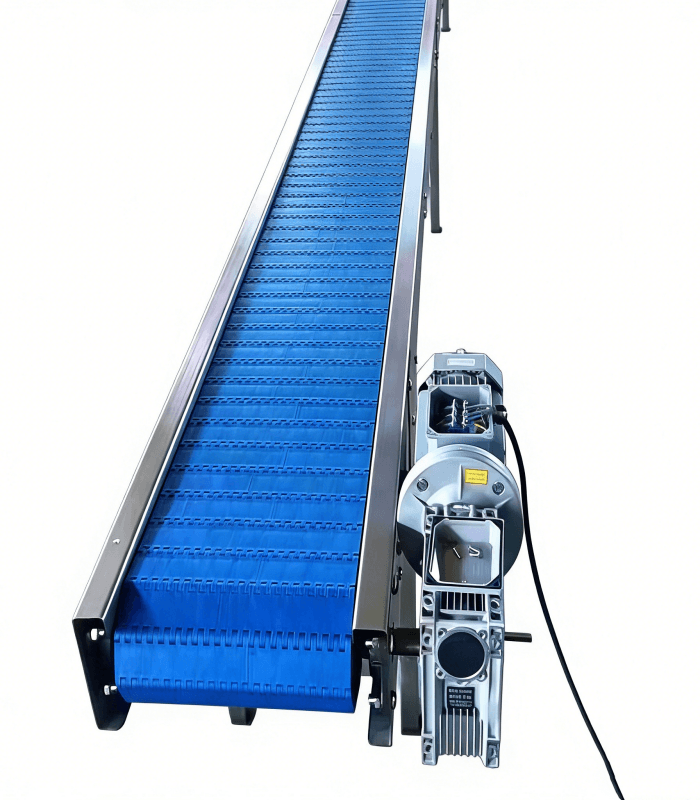
· Drive Method: Powered by a motor-gear reducer, with power transmitted via the meshing of sprockets and plastic chain plates
· Installation Position: Available in left-hand and right-hand configurations (as viewed in the direction of material flow; the drive unit is on the right side for right-hand configuration)
· Speed Control: Variable frequency drive or by changing the sprocket tooth ratio; optional variable-speed drive unit
· Power Supply Specifications: Three-phase 380V 50Hz or single-phase 220V 50Hz/60Hz
4. Frame and Guide Rails
Component | Material Options | Description
Frame | Anodized aluminum extrusions, 304/316L stainless steel, powder-coated carbon steel | Aluminum extrusions are lightweight and aesthetically pleasing; stainless steel is corrosion-resistant, washable, and compliant with EHEDG hygiene standards
Crossbeam | Aluminum conveyor crossbeam | Features low-friction slide rails to guide multi-curved plastic chain plates
Guide Rails/Slide Rails Ultra-High Molecular Weight Polyethylene (UHMWPE), Nylon, POM Wear-resistant and self-lubricating; support chain plate operation and reduce friction
Curved Guide Rails Polyoxymethylene (POM) Machined to precise curvature to ensure smooth transition of chain plates at curves
5. Control Methods
Control Method Description
PLC Manual Control Manual start/stop operation for a single machine
Single-Machine Automatic Control Automatic operation of a single machine according to a preset program
Networked Automatic Control Coordinated operation of multiple machines, integrated with upstream and downstream equipment


评价
目前还没有评价