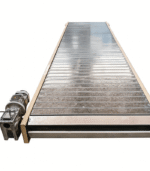
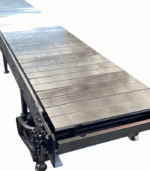
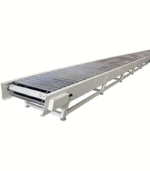
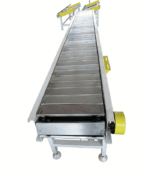
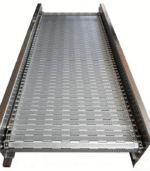
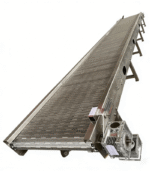
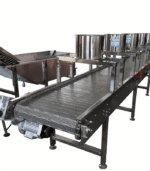
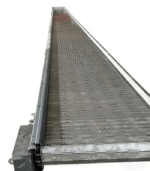
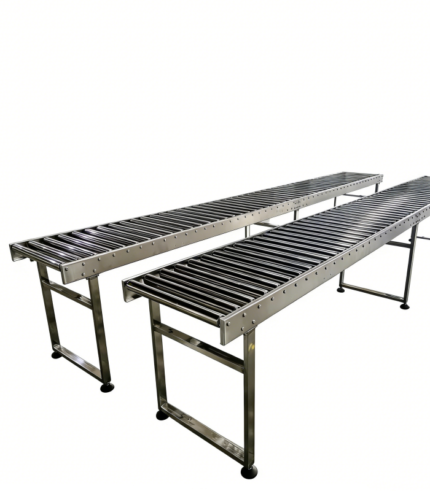
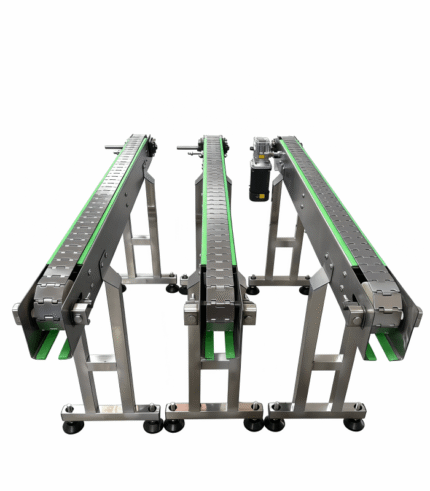
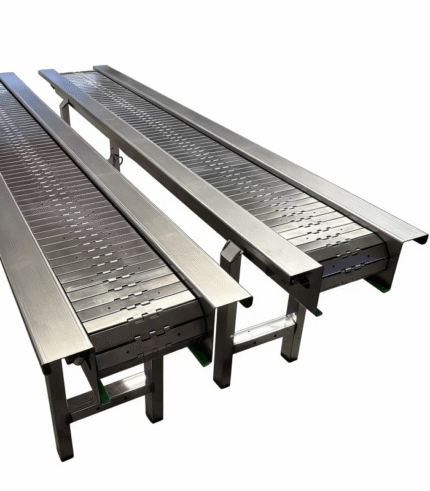
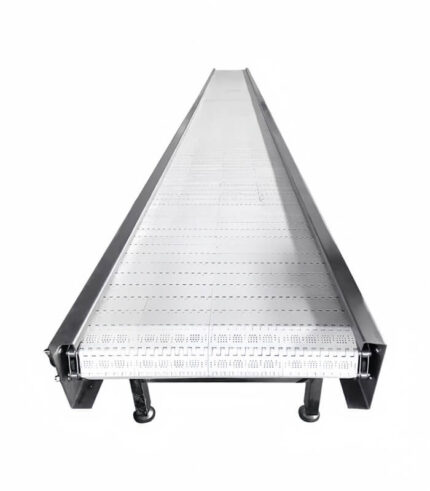
Metal Slat Conveyor, Slat Conveyor, Slat Conveyor Belt
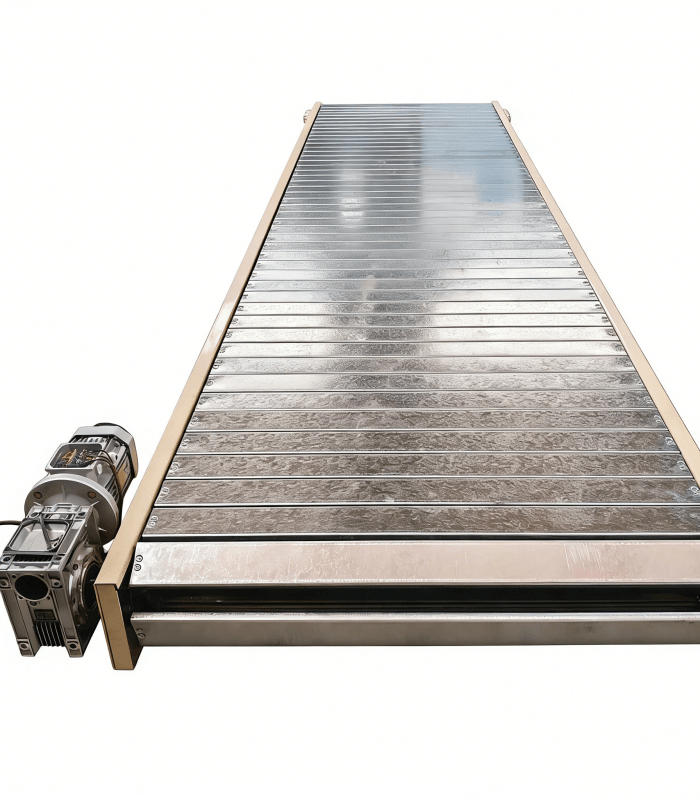
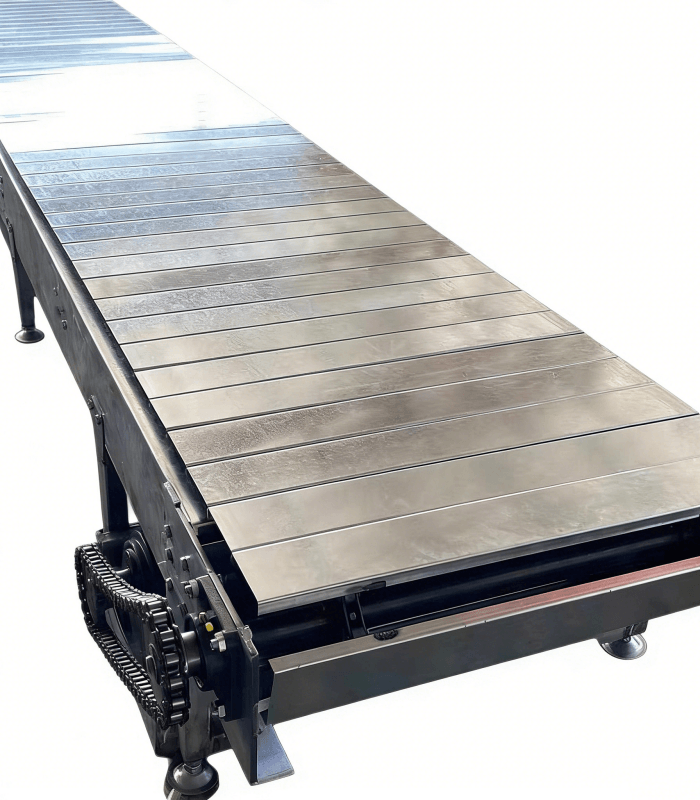
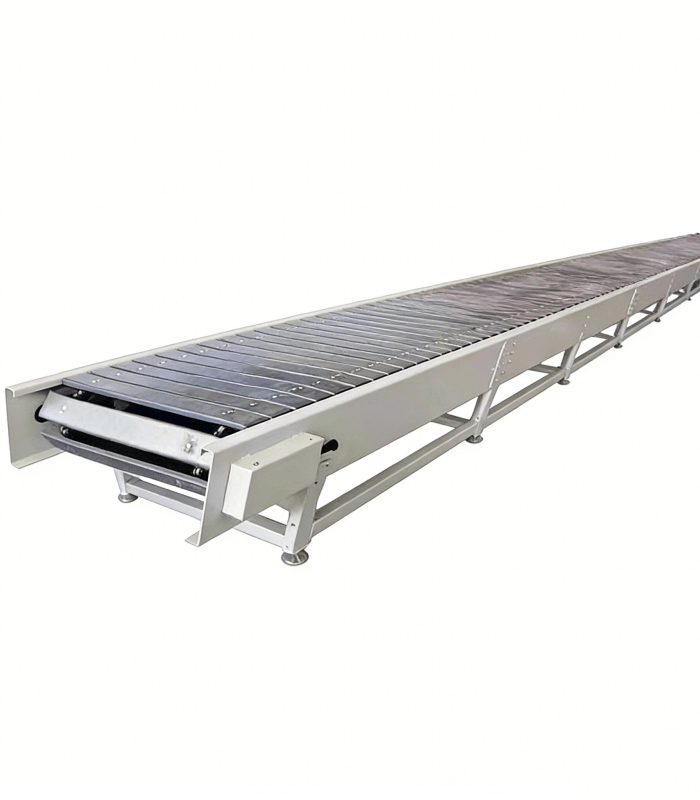
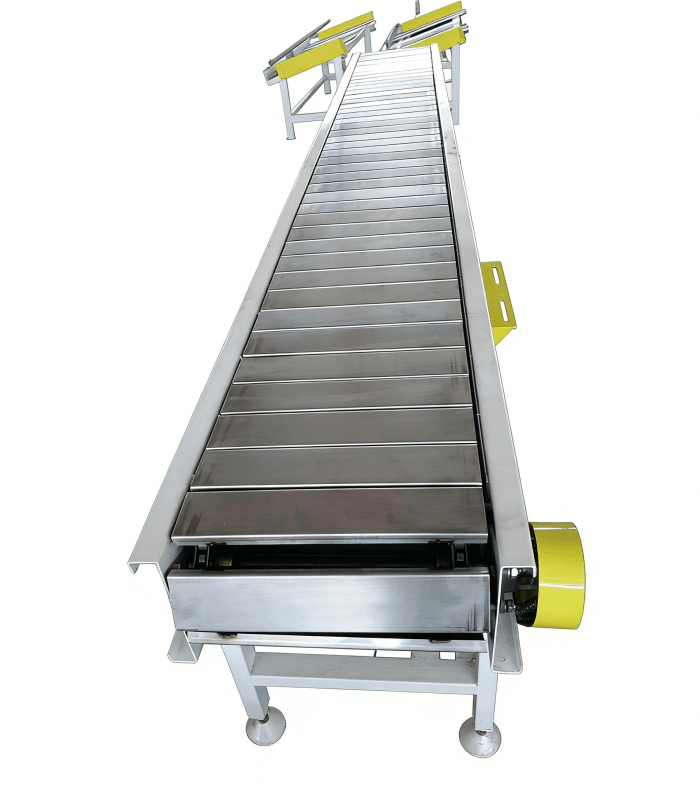
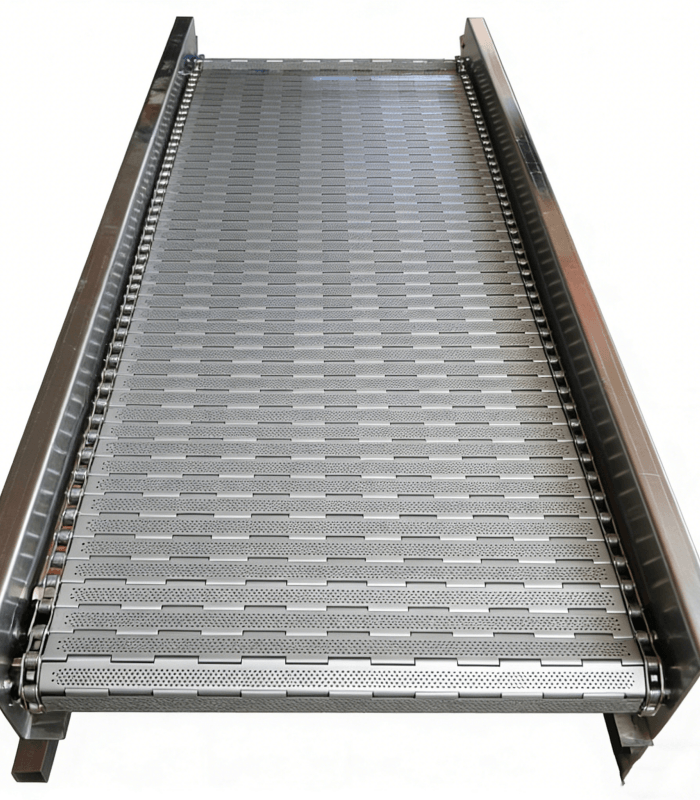
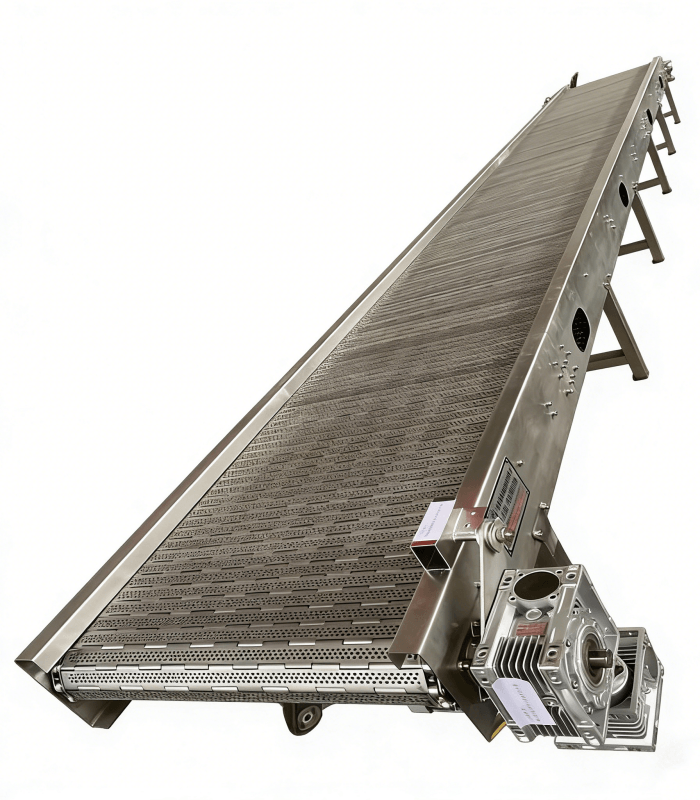
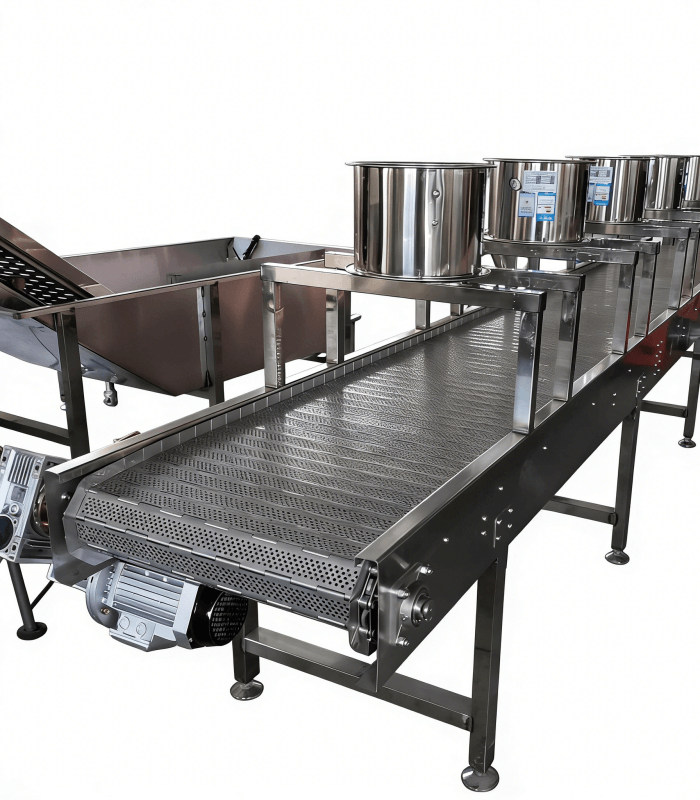
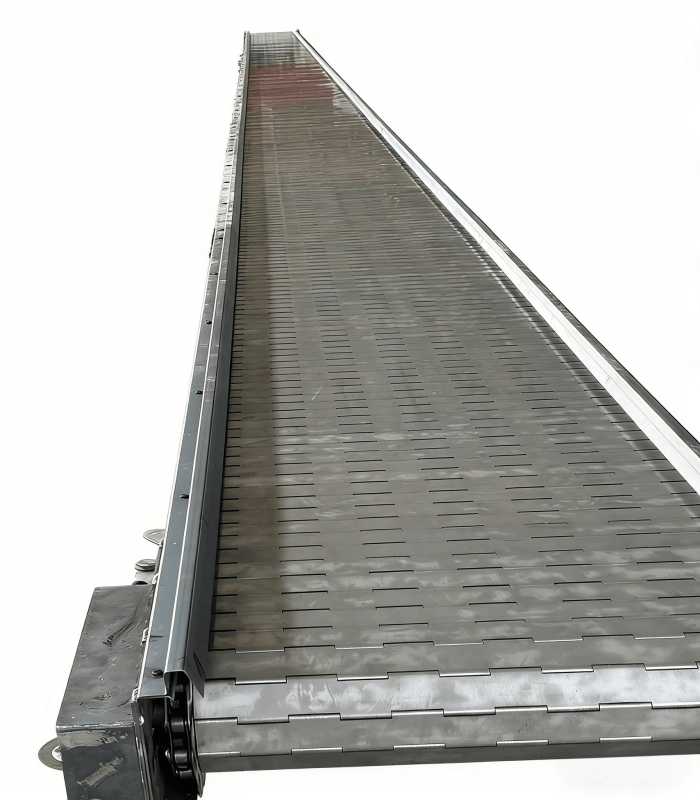
A metal slat conveyor is a type of conveying equipment that uses a circulating chain as the drive mechanism and metal slats to form a rigid conveying surface; it is suitable for conveying materials under harsh conditions such as heavy loads, high temperatures, and high wear.
A metal chain conveyor is a rigid conveying system that uses a circulating chain as the driving element, with metal plates connected to form a load-bearing conveying surface.
I. Product Applications
Thanks to their high-temperature resistance, high strength, and wear resistance, metal chain plate conveyors are widely used in applications requiring heavy loads or operating under harsh conditions:
· Heavy-load and high-temperature material handling: Suitable for industries such as metallurgy, mining, power generation, and chemicals, for conveying high-temperature clinker, red-hot forgings, large ore blocks, and similar materials. With outstanding heat resistance, they can handle materials at temperatures ranging from 300 to 700°C.
· Automotive and Heavy Industry Manufacturing: Used on final assembly and welding lines for automobiles, motorcycles, and construction machinery to carry heavy components such as vehicle bodies and engines, with a maximum load capacity of 500 kg per meter.
· Food and Pharmaceutical Industries: Constructed from 304/316L stainless steel, the conveyor surface is flat, smooth, and easy to clean—it can be directly rinsed with water—making it suitable for automated production lines in the canned food, beverage, and pharmaceutical sectors.
· Logistics and Packaging Industry: Used for the automatic conveying, distribution, and downstream packaging of paper products, cleaning supplies, tobacco, and similar items.
II. Product Advantages
Compared to belt conveyors or standard chain conveyors, metal chain plate conveyors offer the following significant advantages:
1. Wide Application Range and High Load Capacity: Capable of conveying both packaged goods and bulk materials, with the ability to handle heavy loads, making them suitable for transporting heavy items.
2. High-Temperature Resistance and Wear Resistance: Manufactured from metal materials, they are suitable for conveying high-temperature materials at 300–700°C and offer excellent wear and impact resistance.
3. Smooth and Precise Conveying: Relying on the meshing drive between the chain and sprockets, there is no slippage. Conveying speed is accurate and stable, ensuring precise synchronized conveying and rhythmic operation.
4. Flexible and Versatile Layout: A single conveyor line can handle horizontal, inclined, and curved conveying (with a minimum bending radius of approximately 5–8 m), adapting to complex factory layouts.
5. Easy Cleaning and Maintenance: The metal chain plate structure allows for direct water rinsing or soaking, meeting the high hygiene requirements of the food and beverage industries.
III. Manufacturing Process
The manufacturing of metal chain plate conveyors is a process that integrates precision machining and heavy-duty assembly. The core manufacturing processes are as follows:
1. Design and Material Preparation: Design solutions are developed based on material characteristics (weight, temperature, corrosiveness) and conveying requirements. For material selection, 304/316L stainless steel is commonly used in the food and pharmaceutical industries, while Q235 carbon steel is widely used in heavy industry.
2. Core Component Manufacturing:
· Chain Plate Processing: Laser cutting or precision punch press forming (hole position tolerances controlled within ±0.1 mm) is used, followed by bending, welding (TIG welding for stainless steel), and surface treatment (polishing, powder coating, or galvanizing).
· Frame Welding: Utilizes structural steel sections such as channel steel and square tubing, formed via CO₂ gas shielded arc welding, followed by straightening to ensure frame straightness ≤0.5 mm/m.
· Sprocket Machining: 45 steel is forged, turned, gear-cut (to GB/T 10095.1-2008 precision standards), and undergoes carburizing and quenching treatment, resulting in a tooth surface hardness of HRC 50–55.
3. Final Assembly and Commissioning:
· Assembly: The machined frame, drive unit, sprockets, chain, and chain plates are assembled into the complete unit.
· Commissioning: No-load commissioning (to check for misalignment and abnormal noises) and load testing (simulating operational conditions to verify stability) are conducted.
· Quality Inspection: Critical welds undergo non-destructive testing, and the entire machine undergoes performance testing, with a quality inspection report issued.
The core feature of metal slat conveyors lies in their slat-and-chain load-bearing structure, which, through combinations of different materials and specifications, adapts to a wide range of demanding operating conditions—from light-load food applications to heavy-load, high-temperature environments. The following provides a detailed breakdown across three dimensions: core parameter systems, key component details, and parameters categorized by application.
—
I. General Core Parameter Ranges
Parameter Item General Range Remarks
Chain Pitch 25.4 mm ~ 203.2 mm The larger the pitch, the greater the load capacity
Chain Plate Width 63.5 mm ~ 4000 mm Widths ≤800 mm use single-row chains; >800 mm use double-plate chain structures
Conveyor Speed 0.4 ~ 15 m/min Recommended 8–10 m/min; excessively high speeds result in increased noise and wear
Conveying Capacity 50 ~ 2500 kg/m² Light duty: ≥50 kg/m, Heavy duty: ≥300 kg/m, Ultra-heavy duty: up to 2500 kg/m
Operating Temperature -20°C ~ +700°C Standard type: -20°C to 120°C, High-temperature type: up to 600°C to 700°C
Conveying Incline: 0°–30°; generally ≤15°, special designs can reach 30°
Single-unit Length: ≤50 m; for lengths up to 30 m, plate chain traction is recommended, or dual-drive (head and tail) configuration may be used
II. Key Component Details and Specifications
1. Chain Plate (Load-bearing Surface)
The chain plate is the component that directly contacts the material; its material and structure determine the equipment’s application range:
Chain Plate Type | Material | Typical Width Specifications (mm) | Applicable Scenarios
Straight Chain Plate | Stainless Steel (304/316L) | 63.5, 82.5, 101.6, 114.3, 152.4, 190.5, 254, 304.8 | Food, pharmaceutical, beverage, cosmetics, and other industries; can be directly washed with water
Curved Chain Plate: Stainless Steel/Stainless Iron; 82.5, 114.3, 152.4, 190.5, 304.8; Requires curved guide rails (polyoxymethylene) or magnetic guide rails for curved conveying
Heavy-duty scale plates Carbon steel (Q235)/Manganese steel 400–800 mm (standard models) Casting, mining, and metallurgy industries; for conveying high-temperature clinker and large ore chunks
Flat-top chain plates Engineering plastics/Stainless steel Customizable as needed Light-duty applications requiring corrosion resistance; simple structure and lightweight
Chain Plate Manufacturing Details: Stainless steel chain plates are formed via precision stamping or laser cutting, with hole position tolerances of ±0.1 mm; heavy-duty scale plates are fabricated from welded steel plates or castings, with optional welded flanges to prevent material spillage.
2. Drive Chain (Core Transmission Component)
The drive chain is the core load-bearing and transmission component of a metal chain conveyor, and its type directly determines the equipment’s performance:
Chain Type Structural Features Suitable Conditions Maintenance Points
Plate Chain (Plate Link Chain) Rollers installed between inner chain plates, rolling on the track Conveying distance >30m, heavy-duty conditions, smooth operation Rollers require lubrication with calcium-based grease every two weeks
Hollow Large Roller Chain Large outer diameter rollers, with attachments to connect chain plates Conventional conveying, capable of turning Regularly inspect roller wear
Link Chain: Circular link structure; conveying distance ≤30m; lower cost; prone to slippage; not suitable for long distances
Chain Material and Heat Treatment: High-quality alloy steel (40Cr, 20CrMnTi); chain links undergo carburizing and quenching; surface hardness HRC 58–62; excellent wear resistance.
3. Drive and Tensioning Devices
· Drive Configuration:
· Left-hand/Right-hand Mounting: Viewed in the direction of material flow, the drive unit is on the right for right-hand mounting; otherwise, it is left-hand mounting
· Drive Components: Motor + Gearbox + Drive Sprocket (sleeve roller chain drive); speed can be adjusted by changing the sprocket tooth ratio
· Tensioning Method:
· Screw Tensioning (Standard): Manual adjustment of the lead screw at the tail pulley; suitable for short distances and light loads
· For long distances (>30 m), plate chain traction is recommended to prevent slippage
4. Frame and Track
· Frame Material: Carbon steel (Q235, powder-coated or baked after welding), stainless steel (304/316L, food-grade), aluminum profiles (lightweight)
· Track System: Heavy-duty equipment features four light rails inside the frame (for roller operation), made of wear-resistant steel or ultra-high molecular weight polyethylene (UHMWPE)
III. Detailed Specifications by Application
1. Light-Duty/Food-Grade Metal Slat Conveyors
Parameter Specifications
Typical Applications: Automatic conveying and packaging lines for food, beverages, pharmaceuticals, cosmetics, and paper products
Slat Width: 63.5, 82.5, 101.6, 114.3, 152.4, 190.5, 254, 304.8 mm
Curving Capability: Pi-shaped curved chain plates + polyoxymethylene guide rails / magnetic curved guide rails
Hygienic Features: Can be directly washed with water or immersed; conveying surface is flat, smooth, and free of dead corners
Conveyed Items: Beer bottles, aluminum cans, PET bottles, boxes, bags, and canned goods
2. Heavy-Duty/High-Temperature Scale Belt Conveyor
Parameters BL400 BL500 BL650 BL800
Conveying Capacity (t/h) 20 25 35 55
Material Particle Size (mm) ≤130 ≤150 ≤200 ≤280
Operating Speed (m/s) 0.8–3 0.8–3 0.8–3 0.8–3
Conveyor Length (m) 10–20 10–30 10–40 10–50
Suitable Materials: High-temperature castings, cement clinker, sintered ore, red-hot forgings (material temperature up to 600–700°C)
Structural Features: Rollers are installed in the center of the chain links within the traction chain, rolling along the track to reduce frictional resistance; the trough plates are secured to the traction chain with bolts
IV. List of Key Selection Parameters
The following information must be specified during procurement or design:
1. Material Characteristics: Unit weight, material dimensions, material temperature (ambient/high-temperature/low-temperature)
2. Conveying Requirements: Conveying speed (m/min), conveying length (m), conveying incline (°)
3. Layout Configuration: Straight/curved/elevating/combined; whether continuous or intermittent operation is required
4. Environmental Conditions: Indoor/outdoor, humidity, presence of corrosive media, hygiene grade requirements
5. Installation Method: Left-hand/right-hand (drive unit position)


评价
目前还没有评价