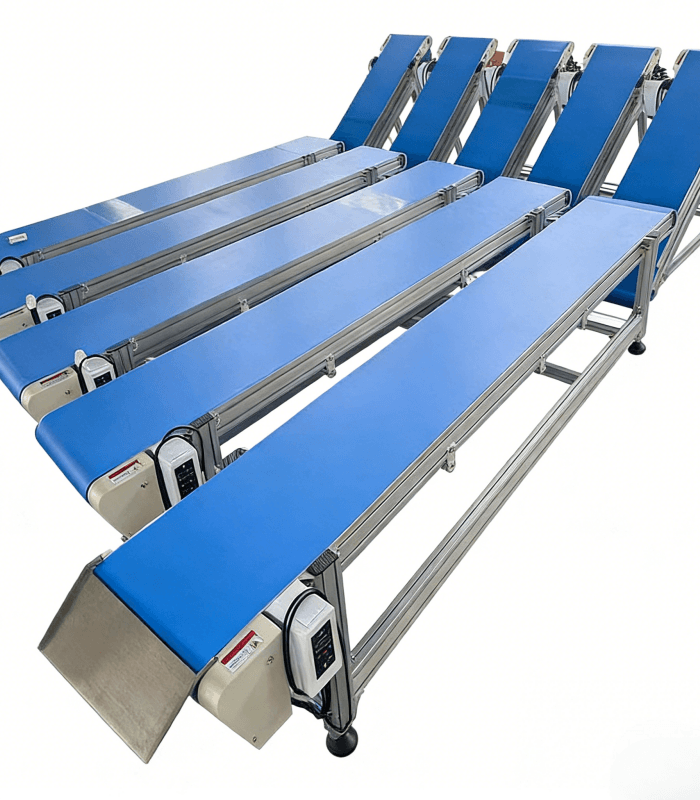
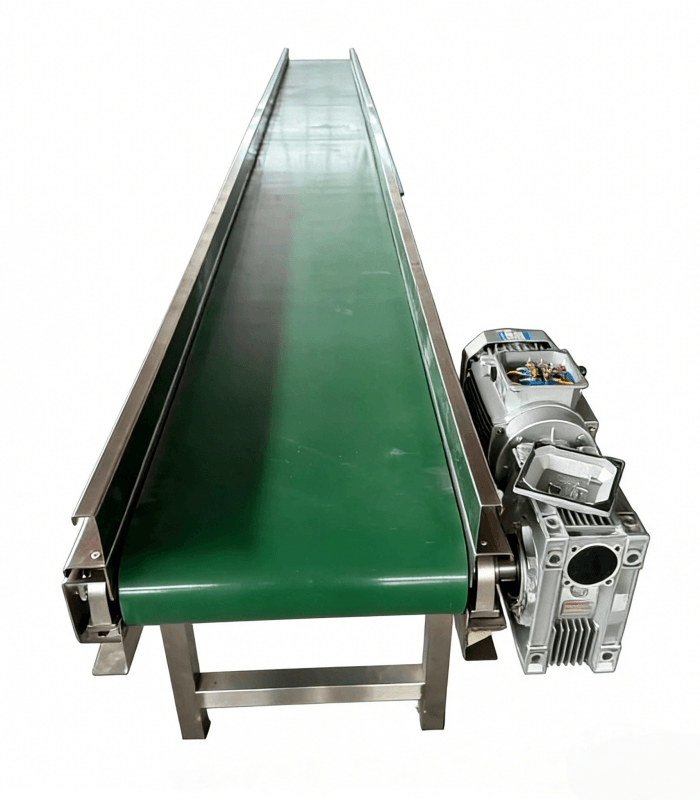
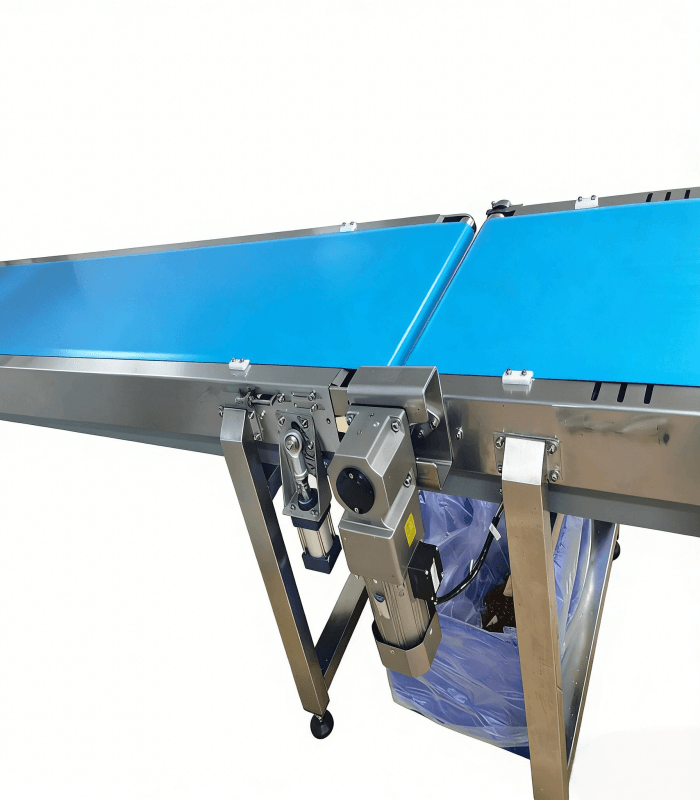
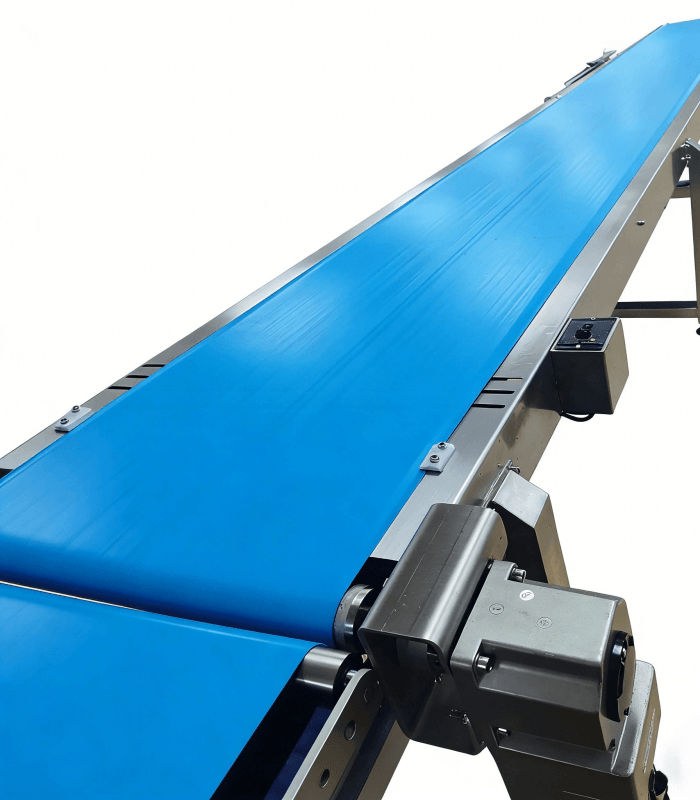
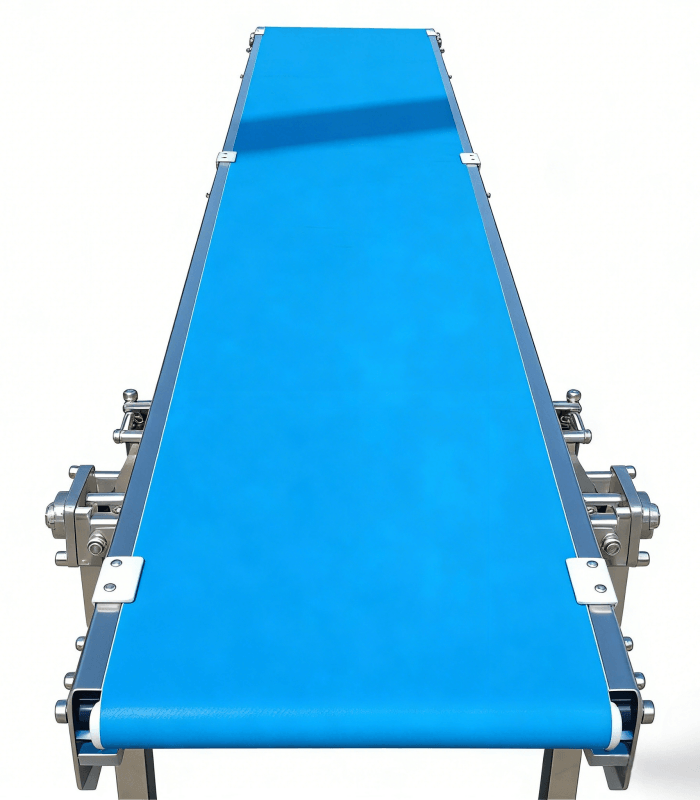
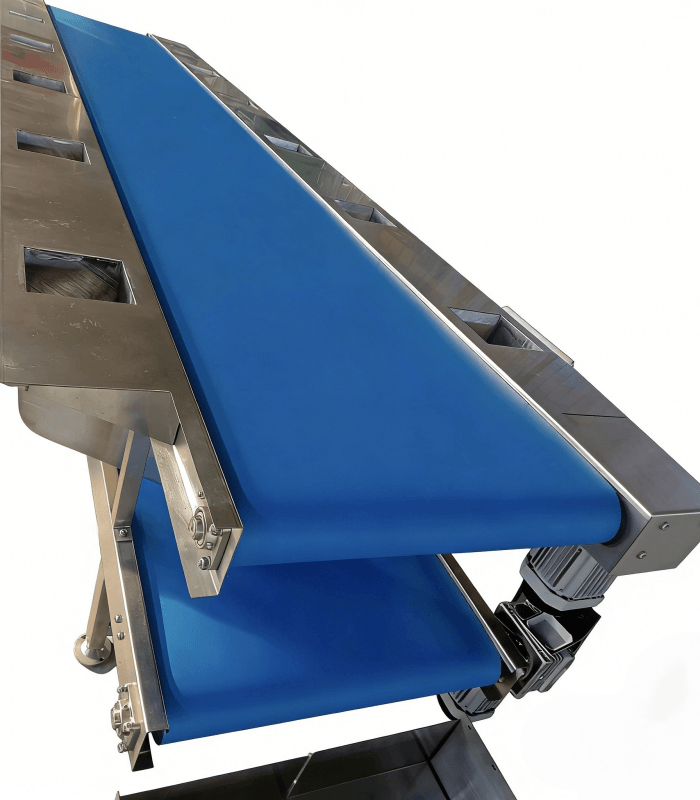
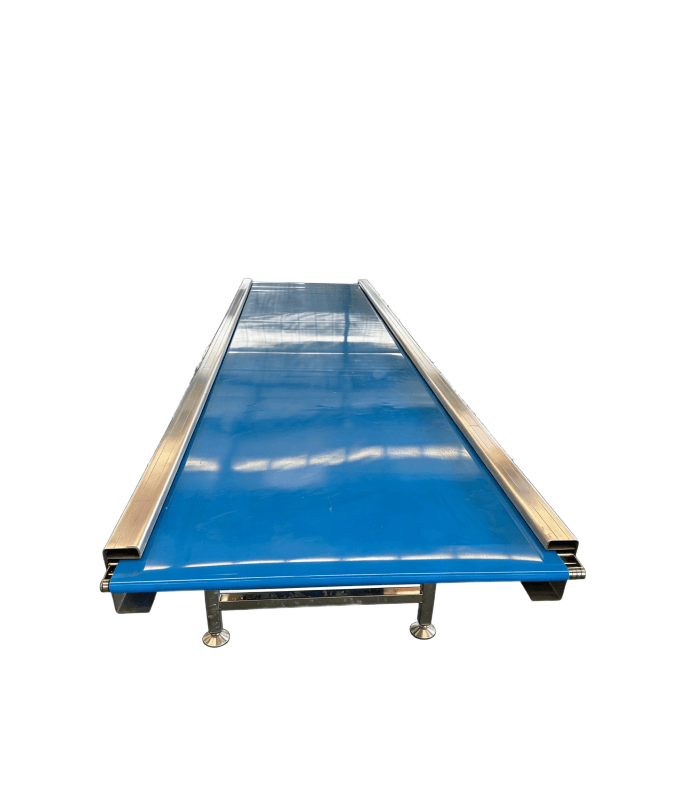
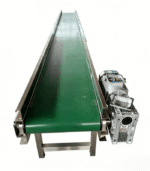
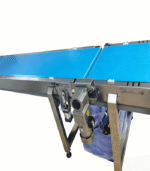
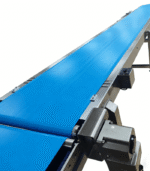
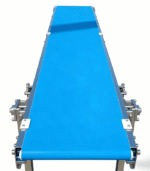
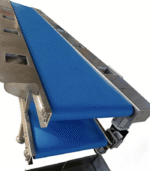
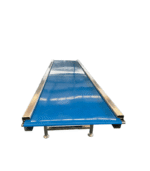
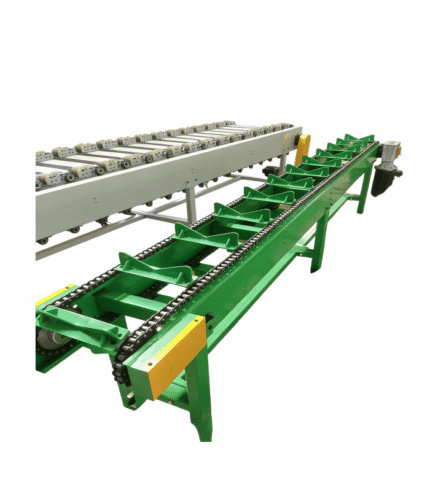
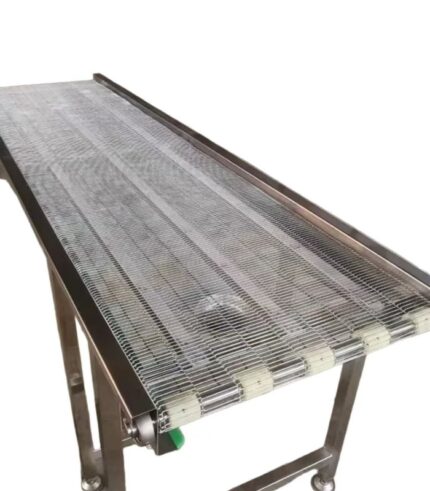
Belt conveyor, conveyor belt, belt conveyor system
A belt conveyor is a versatile material handling system that uses the friction between the drive pulley and the conveyor belt to achieve continuous, efficient, and long-distance material transport.
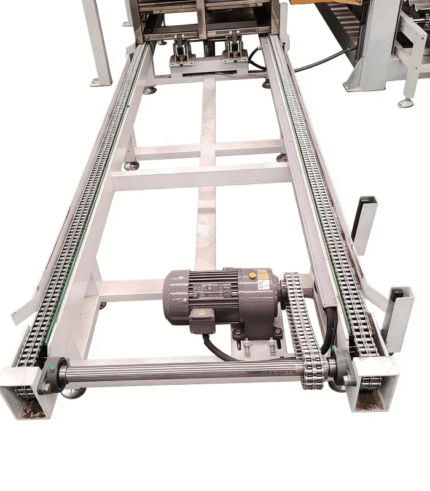
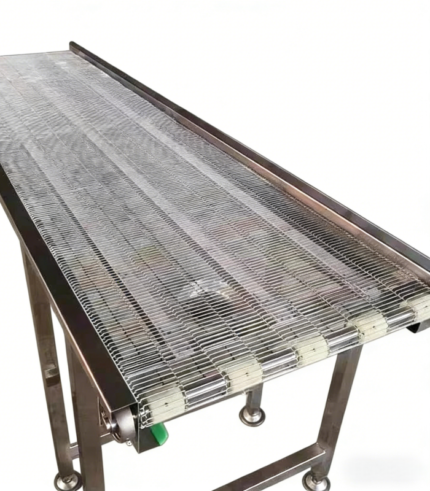
Belt conveyors (also known as belt conveyors) are indispensable, cost-effective material handling equipment in modern assembly lines. They transmit power through friction between the drive pulley and the conveyor belt, enabling continuous and efficient material transport.
The following is a detailed analysis of the applications, advantages, and manufacturing processes of belt conveyors:
I. Product Applications
Belt conveyors are widely used in material handling operations across various industries, with their applications primarily falling into two categories:
1. Bulk Material Conveying: Suitable for sectors such as mining, metallurgy, coal, power plants, ports, and grain storage. They can convey powdered, granular, and small-lump materials such as coal, crushed stone, sand, cement, fertilizer, and grain.
2. Conveyor of Assembled Items: Suitable for industries such as electronics, home appliances, food, pharmaceuticals, logistics and express delivery, and tobacco. Used to convey various boxes, packaging bags, soft packs, and components, meeting the needs of assembly, inspection, and packaging on production lines. For example, the telescopic belt conveyor in express sorting centers is specifically designed to shorten loading and unloading distances and improve efficiency.
II. Product Advantages
The core advantages of belt conveyors lie in their cost-effectiveness and reliability:
1. Simple structure and easy maintenance: Compared to other conveying equipment (such as scraper conveyors), belt conveyors feature a lightweight structure, a high degree of component standardization, minimal maintenance requirements, and low costs.
2. Reliable operation and low power consumption: There is virtually no relative movement between the material and the conveyor belt, resulting in low operating resistance (approximately 1/3 to 1/5 that of a scraper conveyor), low energy consumption, and the ability to operate continuously without interruption.
3. High adaptability and flexible layout:
· Route adaptability: Capable of both horizontal and inclined conveying, and can even be configured into three-dimensional routes. Routes can range from a few meters to over 10 kilometers in length.
· Diverse configurations: Includes straight, incline, curved, telescopic, and trough types to accommodate various operating conditions.
4. Automation and intelligence: Easily supports programmed control and automated operation. Modern technologies, such as air-cushion conveyors, can achieve energy savings of 10%–20% and significantly reduce dust emissions.
III. Product Manufacturing Process
The manufacturing of belt conveyors is a systematic engineering process spanning from design to assembly and commissioning. The main process flow is as follows:
1. Design Phase: Determine the design scheme based on material characteristics (weight, particle size), conveying distance, and operating environment (temperature, humidity, indoor/outdoor). This includes structural design (frame, drums, idlers), selection of the power system (motor, reducer), and safety protection design.
2. Material Procurement and Component Processing:
· Frame: Made of carbon steel, stainless steel, or aluminum profiles, processed through cutting, welding, grinding, and powder coating to ensure strength and corrosion resistance.
· Drums: Drive drums are typically fabricated from welded seamless steel tubes with wall thicknesses of 6–18 mm. They undergo stress relief treatment and static balancing tests (radial runout ≤ 0.55 mm) to ensure smooth operation.
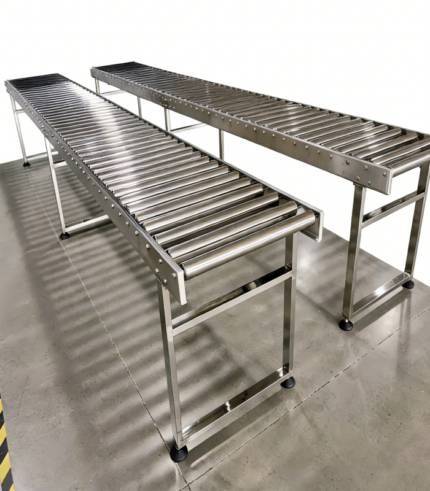
· Idler Rollers: Wall thickness must exceed 3 mm. They are made from high-quality seamless steel tubes and feature fully sealed bearings to minimize operational resistance.
3. Assembly and Core Processes:
· The frame, drive unit, drums, and idlers are assembled into the final configuration. Modern manufacturing processes utilize laser cutting and precision machining to enhance component accuracy and enable modular design, resulting in higher interchangeability and easier maintenance.
· The conveyor belt (made of PVC, PU, rubber, etc.) is installed, and initial tension is adjusted via a tensioning device to prevent slippage.
4. Commissioning and Testing:
· No-load commissioning: Check for belt misalignment and verify that all moving parts are functioning normally.
· Load testing: Verify full-load starting capability and conveying capacity, ensuring the motor operates at rated current.
· Safety testing: Check the responsiveness of emergency stop devices such as pull-cord switches and belt misalignment switches.
The specifications and parameters of belt conveyors typically vary significantly depending on the application (whether conveying packaged goods or bulk materials). Below, we outline the key points from three perspectives: general core parameters, differences between light-duty and heavy-duty equipment, and the specifications of critical components.
I. General Core Parameter Ranges
These are the standard parameter ranges commonly used in the industry and applicable to most conventional designs:
· Belt width: Common specifications include 400 mm, 500 mm, 650 mm, 800 mm, 1000 mm, and 1200 mm, with a maximum width of up to 1600 mm.
· Belt Speed: Generally adjustable between 0–90 m/min or 1.3–3.15 m/s.
· Conveying Capacity: Depends on belt width and speed, typically ranging from 40 to 1,600 t/h.
· Conveying Length: Single units offer flexibility, ranging from as short as 2 meters to long-distance conveying of up to 240 meters or more (requiring multiple units in combination).
· Conveying angle: Standard belt conveyors typically operate at 0–20°; with side guards and skirting, steep inclines (≥30°) and vertical lifting can be achieved.
· Operating temperature: Generally suitable for environments ranging from -20°C to +40°C; material temperature typically does not exceed 50°C (except for heat-resistant belts).
II. Parameter Differences by Application Scenario
Depending on the material being conveyed, there are significant differences in equipment design details:
Category Light-duty Conveying Equipment (e.g., express delivery, electronics, food) Heavy-duty Conveying Equipment (e.g., mining, metallurgy, coal)
Primary Objects Cartons, soft packages, returnable containers, small parcels Ore, sand, gravel, coal, grain, and other bulk materials
Unit Weight/Load Capacity: Typically ≤ 60 kg per unit; dynamic load capacity approx. 60 kg/m²; starting from several hundred tons per hour, up to 1,600 tons per hour or more
Frame Material: Aluminum alloy profiles, powder-coated bent profiles (aesthetic, lightweight); heavy-duty carbon steel structures (sturdy, impact-resistant, securely welded)
Drive System: Electric rollers (built-in) or small motors; common brands include SEW; high-power motors + gearboxes + hydraulic couplers (external, easy to maintain)
Belt Material: PVC, PU, silicone, food-grade (oil-resistant, anti-static); rubber, nylon canvas, steel cord core (wear-resistant, tear-resistant)
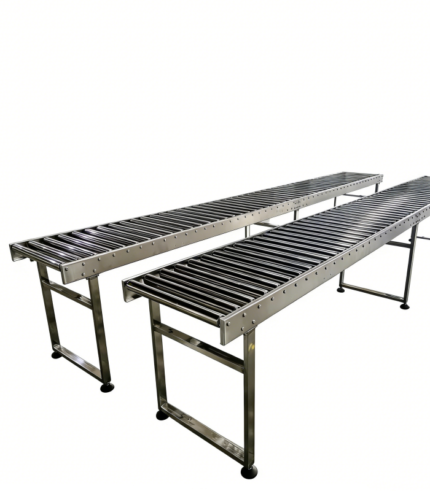
Idler Types: Flat idlers or steel plate slide supports (simple structure) Grooved idlers (35°/45° groove angle, spill-proof)
Special Features: Incline, curve, telescopic (adaptable to complex production lines) Explosion-proof, heat-resistant, tear-resistant, automatic tracking
III. Details and Specifications of Key Components
1. Conveyor Belt (Core Component)
· Thickness and Number of Plies: Heavy-duty rubber belts typically consist of multiple layers of fabric (e.g., 3–6 layers) to withstand high tension; lightweight PVC/PU belts feature a single- or double-layer structure.
· Special Requirements:
· Food-grade: Must comply with FDA standards; white or blue in color for easy cleaning.
· Anti-static: Used in electronics workshops or dusty environments.
· Steep inclines: The belt surface requires additional baffles and side skirts to prevent material from sliding off.
2. Idlers and Drums
· Idlers:
· Trough Idlers: Consist of 3 or 5 small rollers forming a “U”-shaped trough, used in the loading section to prevent bulk material from spilling.
· Self-aligning Idlers: Feature an automatic alignment function to correct belt misalignment, but may slightly affect belt lifespan.
· Shock-absorbing Idlers: Installed below the discharge chute, with rubber-coated surfaces to absorb impact forces.
· Drums:
· Barrel-shaped: The head and tail drums are often designed with a “barrel shape”—thicker in the middle and thinner at both ends—which is currently one of the most effective anti-drift designs.
· Diameter: Matched to belt width; for example, a B500 belt is paired with a Φ500 mm drum, while a B1000 belt may be paired with a Φ630–800 mm drum.
3. Drive and Installation
· Installation Configuration: Divided into left-hand and right-hand configurations (depending on whether the motor is on the left or right side when facing the discharge opening).
· Tensioning Method: For short distances, use screw tensioning (manual adjustment via a lead screw); for long distances, use counterweight tensioning (automatic adjustment via gravity) or hydraulic tensioning.


评价
目前还没有评价