Guide to Conveyor Belt Materials: Technical Selection

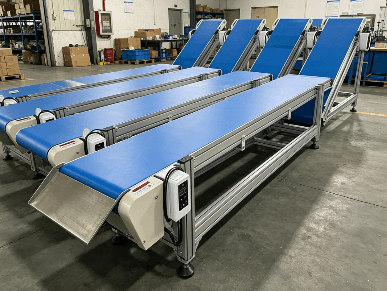
Selecting the correct conveyor belt material is a fundamental engineering decision that dictates the lifespan, safety, and operational efficiency of a material handling system. The material choice is not merely about what moves the product, but how that surface interacts with environmental factors like temperature, chemical exposure, and mechanical stress.
In industrial automation, the belt is the primary interface between the machine and the product. A mismatch in material specifications can lead to premature belt fatigue, product contamination, or catastrophic system downtime. This guide breaks down the core polymers, fabrics, and compounds used in contemporary belt manufacturing.
The Composite Structure of Conveyor Belts
Most industrial conveyor belts are composite structures. They are rarely made of a single material. Understanding the distinction between the “carcass” and the “cover” is vital for any technical evaluation by engineers and project managers.
The Carcass: Internal Reinforcement
This is the internal layer that provides tensile strength and structural integrity. It handles the tension required to move the load and prevents excessive stretching.
- Polyester (EP): The most common fabric, offering low stretch and high tensile strength.
- Nylon (NN): Known for excellent impact resistance and flexibility.
- Aramid: Used for high-tension, long-distance applications where weight must be minimized.
- Steel Cords: Essential for heavy-duty mining or high-load industrial lines.
The Cover: External Surface Protective Layer
This is the outer layer that protects the carcass and provides the necessary friction or release properties. The cover material is selected based on the specific application—be it food-grade hygiene, oil resistance, or high-grip requirements.
Key Polymer Materials for Industrial Belting
In industries such as electronics, packaging, and logistics—environments where straight conveyor systems are frequently deployed—two polymers dominate the market: PVC and Polyurethane (PU).
Polyvinyl Chloride (PVC)
PVC is the most widely used material in general automation. It is favored for its versatility and cost-effectiveness across various logistics environments.
- Best For: General material handling, warehousing, and non-fatty food processing.
- Technical Properties: Excellent resistance to most acids and alkalis.
- Limitation: PVC typically has lower resistance to organic solvents and fats compared to specialized polymers.
Polyurethane (PU)
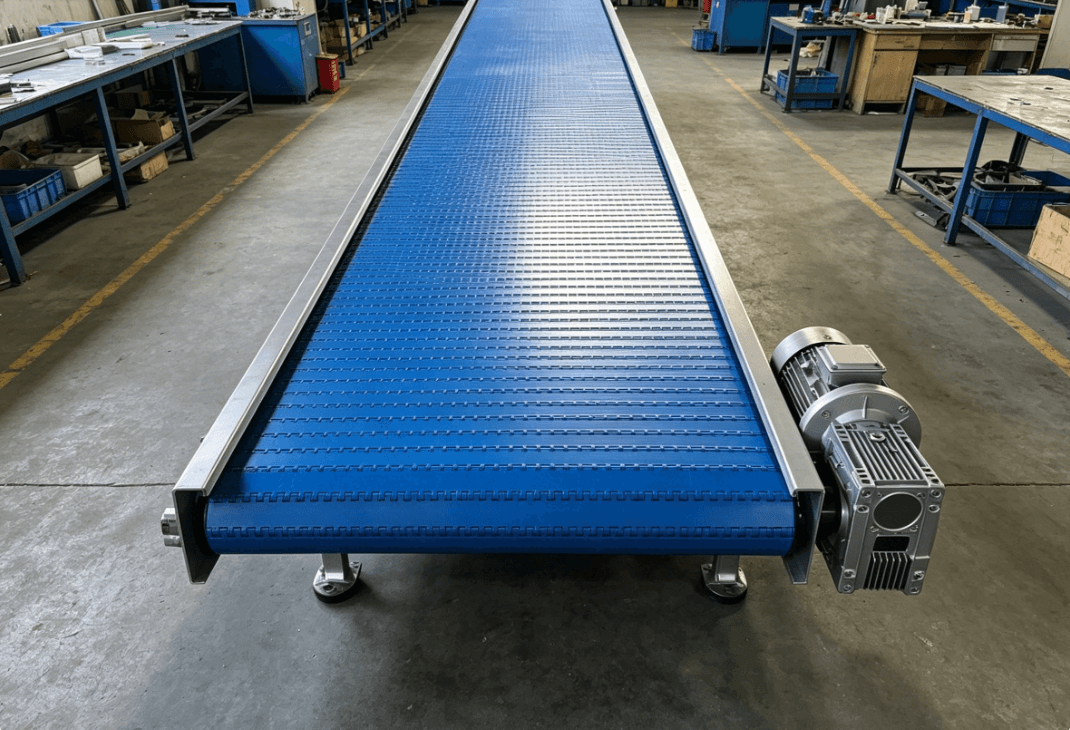
PU is the premium choice for applications requiring high precision, superior hygiene, and mechanical durability.
- Best For: Food processing, pharmaceutical manufacturing, and high-abrasion environments.
- Technical Properties: Highly resistant to animal fats, vegetable oils, and chemicals.
- Precision: PU is significantly more abrasion-resistant than PVC, allowing for thinner belts that can wrap around smaller pulley diameters or nose bars.
Technical Comparison of Belt Materials
When engineers evaluate materials for a new conveyor line, they look at specific performance metrics. Below is a comparison of common materials used in standard automated lines.
| Property | PVC | Polyurethane (PU) | Modular Plastic (PE/PP) |
| Abrasion Resistance | Moderate | High | High |
| Flexibility | High | Very High | Low (Interlocking) |
| Oil Resistance | Low to Moderate | Excellent | High |
| Max Temperature | ~80°C | ~100°C | ~60°C – 100°C |
| Food Safety | Selected Grades | Standard | Standard |
Matching Material to Application Logic
Choosing a material is a process of elimination based on the environmental constraints and the physical characteristics of the goods being transported.
Environmental Resistance and Compliance
In the pharmaceutical and food sectors, material compliance is non-negotiable. “Blue” belts are increasingly popular because blue is a color not found naturally in most foods, making it easier for vision systems to identify foreign material. Furthermore, antimicrobial additives are often embedded in PU covers to inhibit the growth of bacteria and biofilm.
Friction and Surface Texture Needs
The material choice also dictates the coefficient of friction.
- Smooth Surfaces: Ideal for easy cleaning and standard horizontal transport.
- Rough Top Textures: Used for incline or decline conveyors to prevent boxes or parts from slipping.
- Low-Friction Bases: Essential for accumulation conveyors where products must stop while the belt continues to run underneath.
Summary
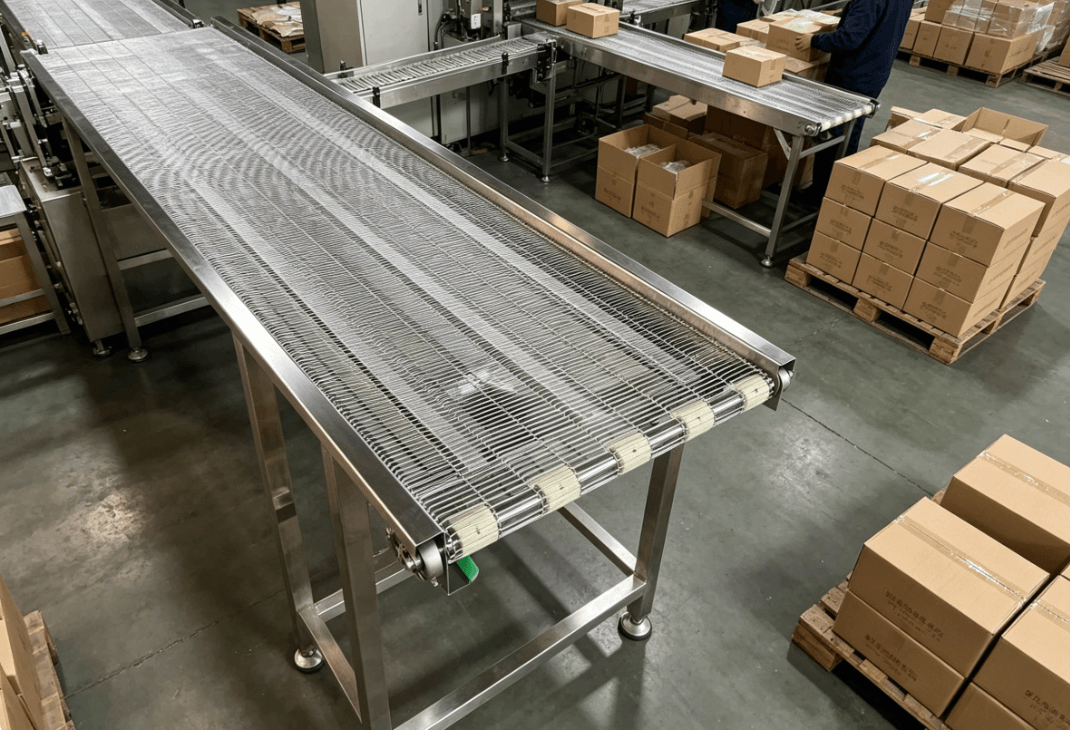
Selecting conveyor belt materials requires a balance of tensile strength, surface chemistry, and environmental resistance. While PVC serves the majority of general-purpose logistics, specialized polymers like PU or NBR are required for food safety and oil-heavy industrial environments. Understanding the carcass and cover relationship ensures that the selected belt can withstand the mechanical rigors of modern automated production lines.
FAQ
1. What is the difference between food-grade and standard belts?
Food-grade belts are manufactured with materials that do not migrate into food products. They comply with FDA or EU regulations and are designed to withstand harsh chemical washdowns without degrading or harboring bacteria.
2. Why is the carcass material important?
The carcass determines the belt’s ability to handle tension. A high-quality polyester carcass ensures the belt does not stretch over time, which reduces the need for frequent tension adjustments and prevents tracking issues.
3. Which material is best for oily environments?
Nitrile (NBR) or Polyurethane (PU) are the best choices for oily environments. Standard PVC will absorb oils, causing the belt to swell, harden, and eventually crack or delaminate.
4. When should I use a silicone-coated belt?
Silicone is used when exceptional release properties are needed, such as in high-heat baking or when handling sticky adhesives. It prevents product buildup that would otherwise damage standard polymer belts.
Reference Sources
ISO 284: Electrical conductivity requirements for belts