How to Improve Conveyor Efficiency in Production Lines: An Engineering Guide

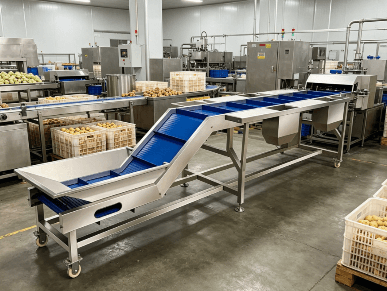
Efficiency in a production line is rarely about the top speed of a motor. Instead, it is the result of synchronized mechanical harmony, precise material handling, and proactive maintenance. For plant managers and systems engineers, the drive to improve conveyor efficiency is often a response to rising energy costs, unexpected downtime, or throughput bottlenecks that stifle ROI.
In industrial automation, a conveyor is more than a transport mechanism; it is the pulse of the facility. When this pulse falters due to friction, misalignment, or outdated drive logic, the entire production chain suffers. This guide examines the technical levers available to optimize your conveyor systems for peak performance.
The Foundation of Throughput: Mechanical Alignment and Belt Tracking
The most common cause of efficiency loss is parasitic friction. When a belt is not tracking correctly, it consumes more power to overcome the resistance of rubbing against the frame.
Precision Tracking and Tensioning
Improper tension is a silent efficiency killer. Over-tensioning leads to premature bearing failure and excessive motor strain. Under-tensioning causes belt slippage, leading to inconsistent product spacing and timing issues. Engineers should implement “crowned rollers” or V-guide tracking systems—common features in professional-grade straight conveyors—to ensure the belt remains centered under varying load conditions.
Reducing Friction Points
Every roller that fails to turn freely acts as a brake. High-quality bearings with appropriate L10 life ratings (the basic dynamic load rating) are essential. In high-speed packaging environments, switching from standard friction-heavy wear strips to Ultra-High Molecular Weight (UHMW) polyethylene can significantly reduce the coefficient of friction, allowing the motor to operate at lower amperage.
Optimizing Motor Performance and Drive Logic
To truly improve conveyor efficiency, one must look at the “brain” and “muscles” of the system: the motor and the controller.
Variable Frequency Drives (VFDs)
Running a conveyor at a constant, maximum speed is rarely efficient. VFDs allow the system to match the conveyor speed to the actual production demand. By implementing a “soft start” and “soft stop,” VFDs reduce the mechanical shock on gears and belts, extending the mean time between failures (MTBF).
Right-Sizing the Drive System
Over-specifying a motor leads to poor power factors and wasted energy. Conversely, an underpowered motor will run hot, leading to insulation breakdown. A technical audit should evaluate the “Moment of Inertia” and the “Starting Torque” required for the specific load. Utilizing high-efficiency helical gearmotors instead of traditional worm gears can improve energy transmission efficiency by up to 20-30%.
Strategic Component Selection and Material Science
The physical properties of the conveyor belt itself dictate how much energy is required to move a load.
| Belt Material | Typical Application | Efficiency Benefit |
| PVC (Polyvinyl Chloride) | General Logistics | Cost-effective, high traction for inclines. |
| PU (Polyurethane) | Food & Pharma | High flexibility, lower rolling resistance, easy to clean. |
| Modular Plastic | Heavy Load / Cooling | Low friction, easy to repair individual links, high durability. |
| Silicone Coated | High Heat | Resists tackiness, prevents product drag. |
Selecting a belt with the correct “Lateral Stiffness” ensures that the belt does not “cup” under heavy loads, which prevents edge wear and maintains a flat conveying surface for better stability.
Maintenance 4.0: From Reactive to Predictive
Efficiency is the byproduct of uptime. Moving beyond “fix-it-when-it-breaks” to a predictive model is essential for modern manufacturing.
Thermal Imaging: Regularly scan motors and gearboxes for hotspots. An overheating bearing is a sign of imminent failure and current energy waste.
Acoustic Monitoring: Use ultrasonic sensors to detect the high-frequency “squeal” of failing bearings long before they are audible to the human ear.
Scheduled Cleaning Regimes: In industries like electronics or food packaging, debris buildup on the underside of the belt increases friction. A clean conveyor is a low-friction conveyor.
Integration of Straight Conveyor Modules for Scalability
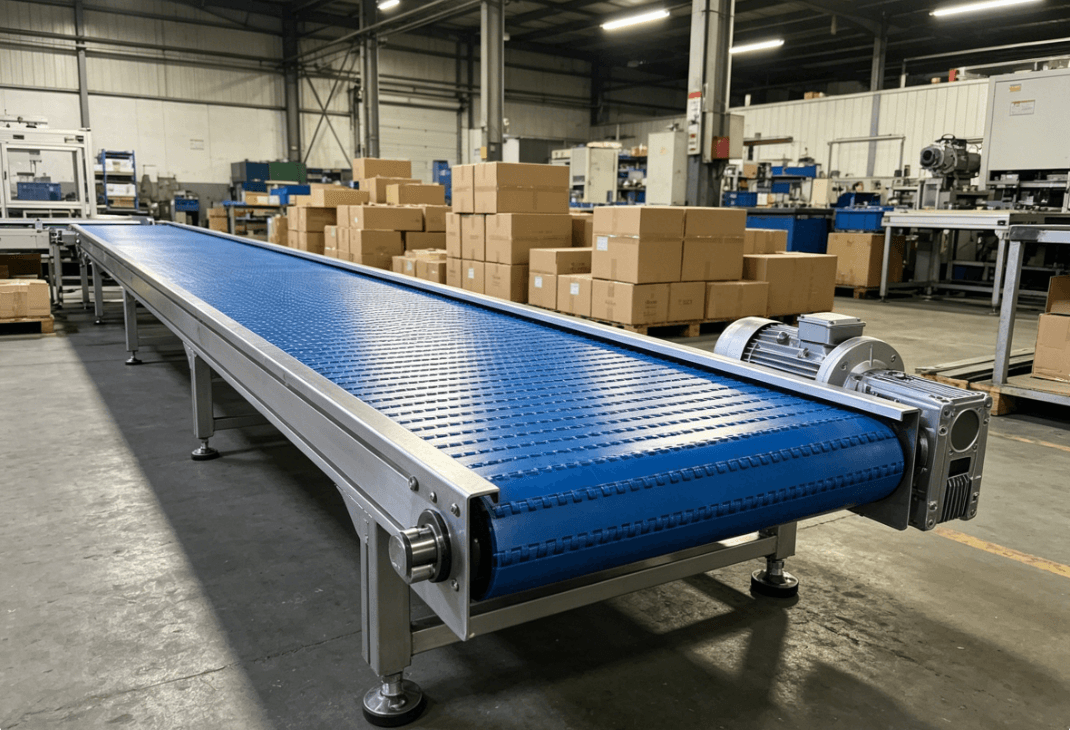
In many production environments, the layout itself hinders efficiency. Complex curves and unnecessary elevation changes create “choke points.” Leveraging modular straight conveyor sections allows for a streamlined flow.
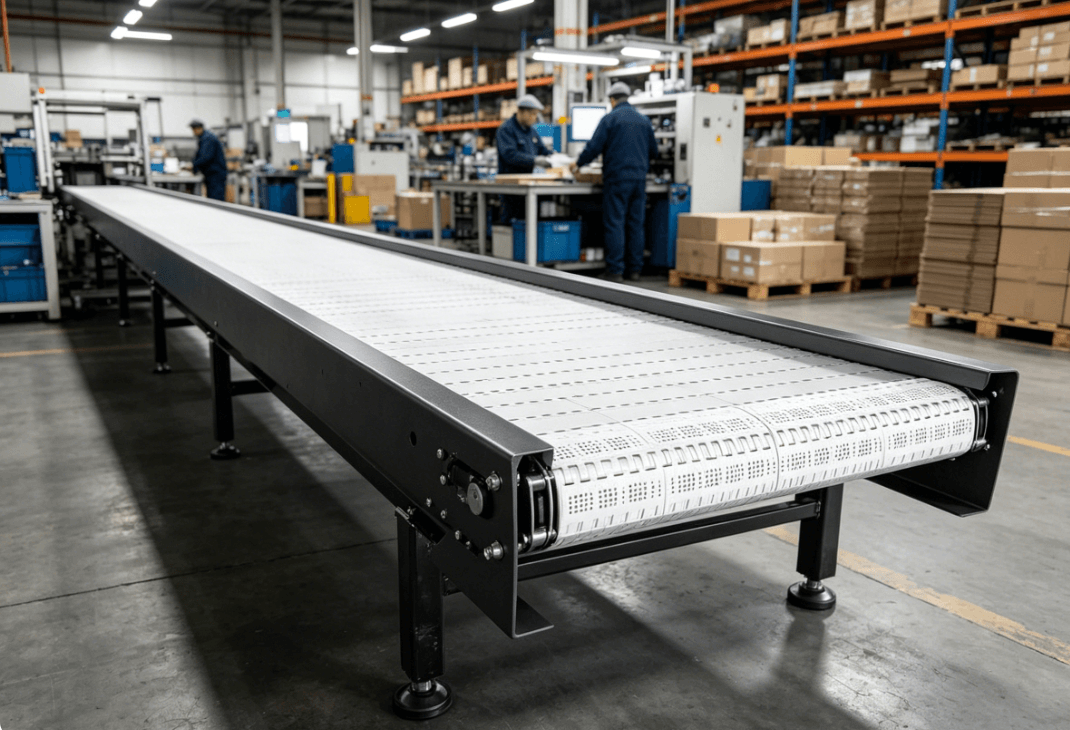
Straight sections are inherently more efficient than curves because they eliminate the lateral forces and differential speeds associated with turning. When designing a line, maximizing the use of high-quality aluminum profile straight conveyors ensures a rigid, vibration-free platform that maintains alignment over years of operation. These systems are often designed with T-slots, allowing for easy integration of sensors and side guides which help maintain product orientation, further reducing the need for manual intervention or “re-work.”
Environmental and Load Considerations
Efficiency is not a static number; it changes based on the environment.
Temperature: In cold storage, lubricants thicken, increasing drag. Low-temperature grease is required.
Static Build-up: In electronics assembly, static can cause products to “stick” to the belt or each other. Anti-static (ESD) belts are mandatory to maintain flow consistency.
Load Distribution: Ensure that products are centered. Off-center loading creates uneven wear on the drive pulleys and forces the motor to work harder to maintain belt speed.
Conclusion: The Long-Term ROI of Efficiency
To improve conveyor efficiency, technical teams must view the system as a holistic entity. By combining precision-engineered straight conveyor modules with advanced VFD control and a rigorous predictive maintenance schedule, manufacturers can see a marked decrease in energy consumption and a significant boost in total units processed per hour. Efficiency is not merely about speed; it is about the reliability and sustainability of the move.
FAQ: Improving Conveyor Efficiency
1. How do I know if my conveyor motor is oversized?
If your motor is consistently running at less than 50% of its rated load, it is likely oversized. This leads to a poor power factor. Using a power analyzer to check the amperage during full-load operation will help determine if a smaller, higher-efficiency motor would be more appropriate.
2. What is the most effective way to reduce belt slippage?
The first step is checking the “lagging” on the drive pulley. Pulley lagging (often rubber or ceramic) increases the coefficient of friction between the pulley and the belt. If slippage persists, evaluate the take-up unit to ensure the tension is within the manufacturer’s recommended Newtons per Millimeter (N/mm) specifications.
3. Does conveyor color or material affect sensor efficiency?
Yes. If you use optical sensors for counting or sorting, the belt’s reflectivity matters. A high-gloss belt can cause “false triggers” or “missed counts.” Selecting a matte-finish belt or a specific color (like dark blue or green) can improve the accuracy of your automation sensors, thereby reducing system errors.
4. How often should straight conveyors be leveled?
In a new installation, leveling should be checked after the first 100 hours of operation as the floor or supports may settle. Thereafter, an annual check is sufficient unless there are signs of tracking issues or unusual wear on one side of the belt.
Reference Sources
CEMA (Conveyor Equipment Manufacturers Association): Belt Conveyor Standards and Safety Practices.
IEEE Xplore: “Variable Frequency Drives in Industrial Applications: Efficiency and Performance Analysis.”
Technical Whitepaper: “The Impact of Friction Coefficients on Conveyor Power Consumption,” Journal of Manufacturing Systems.