How Conveyor Systems Reduce Labor Costs: Automation ROI Guide

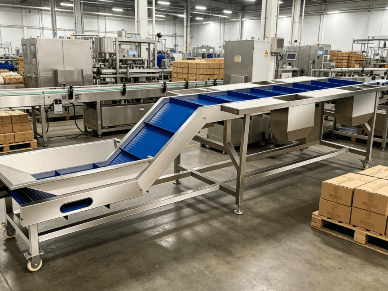
The rising cost of industrial labor and the persistent shortage of skilled floor operators have shifted conveyor systems from “convenient equipment” to “critical financial infrastructure.” In modern manufacturing and logistics, the primary goal of material handling is no longer just moving a product from Point A to Point B; it is about the radical elimination of non-value-added movement.
When engineers and facility managers evaluate conveyor automation benefits, the conversation typically centers on throughput. However, the most significant impact on the bottom line is often the drastic reduction in man-hours required to maintain that throughput.
How Conveyor Automation Benefits Direct Labor Reduction
The most immediate impact of a conveyor system is the elimination of “travel time.” In a manual facility, a significant percentage of an operator’s shift is spent walking, fetching, or transporting materials. This is classified in Lean Manufacturing as “Waste of Motion.”
1. Eliminating Non-Value-Added Manual Transport
Manual material handling is one of the highest costs in a warehouse or production line. By implementing a continuous flow system, such as a straight conveyor line, a facility can relocate workers from transport tasks to high-value assembly or quality control stations.
- Continuous Flow vs. Batch Processing: Manual transport often relies on forklifts or carts, leading to “stop-and-go” production. Automation ensures a constant “Takt time,” allowing the system to dictate the pace rather than human variability.
- Reduced Interaction Points: Every time a human touches a product to move it, the risk of damage and the cost of labor increase. Conveyors reduce these “touches” to the absolute minimum.
2. Enhancing Throughput without Increasing Headcount
Scalability in a manual environment usually requires hiring more personnel. In an automated environment, increasing throughput often only requires adjusting the Variable Frequency Drive (VFD) settings on the conveyor motors.
Automation allows a single operator to oversee a multi-stage sorting or packaging process that would otherwise require four to five manual handlers. This shift from “doing” to “monitoring” is the hallmark of a high-efficiency plant.
Comparative Analysis: Manual Handling vs. Automated Conveyor Systems
| Feature | Manual Handling (Carts/Forklifts) | Automated Conveyor Systems |
| Labor Requirement | High (1 person per load) | Low (1 person per system) |
| Consistency | Variable (Fatigue dependent) | Constant (24/7 capability) |
| Safety Risk | High (Strain/Impact) | Low (Guarded/Ergonomic) |
| Operational Speed | Slow / Intermittent | Fast / Continuous |
| Error Rate | Prone to human misplacement | Precision tracking/sorting |
Technical Mechanisms for Cost Control
From a manufacturing engineering perspective, the reduction in labor costs is achieved through specific technical configurations.
Ergonomic Design and Injury Prevention
Workplace injuries, specifically Musculoskeletal Disorders (MSDs), represent a massive “hidden” labor cost. Lifting, twisting, and repetitive carrying lead to high turnover and expensive workers’ compensation claims.
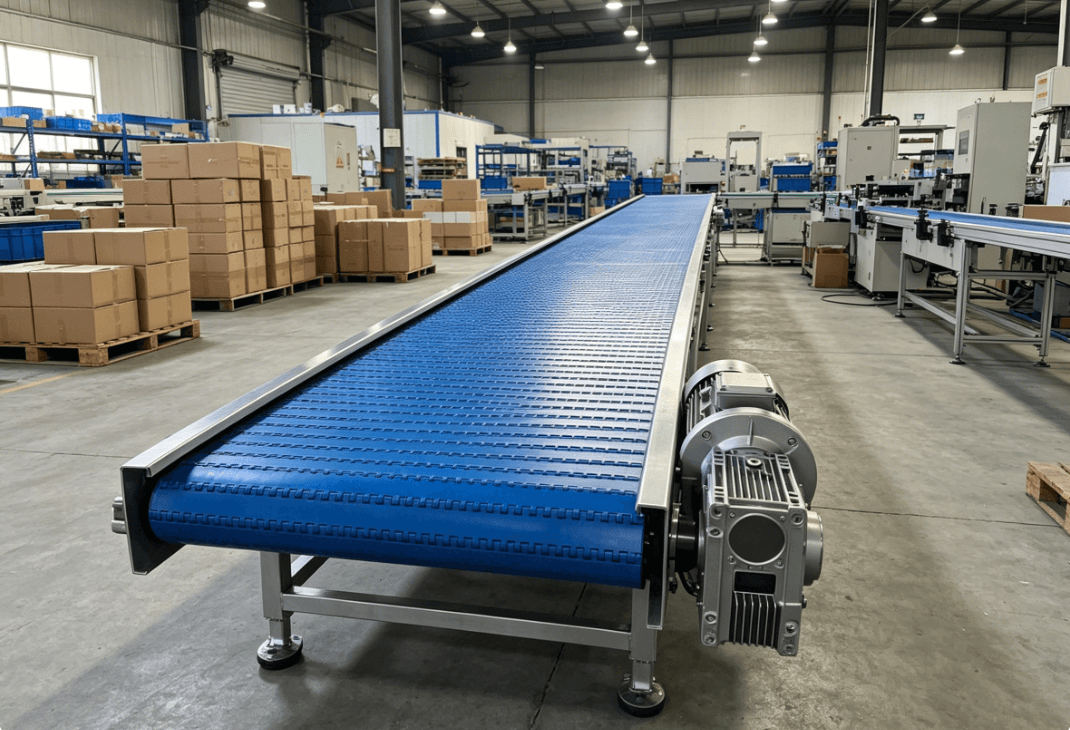
Modern systems, like straight belt conveyors, are designed to interface with workers at “golden zone” heights (between the waist and chest). This reduces physical strain, lowers fatigue-related errors, and significantly improves worker retention—a critical factor in reducing the costs of hiring and training new staff.
Precision Integration with Assembly Lines
Advanced conveyor systems utilize sensors and PLCs (Programmable Logic Controllers) to manage “buffering” and “accumulation.”
- Zero-Pressure Accumulation: This prevents products from touching on the line, reducing the need for manual oversight to prevent jams or product damage.
- Modular Scalability: Using aluminum profile straight conveyors allows for quick reconfiguration of the floor plan. If a production process changes, the hardware can be adjusted without a total overhaul, saving hundreds of hours in millwright labor.
Application Logic: Where Labor Savings Are Highest
Not all conveyor applications yield the same labor ROI. The highest returns are typically found in the following scenarios:
- Repetitive Sorting: Replacing manual “pick and sort” stations with high-speed diverted conveyors.
- Multi-Level Transport: Using vertical or inclined conveyors to move goods between floors, eliminating the need for freight elevator operators.
- End-of-Line Packaging: Automatically feeding boxes into tapers and palletizers, removing the need for manual heavy lifting.
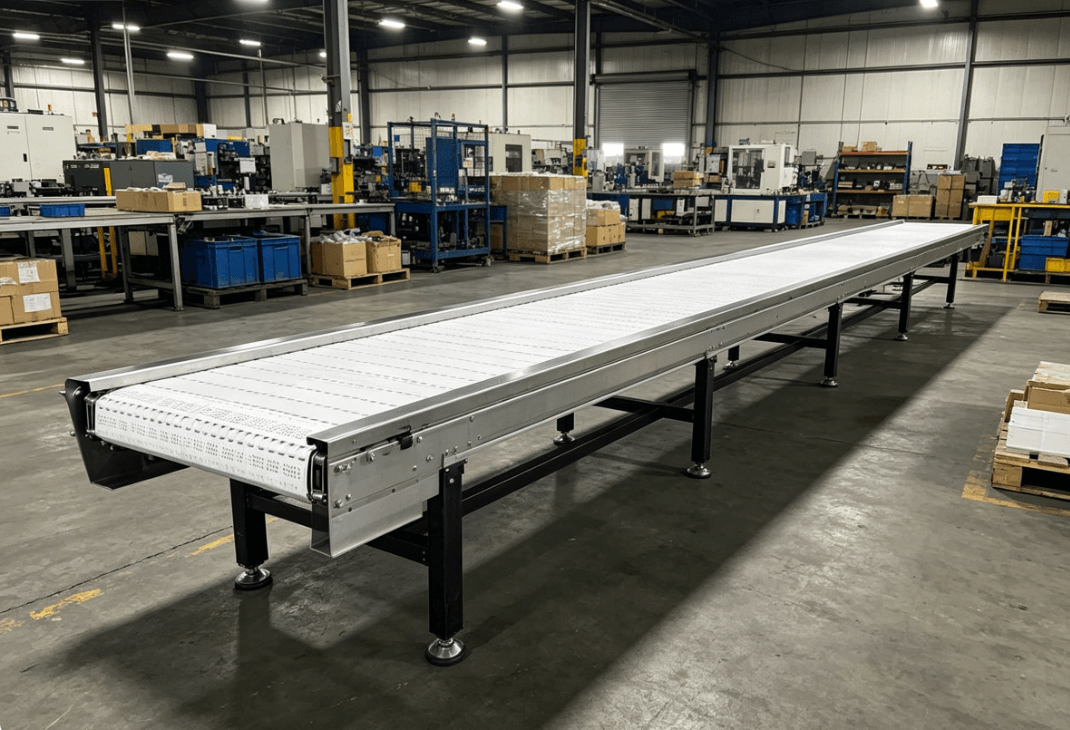
For instance, in a standard packaging workflow, a straight conveyor system built on an aluminum frame provides the stability required for high-speed labeling and weighing. By automating the transition between these two steps, a facility can eliminate the “transfer operator” role entirely.
The ROI Calculation: Beyond the Hourly Wage
When calculating the return on investment for conveyor automation, project managers must look beyond the simple “hourly wage vs. machine cost” equation. True labor cost reduction includes:
- Fringe Benefits: Healthcare, insurance, and payroll taxes saved per displaced manual role.
- Training Costs: The expense of onboarding new employees in high-turnover manual roles.
- Quality Assurance: Automated systems don’t get tired; they don’t drop products or misplace items, which reduces the labor required for “re-work” and waste management.
In the long term, a modular conveyor system typically pays for itself within 12 to 24 months solely through the reduction of auxiliary labor expenses.
FAQ
How does a conveyor system specifically reduce “indirect” labor costs?
Indirect labor refers to the staff needed to support production, such as supervisors, maintenance for forklifts, and safety officers. By streamlining the workflow with conveyors, you reduce the complexity of the floor, requiring fewer supervisors to manage movement and fewer mechanics to maintain mobile equipment.
Can straight conveyors be integrated into existing manual lines?
Yes. Most modern straight conveyors use modular aluminum profiles, making them easy to bolt into existing manual workstations. This allows for a “hybrid” automation approach where you automate the most strenuous transport tasks first while keeping human intelligence at critical assembly points.
What is the impact of conveyor speed on labor efficiency?
The goal is not always “faster.” The goal is “synchronized.” By matching the conveyor speed to the precise “Takt time” of your most skilled operators, you eliminate “wait time” (where workers stand idle) and “over-processing” (where workers rush and make mistakes).
Do conveyors require highly skilled (expensive) maintenance labor?
While conveyors require maintenance, modern modular systems are designed for “low-touch” reliability. Features like sealed-for-life bearings and quick-change belt tracking systems mean that standard floor technicians can maintain them, rather than requiring specialized external engineers.
Reference Sources
- MHI (Material Handling Institute): Annual Industry Reports on Automation Trends and Labor Productivity.
- ISO 12100: Safety of machinery — General principles for design — Risk assessment and risk reduction.
- Journal of Manufacturing Systems: “Impact of Automated Material Handling on Plant Floor Efficiency.”