Top Modern Conveyor Technology for Efficient Factory Automation

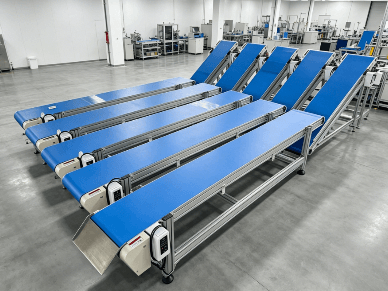
The landscape of industrial automation has shifted from simple mechanical transport to sophisticated, data-driven material handling. Modern conveyor technology is no longer just a “belt on a frame”; it is the central nervous system of the smart factory. For engineers and plant managers, choosing the right transport architecture determines the scalability of the entire production line.
The Architecture of Modern Conveyor Systems
At its core, contemporary conveyor design focuses on three pillars: modularity, energy efficiency, and intelligence. Unlike the rigid, monolithic systems of the past, modern solutions are designed for rapid reconfiguration. This flexibility is essential in an era where product lifecycles are shorter and customization demands are higher.
Integrated sensors and PLC (Programmable Logic Controller) interfaces now allow conveyors to communicate with upstream and downstream equipment. This ensures that the flow of materials is synchronized with machine cycles, preventing “bottle-necking” or dry-running. By utilizing variable frequency drives (VFDs), facilities can now fine-tune belt speeds to match real-time demand, significantly reducing wear and energy consumption.
Key Classifications of Modern Conveyor Technology
Different manufacturing environments require specific transport logics. Understanding the mechanical advantages of each system is the first step in optimizing a facility layout.
Modular Plastic Belt Systems: These use interlocking plastic segments rather than a continuous fabric or rubber belt. They are highly resistant to impacts and can be repaired by replacing individual links rather than the entire belt, which drastically reduces maintenance downtime.
Motorized Drive Roller (MDR) Technology: In MDR systems, each zone is powered by an internal motor within the roller. This allows for “Run-on-Demand” functionality—sections only move when a package is detected, saving up to 50% in energy costs compared to traditional AC-driven systems.
Straight Conveyor Foundations: The straight conveyor remains the backbone of most industrial layouts. Modern iterations utilize high-tensile aluminum profiles or stainless steel frames, providing the structural integrity needed for high-speed linear transport while maintaining a compact footprint.
Technical Comparison: Selecting the Right Transport Logic
Choosing between technology types depends on load characteristics, speed requirements, and environmental factors.
| Technology Type | Best Use Case | Key Technical Advantage | Maintenance Level |
| Traditional Belt | Bulk materials / Lightweight parts | Constant grip and smooth surface | Moderate |
| Modular Belt | Heavy loads / Food processing | High durability and easy link replacement | Low |
| MDR Roller | Warehousing / Small parcels | Zero-pressure accumulation (ZPA) | Medium |
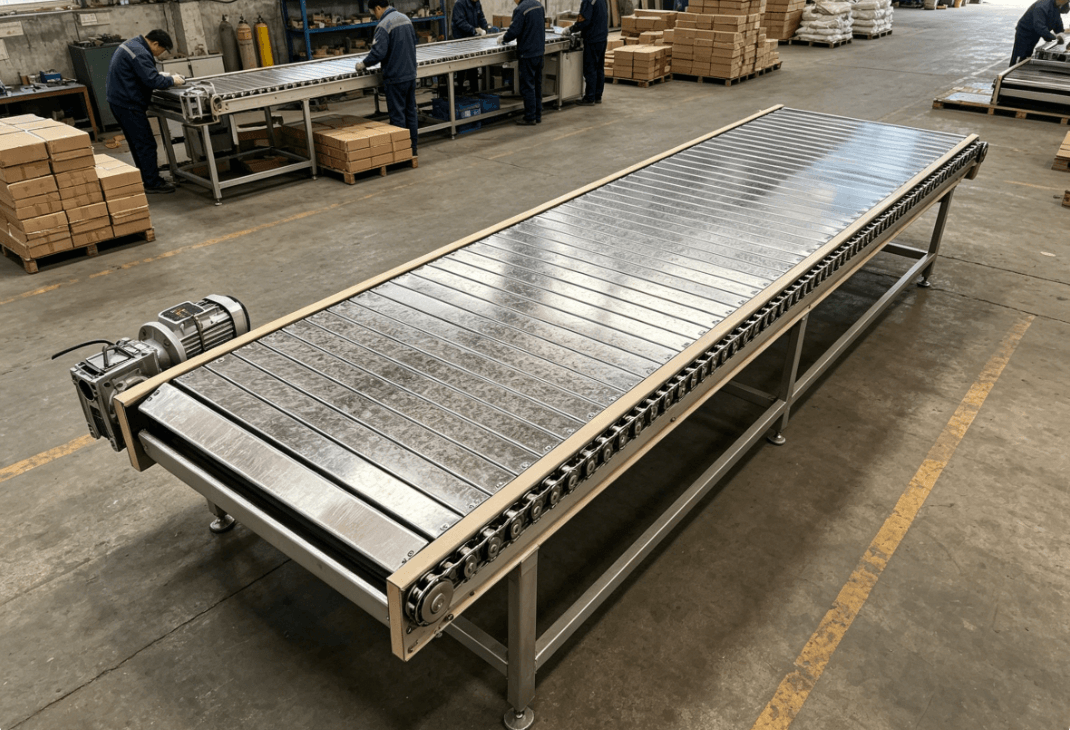
| Straight Chain | Automotive / Heavy assembly | High torque and heat resistance | High |
IoT Integration and Predictive Maintenance
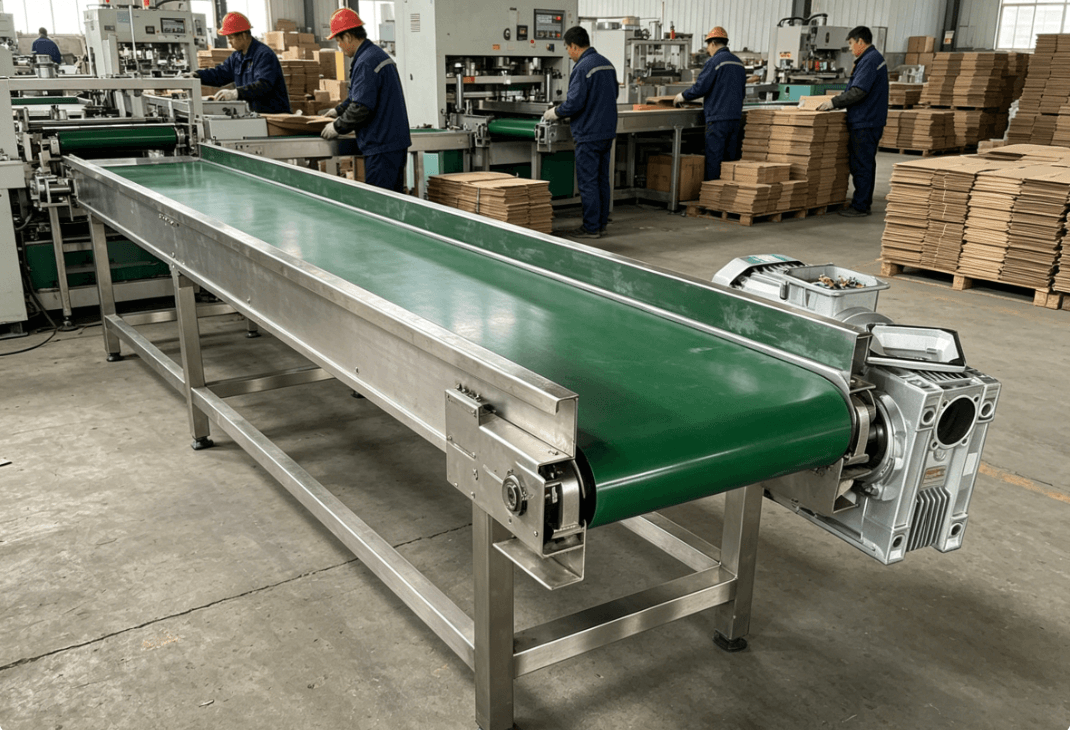
One of the most significant leaps in modern conveyor technology is the move toward predictive rather than reactive maintenance. Modern systems are increasingly equipped with vibration sensors and thermal monitors on motor gearboxes.
These sensors feed data into Edge Computing devices that analyze patterns. For example, a slight increase in the heat signature of a drive motor often precedes a bearing failure. By identifying these anomalies early, factory consultants can schedule repairs during planned shutdowns, avoiding the catastrophic costs of an unscheduled line stoppage.
Furthermore, the integration of IO-Link technology allows for decentralized control. Instead of running miles of cabling back to a central cabinet, sensors and actuators are connected to local hubs, simplifying the troubleshooting process for on-site technicians.
Material Handling Challenges in High-Speed Production
As throughput speeds increase, the physics of material handling becomes more complex. Modern conveyors must address “product fly-off” and centrifugal forces during high-speed transfers.
In precision electronics or pharmaceutical packaging, the stability of the product is paramount. Modern straight conveyors often incorporate vacuum beds or high-friction modular tops to ensure that lightweight components do not shift during rapid acceleration or deceleration. Additionally, the use of anti-static (ESD) belt materials is a standard requirement in modern electronics assembly to prevent electrostatic discharge from damaging sensitive microchips.
Practical Engineering Considerations for Layout Design
When designing a modern floor plan, the “Straight Line” efficiency rule usually applies. While curves and inclines are often necessary, minimizing direction changes reduces the mechanical stress on the drive system.
Pitch and Tensioning: Modern designs often feature “tool-less” tensioning mechanisms, allowing operators to make adjustments without specialized equipment.
Surface Compatibility: The coefficient of friction between the belt material and the product must be calculated based on the maximum incline angle.
Frame Rigidity: For high-load applications, heavy-duty aluminum extrusions provide a balance between weight and torsional rigidity, preventing belt mistracking over long distances.
In large-scale manufacturing, the integration of these technologies allows for a “lights-out” manufacturing environment where the conveyor system autonomously manages the routing of parts through various assembly stages without human intervention.
FAQ
What is the main advantage of modular belt conveyors over traditional rubber belts?
Modular belts are made of interlocking plastic pieces, making them more durable and easier to repair. If a section is damaged, you only replace the specific links rather than the entire belt. They also handle “tracking” better because they are positively driven by sprockets rather than friction.
How does modern conveyor technology improve energy efficiency?
Most modern systems use “Run-on-Demand” logic, particularly in MDR (Motorized Drive Roller) systems. Instead of the entire line running constantly, individual zones only activate when a sensor detects a product, significantly reducing electricity consumption and mechanical wear.
Can straight conveyors be integrated into existing automated lines?
Yes. Modern straight conveyors are designed with modularity in mind. They typically feature standard T-slot aluminum frames or mounting points that allow for the easy addition of sensors, side guides, and diverted arms to sync with existing PLC-controlled environments.
What role does Industry 4.0 play in conveyor systems?
Industry 4.0 introduces smart sensors and IoT connectivity. This allows for real-time monitoring of belt speed, motor health, and throughput data, enabling predictive maintenance and tighter integration with Enterprise Resource Planning (ERP) systems.
Reference Sources
MHI (Material Handling Institute): Technical standards for automated material handling.
ISO 2110: Standardization of conveyor belt characteristics and testing.
OSHA 1910.212: General requirements for all machines (including conveyor safety).
IEEE Xplore: Research on IoT integration in industrial conveyor systems.