Stainless Steel Mesh Belt Conveyor for Food Processing

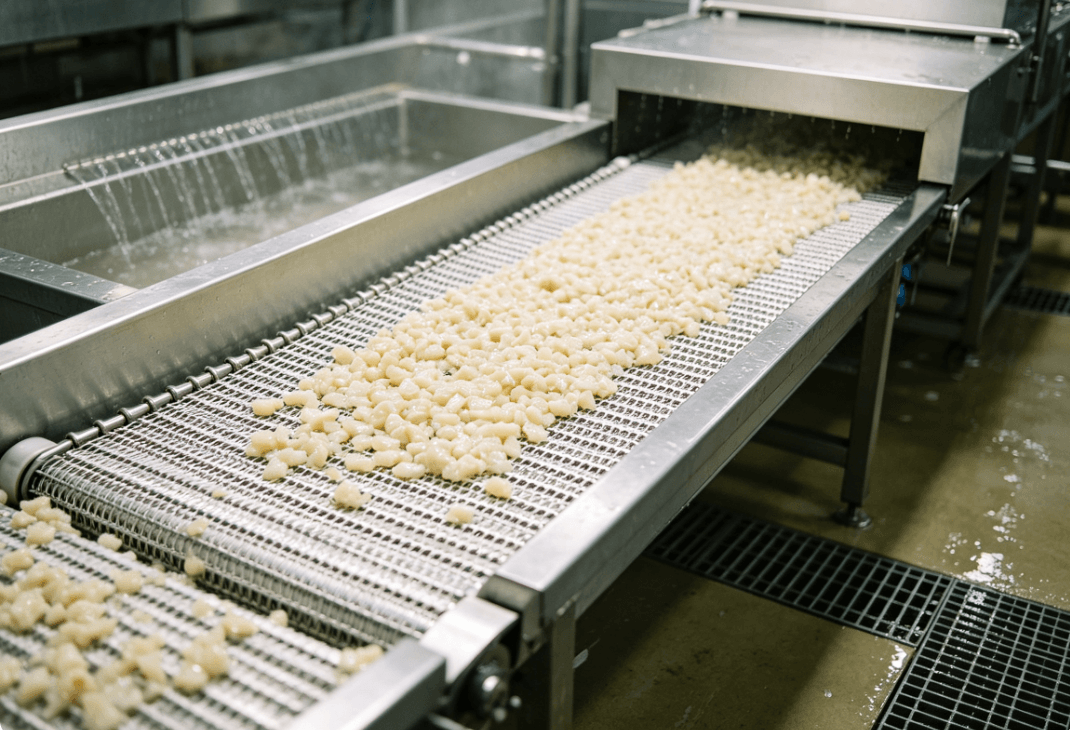
Choosing a stainless steel mesh belt conveyor for food processing is not simply a question of selecting a belt material. The conveyor must match the product, thermal profile, cleaning method, drainage requirement, line layout, and documentation expected during procurement. For commercial buyers, the most reliable approach is to define the process first, compare the conveyor configuration against that process, and request confirmation of every project-specific parameter before placing an order.
Why stainless steel mesh belts suit food-processing applications
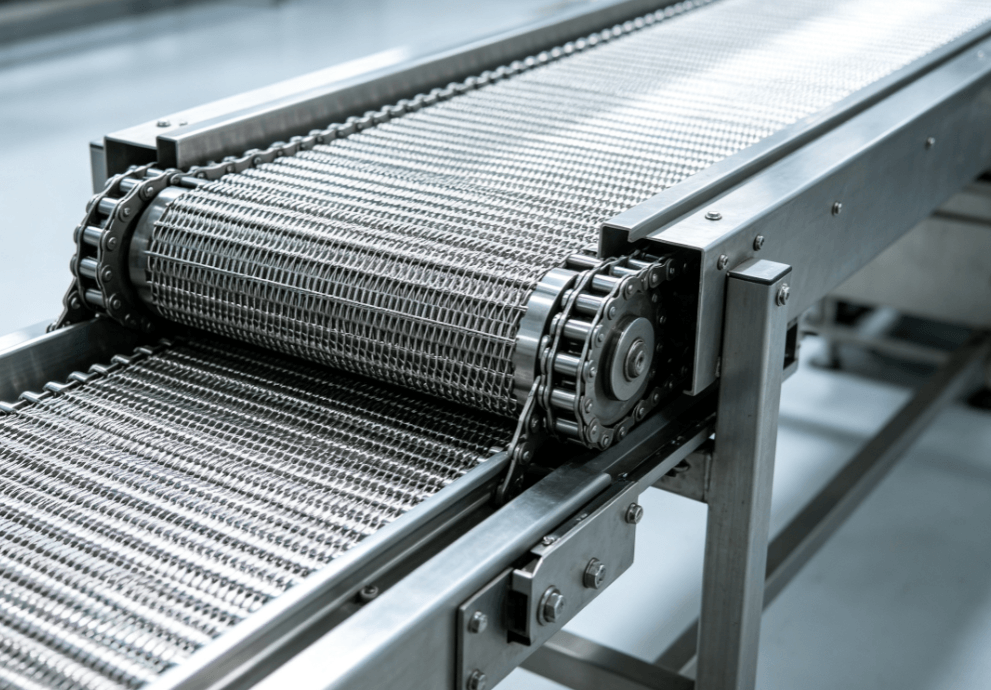
Open metal mesh construction can support airflow and drainage in operations such as washing, drying, freezing, and heat treatment. Leyu Conveyor’s product page describes its metal mesh belts as woven from metal wire and presents adjustable mesh sizes, air permeability, and applications involving drying, cleaning, freezing, and heat treatment. These are supplier-published product claims and should be matched to the final quotation rather than assumed for every belt configuration.
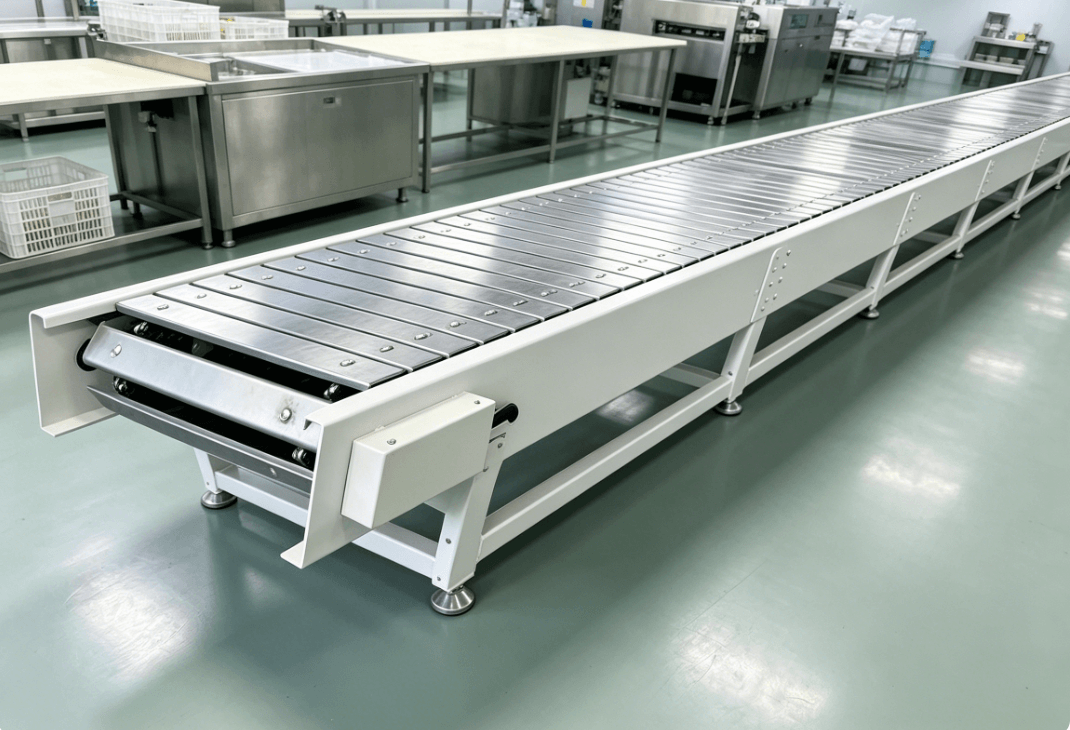
Hygiene is a system-level issue. The European Hygienic Engineering & Design Group’s GL 43 guidance addresses belt conveyors used where wet cleaning is mandatory and notes that the design must consider direct food contact, indirect contamination risks, actual operating conditions, product types, and contamination risks [1]. The U.S. Food and Drug Administration likewise frames sanitation around the cleaning—and where appropriate, sanitizing—of food-contact surfaces [2]. Therefore, a stainless steel belt does not by itself prove that a complete conveyor is sanitary or suitable for a particular food line.
Key design factors for food processors
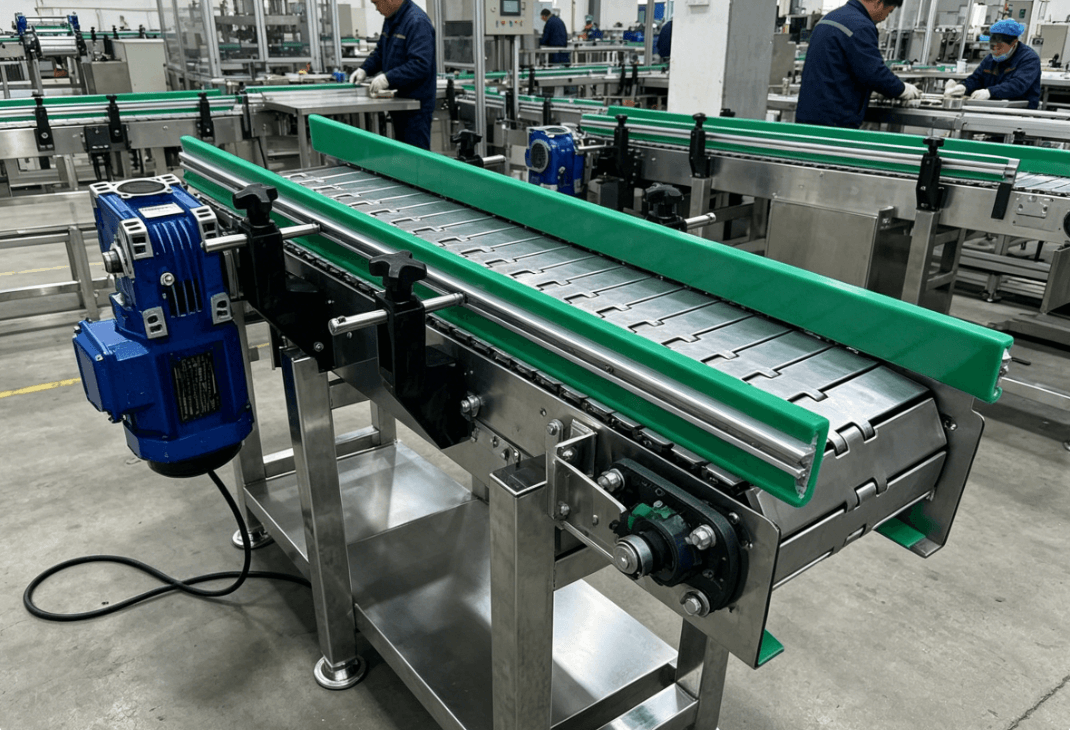
The first factor is the product. Small, unstable, sticky, wet, frozen, or fragile products may require different mesh openings and support conditions. A dense weave can help retain smaller items, while a more open structure may improve drainage and air circulation. The belt surface, transfer points, side guides, sprockets, supports, and guarding should be reviewed together because contamination and cleanability risks can occur outside the belt itself.
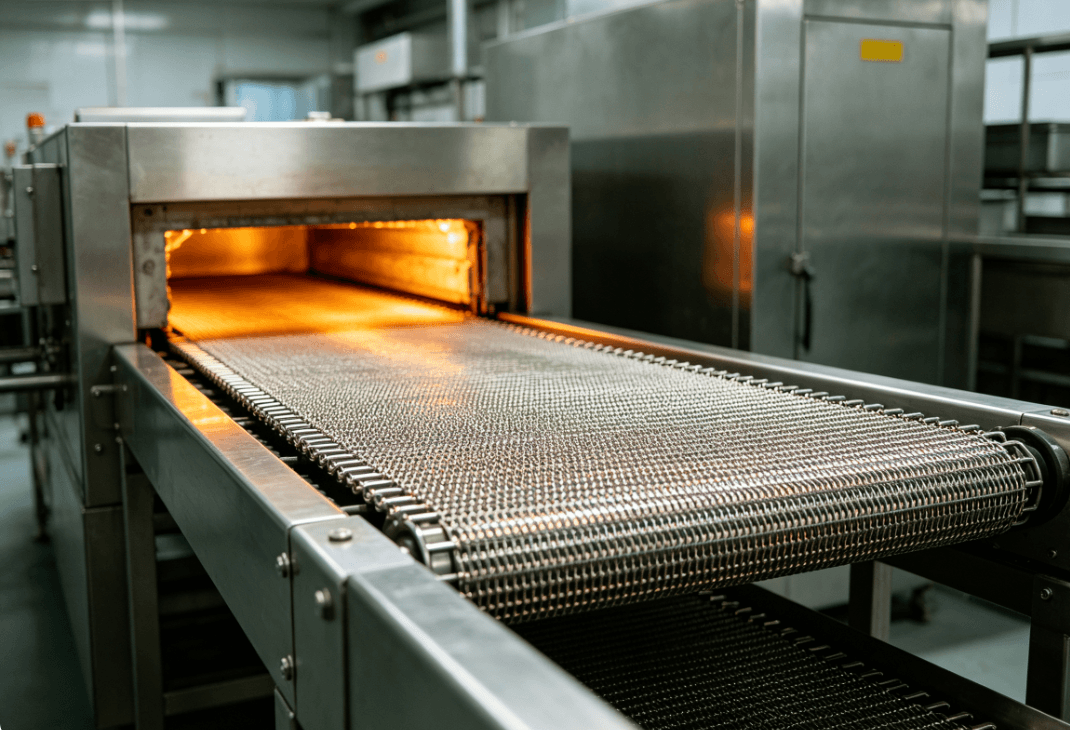
The second factor is the process environment. Baking, blanching, washing, freezing, coating, and drying impose different combinations of temperature, moisture, chemical exposure, and cleaning frequency. Leyu’s product page lists 304, 316/316L, 310S/314 stainless steels and 1Cr13 heat-resistant steel as material examples, with different claimed temperature capabilities. These figures are not a recommendation for a specific food application; the required material grade, allowable operating temperature, weld quality, and chemical compatibility must be confirmed in the RFQ.
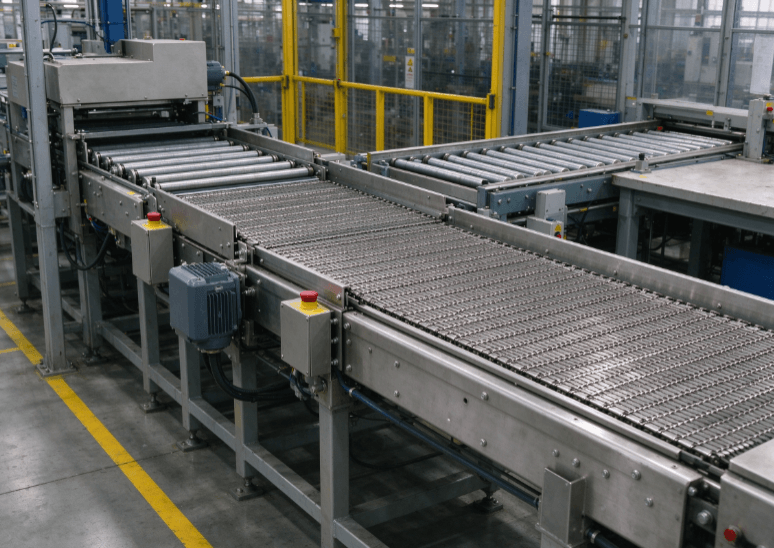
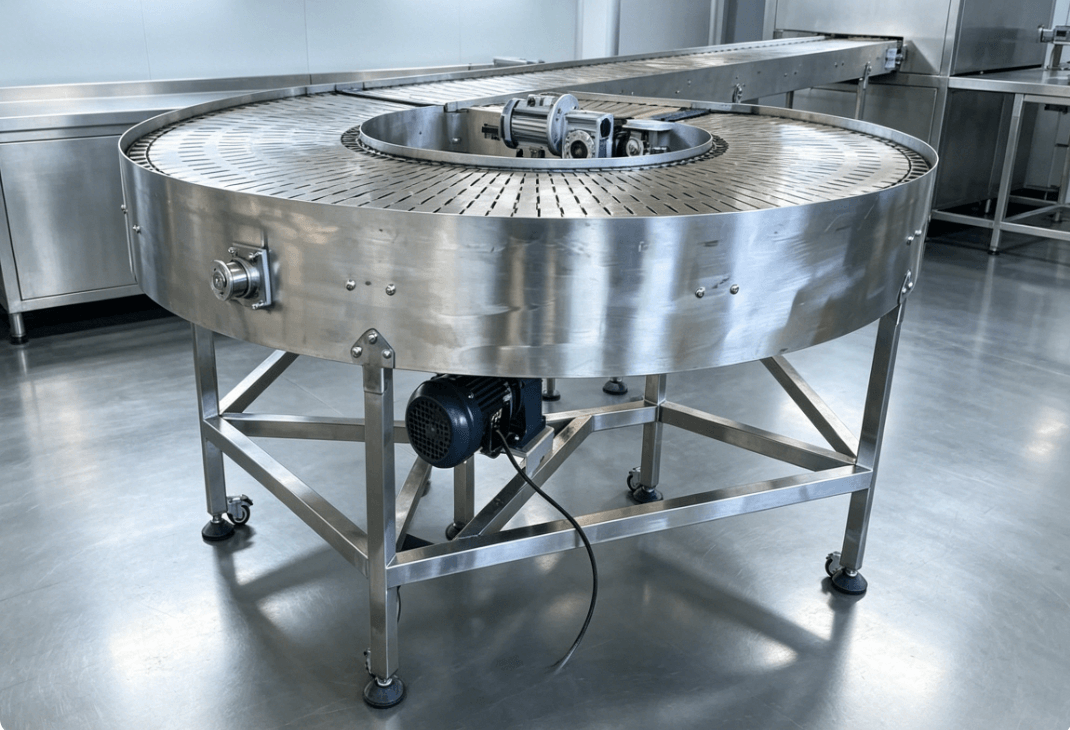
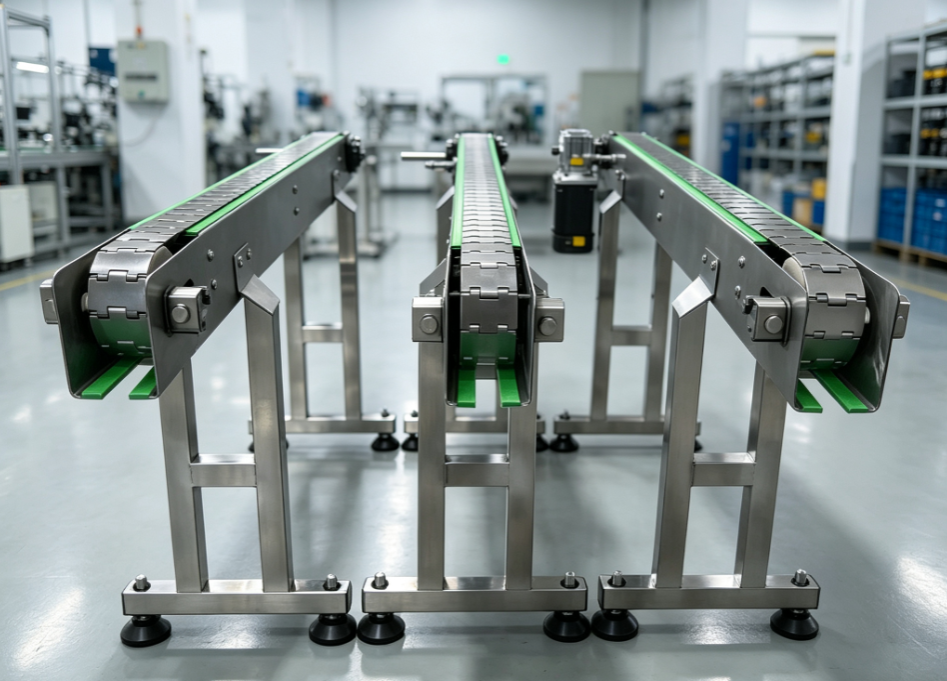
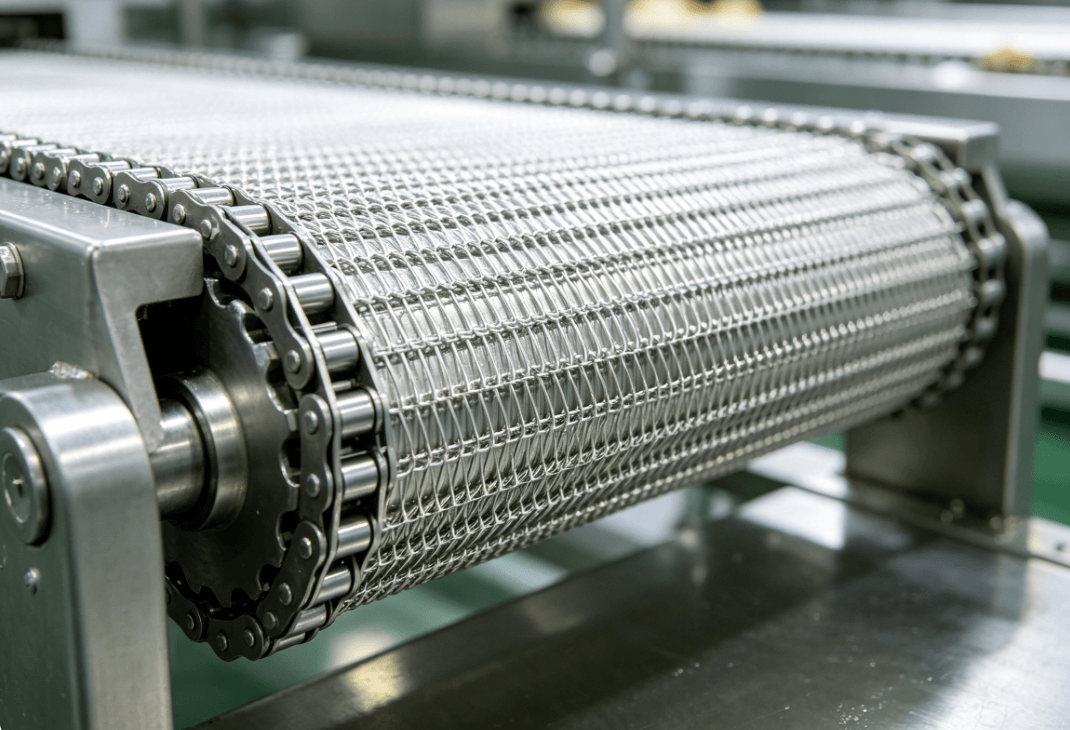
The third factor is the conveyor layout. Balanced, herringbone, chain-link or chain-plate, Great Wall, and U-shaped or spiral structures are described on the supplier page as different design families. A straight conveyor, a turning section, and a spiral tower may require different drive and support arrangements. Buyers should provide the complete line drawing, elevation changes, transfer locations, product orientation, and available maintenance space before asking for a final configuration.
Supplier information and RFQ verification
| Decision area | Information published on the product page | What the buyer should confirm |
|---|---|---|
| Construction | Metal-wire woven mesh belts; stainless steel is listed among material examples. | Exact material grade, wire specification, edge treatment, weld details, and food-contact suitability. |
| Process uses | Drying, washing, cleaning, freezing, drainage, ventilation, and heat treatment are described. | Actual product, process stage, moisture level, cleaning chemicals, and operating temperature. |
| Mesh and geometry | Adjustable mesh sizes; example pitch, wire diameter, width, and mesh values are listed. | Final pitch, opening, wire diameter, belt width, length, allowable load, and tracking method. |
| Temperature | The page states a broad claimed range of –40°C to 1,150°C and gives material-specific examples. | Continuous and peak temperature, dwell time, thermal cycling, and the rating of the complete conveyor. |
| Drive and layout | Chain-linked, curved, and spiral-related structures are described. | Drive type, sprocket arrangement, tensioning, side guides, transfer design, guarding, and maintenance access. |
The product page gives example values of 25.4 or 38.1 mm pitch, 1.0–4.0 mm wire diameter, 150–5,500 mm typical width, a stated maximum width of 8,500 mm, and a typical speed range of 0.15–0.50 m/min. Because these figures are presented as general or example parameters rather than a signed project specification, treat them as RFQ confirmation required. Do not compare suppliers using headline numbers alone; compare the complete operating envelope and the evidence supplied for the proposed configuration.
How to prepare a practical RFQ
A useful RFQ should include the product name, dimensions, weight range, throughput target, product temperature, ambient temperature, washdown method, cleaning chemicals, required drainage or airflow, conveyor elevation, line speed, duty cycle, and available footprint. It should also state whether the belt is in direct food contact and identify any regulatory or customer documentation required by the end user.
Ask the supplier to return a dimensional drawing, belt construction description, material certificate options, drive and support details, motor information, electrical requirements, maintenance instructions, cleaning recommendations, inspection points, spare-parts list, and quotation exclusions. Certifications, validation documents, test reports, delivery time, warranty, production capacity, and customer references should be requested explicitly. None of these items should be inferred from a product title or from the existence of a stainless steel belt.
For related line planning, buyers can review Leyu’s metal mesh belt product details and the metal mesh belt product category. These links provide supplier-side context; they do not replace application engineering or a project-specific quotation.
Commercial comparison: what to evaluate beyond purchase price
| Evaluation criterion | Why it matters | Evidence to request |
|---|---|---|
| Cleanability and access | Cleaning time, inspection effort, and contamination risk affect operating cost. | Sanitation procedure, access drawing, removable parts, and cleaning limitations. |
| Thermal and chemical compatibility | Incorrect material or process assumptions can shorten belt life or create food-safety concerns. | Material declaration, temperature basis, chemical compatibility statement, and exclusions. |
| Product retention and transfer | Mesh opening and transfer geometry influence product loss and damage. | Mesh drawing, transfer detail, sample test plan, and product trial requirements. |
| Maintenance and spares | Downtime may exceed the initial price difference between two conveyors. | Wear parts list, recommended spares, service scope, and adjustment procedure. |
| Total integration scope | A belt may be quoted without controls, guarding, supports, or installation. | Boundary-of-supply list, layout, controls interface, installation terms, and exclusions. |
Frequently asked questions
Is stainless steel mesh automatically food grade?
No. Stainless steel is a material choice, not a complete hygiene qualification. The belt grade, surface condition, joints, supports, drive components, cleaning method, and intended food contact must be assessed together. Request the relevant material and application documentation from the manufacturer.
Which mesh opening should a food processor choose?
Choose the opening from the product size, retention requirement, drainage target, airflow need, transfer geometry, and cleaning method. A fine mesh is not universally better. The final opening and wire diameter should be confirmed through the product and process data in the RFQ.
Can one belt handle washing, freezing, and baking?
Not necessarily. Those processes can impose very different thermal, moisture, chemical, and sanitation conditions. A supplier may offer several material and weave options, but the exact belt and conveyor rating must be confirmed for the intended duty cycle.
What documents should be requested before purchase?
Request a drawing, material specification, operating envelope, cleaning guidance, drive and electrical details, scope-of-supply list, maintenance information, and any certificates or tests required by your site or customer. Treat delivery, warranty, capacity, and references as confirmation items unless documented in the quotation.
Conclusion: use the RFQ to control technical risk
A stainless steel mesh belt conveyor can be a practical option where food products require ventilation, drainage, drying, washing, freezing, or controlled thermal processing. The commercial decision should be based on process fit, hygienic design, maintainability, integration scope, and documented supplier responses—not on stainless steel construction alone. Share the product, process, layout, and sanitation requirements with Leyu Conveyor to request a configuration review. The exact belt material, dimensions, performance limits, certifications, delivery terms, and other project-specific items remain to be confirmed with the manufacturer.