Common Conveyor Belt Problems: A Technical Guide

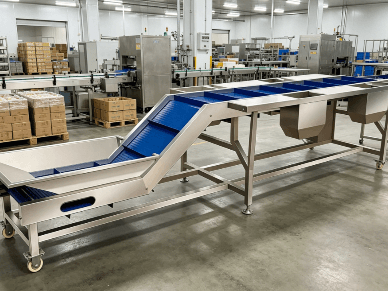
In high-output manufacturing and logistics environments, the conveyor system is the central nervous system of the facility. When a belt fails, the entire production flow halts, leading to cascading costs and missed deadlines. Engineers and maintenance managers often view conveyor issues not just as mechanical failures, but as symptoms of underlying system imbalances.
Understanding the root causes of conveyor belt problems is the first step toward moving from reactive “firefighting” to a proactive, predictive maintenance strategy. This guide analyzes the primary technical failures found in industrial belt systems and provides engineering-backed solutions to restore operational efficiency.
Analyzing Lateral Instability and Belt Mistracking
Mistracking, or the belt “wandering” to one side of the frame, is the most frequently reported issue in material handling. It is rarely a fault of the belt itself, but rather a reflection of the system’s alignment or loading characteristics.
Primary Causes of Mistracking
- Misaligned Frames: If the conveyor structure is not perfectly square and level, the belt will naturally drift toward the lowest or least-tensioned point.
- Off-Center Loading: When materials drop onto the belt off-center, the lateral force pushes the belt toward the opposite side.
- Build-up on Components: Debris or material accumulation on return idlers and pulleys changes the effective diameter of the component, forcing the belt out of its intended path.
To resolve mistracking, technicians should first ensure the conveyor frame is leveled using precision laser alignment tools. Installing “training idlers”—which pivot to nudge the belt back to center—can provide a dynamic fix for fluctuating loads. For systems like Leyu’s straight conveyors, ensuring that the high-precision rollers are free of debris is critical for maintaining long-term tracking.
Solving Belt Slippage through Friction Dynamics
Slippage occurs when the drive pulley no longer has enough grip to move the belt. This often manifests during startup or under peak load conditions, leading to heat buildup that can melt PVC or PU belt covers.
Technical Drivers of Slippage
- Insufficient Tension: Over time, belts stretch (especially fabric-reinforced types). If the take-up unit is not adjusted, the tension drops below the threshold required for friction.
- Worn Pulley Lagging: The rubber coating on drive pulleys (lagging) creates the necessary coefficient of friction. Once this wears smooth, grip is lost.
- Environmental Contamination: Oil, water, or dust acting as a lubricant between the belt and the pulley.
Increasing the “wrap angle” (the amount of pulley surface the belt touches) via a snub pulley can significantly increase grip without over-tensioning the belt. If the environment is prone to moisture, using grooved lagging allows fluids to escape, maintaining the friction interface.
Managing Material Carryback and Spillage Issues
Carryback refers to small amounts of material that stick to the belt past the discharge point, eventually falling off under the return run. This leads to “housekeeping” nightmares and premature component failure.
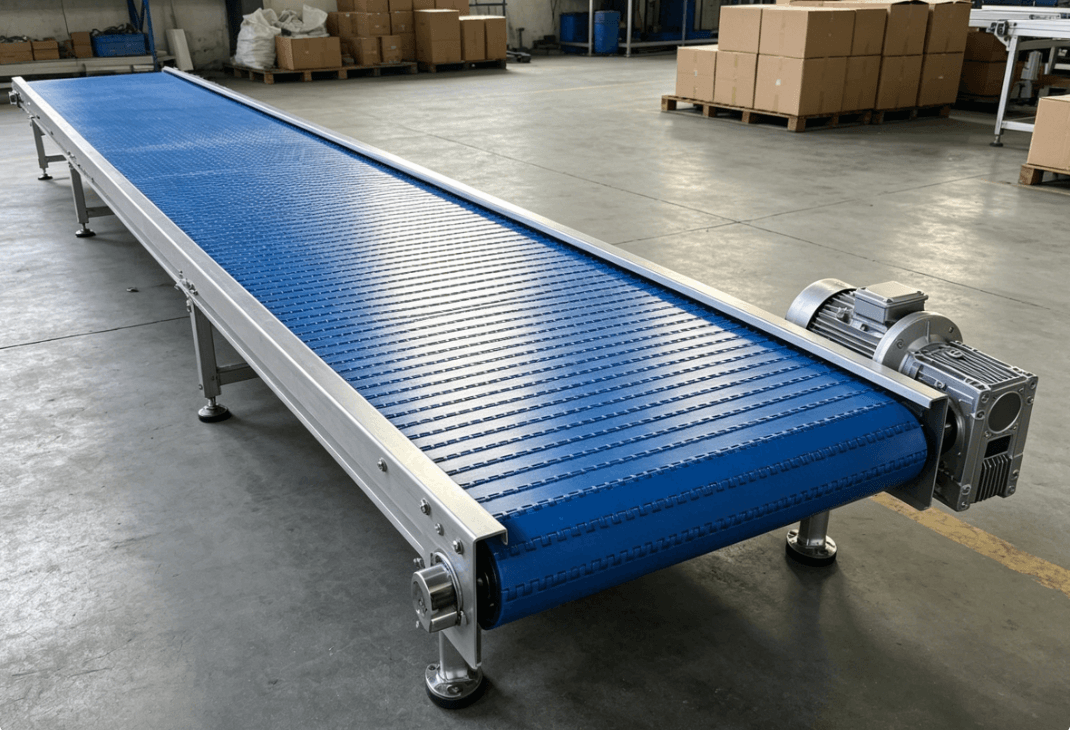
The Impact of Carryback
- Idler Seizure: Fine dust enters bearing housings, causing rollers to stop turning.
- Safety Hazards: Accumulations on floors create trip and slip risks.
- Belt Wear: Abrasive materials trapped between the belt and the return rollers act like sandpaper, thinning the belt carcass.
The most effective solution is a multi-stage cleaning system. A primary “doctor blade” or scraper at the head pulley removes the bulk of the material, while secondary brush cleaners or spray systems remove fines. Choosing a belt material with high release properties, such as specialized PU (Polyurethane) used in food-grade straight conveyors, can also reduce initial adhesion.
Component Analysis: Problem vs. Solution Matrix
The following table summarizes common mechanical failures and the standard engineering response.
| Problem | Likely Technical Cause | Corrective Action |
| Edge Fraying | Continuous mistracking against the frame | Re-align frame; install limit switches |
| Seized Rollers | Bearing contamination or lubrication failure | Replace with sealed-for-life precision bearings |
| Belt Surging | Drive motor harmonic issues or extreme friction | Check VFD settings; lubricate slider beds |
| Splice Failure | Improper vulcanization or mechanical clip wear | Re-splice using manufacturer-specific kits |
| Top Cover Cracking | Chemical incompatibility or tight bend radii | Audit material MSDS; increase pulley diameter |
Addressing Belt Stretch and Elongation
All belts experience “initial stretch” during the first few weeks of operation. However, “permanent stretch” occurs when the belt is taxed beyond its rated tensile strength. In industrial automation, precise positioning is often required. If a belt continues to elongate, it suggests the load exceeds the Newton-per-millimeter (N/mm) rating of the belt. For high-load applications, engineers should specify belts with aramid or steel cord reinforcement rather than standard polyester.
Selecting High-Quality Hardware for System Reliability
Many conveyor belt problems are “built-in” by using low-quality structural components. A straight conveyor system must be rigid enough to resist twisting under load. When evaluating new systems, look for:
- Modular Aluminum or Stainless Frames: These offer high strength-to-weight ratios and resist the warping that leads to tracking issues.
- Crown Pulleys: Pulleys that are slightly thicker in the middle help naturally center the belt through physics (the belt seeks the highest tension point).
- Easy-Access Take-ups: Maintenance is more likely to be performed if the tensioning bolts are easily accessible and protected from debris.
For specialized assembly lines, Leyu’s range of straight conveyors incorporates these design principles to minimize the common failure points associated with light-to-medium duty transport.
Summary
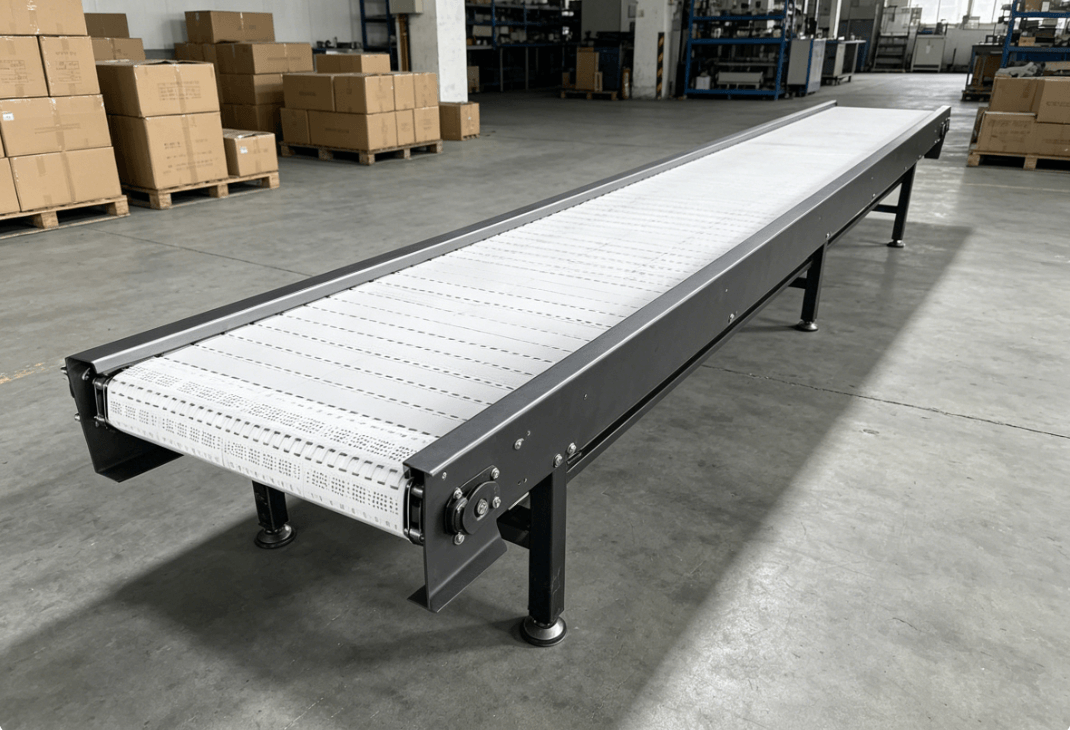
Maintaining an efficient conveyor system requires a combination of high-quality hardware and rigorous maintenance protocols. By addressing mistracking, slippage, and material carryback at their technical roots, facilities can significantly reduce downtime. Investing in precision-engineered straight conveyors ensures that the foundation of your material handling system is built to withstand industrial rigors.
FAQ
1. Why is my conveyor belt squealing during startup?
This is usually a sign of belt slippage. The drive pulley is turning faster than the belt, creating friction noise. Check the tension at the take-up unit or inspect the pulley lagging for wear.
2. How often should I check the alignment of my conveyor?
For 24/7 operations, a visual inspection should be daily, with a formal alignment check every quarter. Any time a belt is replaced, the entire system must be re-squared.
3. Can environmental temperature affect belt tracking?
Yes. Extreme heat can cause the belt material to soften and expand, while cold can make it rigid. Both states change how the belt interacts with the pulleys, often requiring tension adjustments between seasons.
4. What is the best way to prevent material buildup on return idlers?
Installing return-side “V-plows” or diagonal plows just before the tail pulley will deflect any stray material that has fallen onto the inside of the belt, preventing it from being crushed into the pulleys.
5. Is it better to use mechanical fasteners or vulcanized splices?
Vulcanized (bonded) splices are “endless” and offer the smoothest operation, which is ideal for precision straight conveyors. Mechanical fasteners (clips) are faster to install for emergency repairs but can cause wear on scrapers and pulleys over time.
Reference Sources
CEMA Engineering Standards for Belt Conveyors