Essential Conveyor Spare Parts: A Factory Maintenance Guide

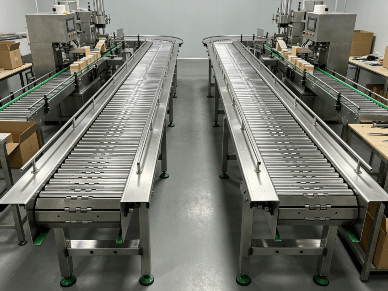
In a high-throughput manufacturing environment, a conveyor system is the circulatory system of the facility. When a single bearing seizes or a drive belt snaps, the entire production line grinds to a halt. For maintenance managers and plant engineers, the goal is not just to fix what is broken, but to anticipate failure through a robust inventory of conveyor spare parts.
Downtime costs in modern factories can range from thousands to tens of thousands of dollars per hour. Having the right components on-hand transitions a facility from “reactive firefighting” to “predictive optimization.” This guide analyzes the critical components required to maintain peak efficiency, focusing on the technical requirements of straight conveyor systems.
Categorizing Essential Conveyor Spare Parts by Function
To build an effective inventory, parts must be categorized by their wear rate and criticality. Not every bolt needs to be stocked, but certain components are guaranteed to fail over time due to mechanical stress, thermal expansion, or friction.
1. Mechanical Drive Components
These parts are responsible for the physical movement of the system. They experience the highest level of torque and constant physical contact.
- Drive Belts and Chains: Depending on whether your system uses modular plastic belts, PVC, or chain drives, these are primary wear items. Look for high-tensile strength and oil-resistant coatings.
- Sprockets and Pulleys: These should be inspected for “hooking” or tooth wear. Improperly aligned sprockets lead to premature chain failure.
- Gearboxes/Reducers: While they have a long lifespan, a gearbox failure is a “line-stop” event. Stocking common ratios for your primary conveyors is a strategic necessity.
2. Support and Guidance Components
These parts ensure the product remains stable and the belt stays aligned.
- Conveyor Rollers: For straight conveyors, rollers are the most replaced item. Options range from galvanized steel to stainless steel or PVC, depending on the load and environment.
- Bearings: These are the most common point of failure. Precision-sealed ball bearings are preferred for dusty or washdown environments to prevent contamination.
- Wear Strips and Side Guides: These sacrificial components protect the main frame of the conveyor from the constant friction of the belt or product.
3. Electrical and Control Elements
Modern automation relies on sensors and precise motor control.
- Photoelectric Sensors: These manage product flow and indexing. They are prone to physical damage or lens clouding in industrial settings.
- Variable Frequency Drives (VFDs): These control motor speed. A surge or heat-related failure in a VFD can disable an entire section of a line.
Technical Specifications for Critical Components
| Part Type | Common Materials | Typical Life Expectancy | Replacement Trigger |
| Rollers | Carbon Steel, SUS304, PVC | 24 – 48 Months | Auditory noise or surface flat spots |
| Drive Belts | Polyurethane, PVC, Rubber | 12 – 24 Months | Frayed edges, elongation, or cracking |
| Bearings | Chrome Steel, Stainless | 18 – 36 Months | Heat buildup or excessive vibration |
| Wear Strips | UHMW-PE, HDPE | 36 – 60 Months | Thickness reduced by >50% |
Material Selection: Matching Parts to Environment
When sourcing conveyor spare parts, material science plays a larger role than many procurement officers realize. Selecting a part based solely on dimensions often leads to premature failure if environmental factors are ignored.
For example, in food processing or pharmaceutical environments, SUS304 or SUS316 stainless steel is non-negotiable for rollers and frames to meet hygiene standards and resist corrosion from harsh cleaning agents. Conversely, in heavy-duty warehousing, carbon steel with a galvanized finish provides the necessary impact resistance at a lower cost-point.
The frame integrity of a straight conveyor often dictates the tolerance levels for spare parts. Precision-engineered frames, such as those utilizing heavy-duty aluminum profiles or powder-coated steel, require parts with exact tolerances to maintain tracking. If a replacement roller is even 2mm out of alignment, the belt will mistrack, leading to edge damage and motor strain.
Identifying Quality Indicators in B2B Procurement
High-quality conveyor components are distinguished by their manufacturing tolerances and certification standards. When evaluating suppliers, engineers should look for several key indicators:
- Bearing Seals: Premium parts use Labyrinth seals or RS-type rubber seals to prevent ingress of particulates.
- Surface Treatment: Rollers should have a smooth, burr-free finish. Rough surfaces act as sandpaper on the underside of your conveyor belt.
- Concentricity: A roller that is not perfectly round will cause “chatter” or vibration, which eventually shakes other components loose.
- Heat Dissipation: Drive components must be designed to dissipate heat efficiently, especially in high-speed applications.
Optimizing Your Spare Parts Inventory Logic
A “just-in-case” inventory is expensive and ties up capital. A “just-in-time” inventory is risky. The middle ground is a Risk-Based Inventory (RBI) strategy.
- Criticality A (Stock on-site): Parts that have a long lead time (4+ weeks) and whose failure stops the entire plant. This includes specialized motors, custom-length belts, and proprietary sensors.
- Criticality B (Local Supplier): Standardized parts like common bearings or fasteners that can be sourced within 24 hours.
- Criticality C (Consumables): Low-cost items like wear strips that are replaced during scheduled annual maintenance.
Engineering Insights for Installation
The best spare part will still fail if installed incorrectly. We often see premature failures caused by “over-tensioning.” When replacing a belt or chain, engineers must follow the manufacturer’s tensioning specifications. Over-tensioning puts excessive radial load on bearings and motor shafts, leading to a cascade of failures.
Additionally, always replace bearings in pairs. If the drive-side bearing has reached its end-of-life, the non-drive side is likely within 10% of the same failure point. Replacing both simultaneously reduces labor costs and future downtime.
Strategic Sourcing for Straight Conveyor Systems
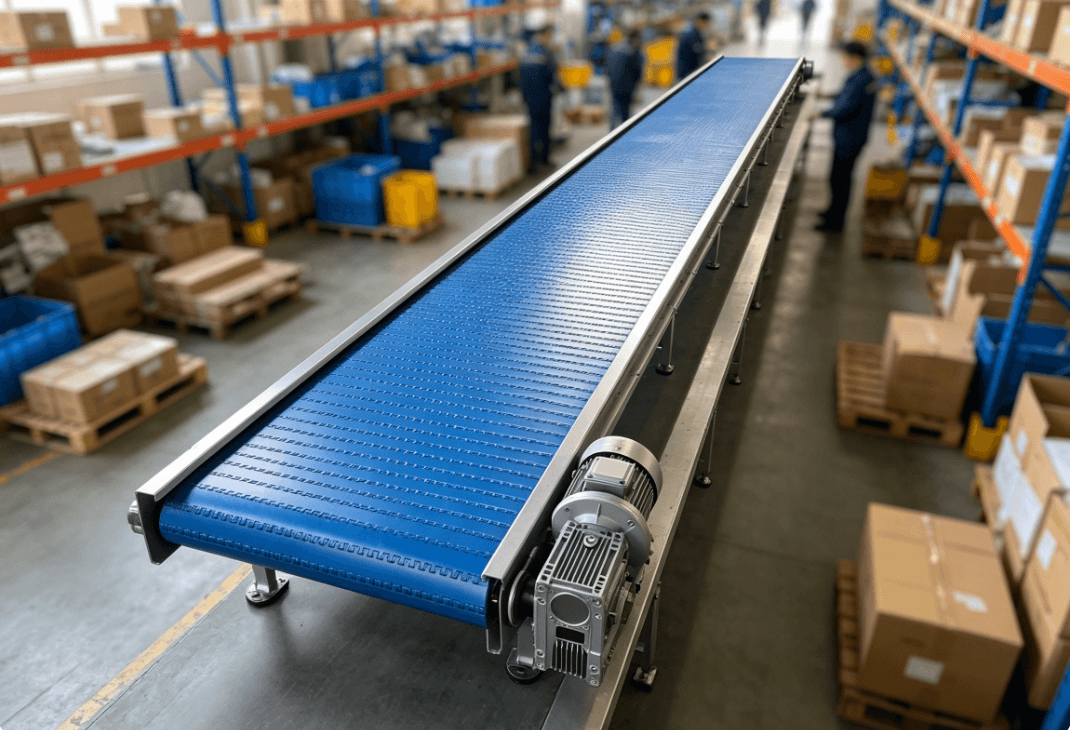
When maintaining straight conveyor systems, the simplicity of the design is its greatest asset, provided the parts remain modular. High-quality straight conveyors utilize standardized components that allow for rapid hot-swapping during a shift.
For facilities looking to streamline their supply chain, consolidating spare parts procurement with a manufacturer that understands the full assembly is beneficial. This ensures that the rollers, belts, and motor mounts are designed to work in synergy, maintaining the geometric precision required for high-speed transport.
FAQ: Professional Conveyor Maintenance
Q: How often should we audit our conveyor spare parts inventory?
A: A full physical audit should be conducted bi-annually. However, your digital inventory management system (CMMS) should track usage in real-time to trigger automatic reorders when stock hits “Safety Level” thresholds.
Q: Is it better to buy OEM parts or universal aftermarket parts?
A: For structural components like rollers and wear strips, high-quality aftermarket parts are often sufficient and more cost-effective. For drive-train components (motors, gearboxes) and specialized sensors, OEM parts are recommended to ensure electrical compatibility and warranty compliance.
Q: How can we extend the life of our existing rollers?
A: Implement a regular cleaning schedule to remove debris that can cause friction. Additionally, ensure the conveyor frame remains level; a warped frame causes uneven load distribution, which wears down rollers on one side prematurely.
Q: What is the lead time for custom-sized conveyor belts?
A: Standard PVC or rubber belts usually have a 1–2 week lead time. However, belts requiring specific cleats, sidewalls, or FDA-approved coatings can take 3–5 weeks depending on the manufacturing cycle.
Reference Sources
- CEMA (Conveyor Equipment Manufacturers Association): Standards for belt conveyor design and component safety.
- ISO 5048: International standard for continuous mechanical handling equipment and power calculations.
- OSHA 1910.212: General requirements for all machines (covers conveyor guarding and emergency stops).
- SGS Technical Reports: Material testing for polymers used in industrial wear strips and modular belting.
Great content! Keep up the good work!
Thank you for your sweet comment ! I always on the way!