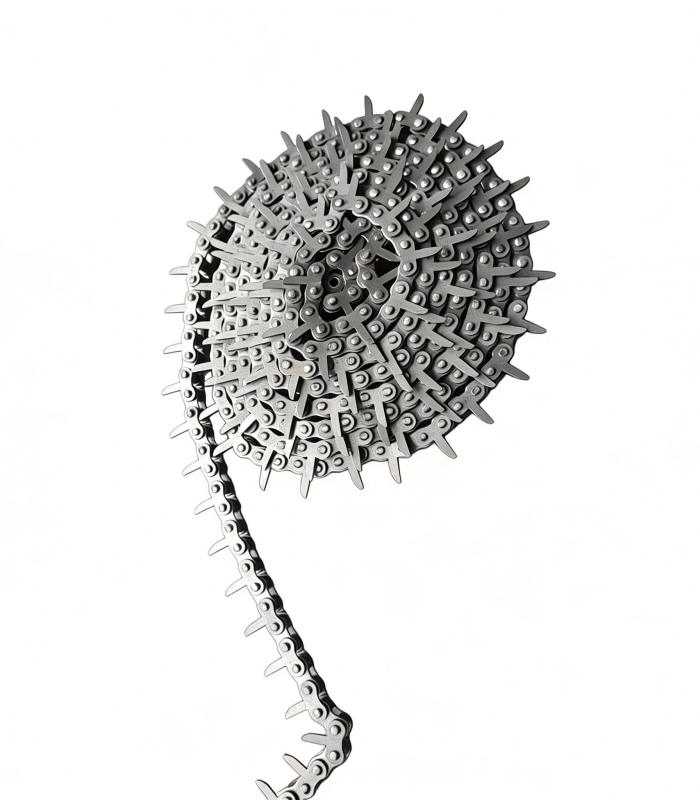
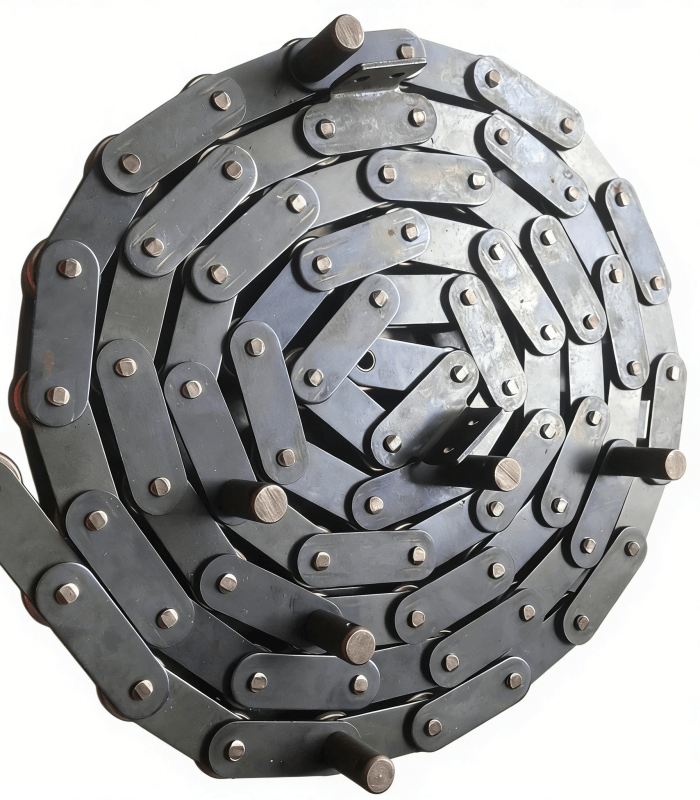
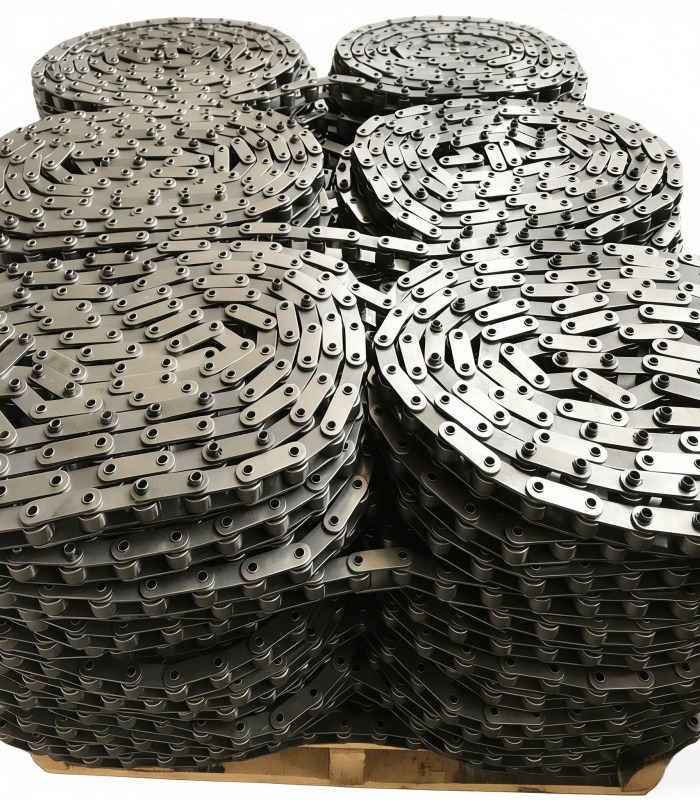
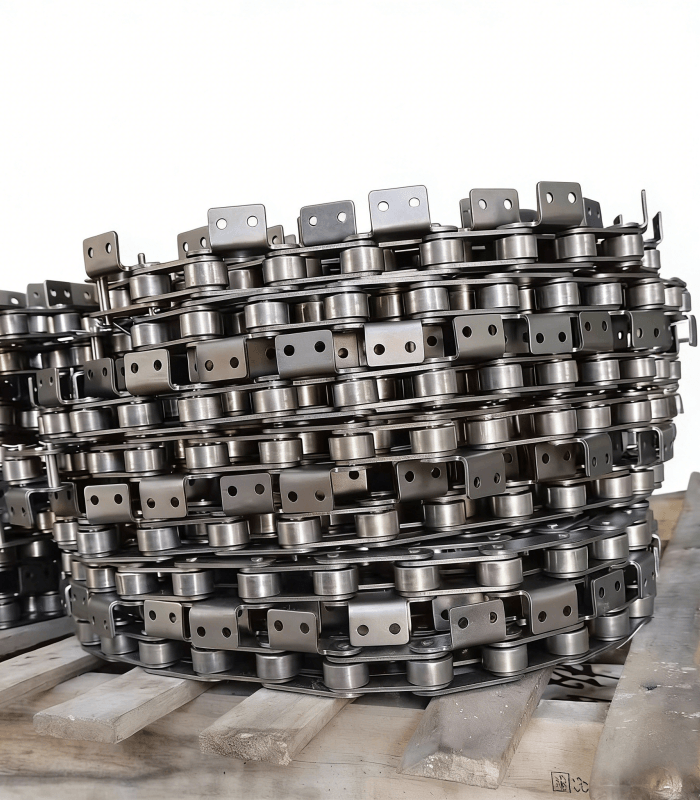
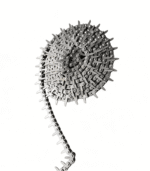
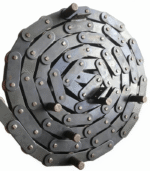
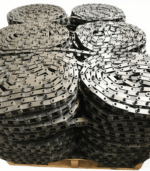
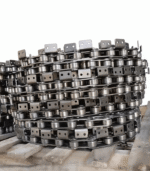
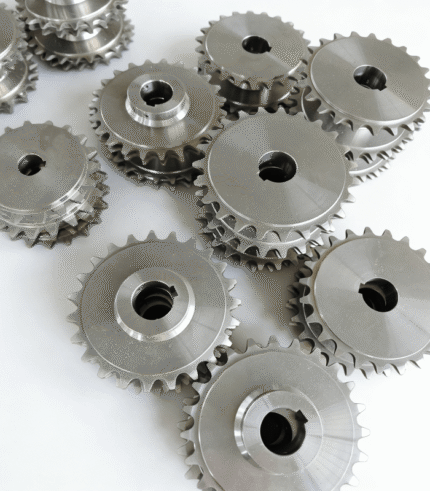
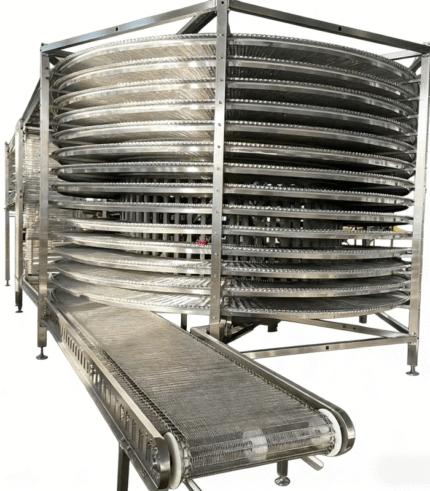
Conveyor chains, drive chains, industrial drive chains
A conveyor chain is a transmission component driven by sprockets, using the chain as the traction element to move attachments such as scrapers and buckets for material conveyance. It offers the advantages of high load-bearing capacity, the ability to withstand harsh environments such as high temperatures and humidity, and precise transmission ratios.
Applications of Conveyor Chains
Conveyor chains are the core traction components of conveying equipment. Driven by sprockets, they move the working elements mounted on the chain—such as scrapers, buckets, slats, and carriages—along the conveying route, thereby facilitating the transport of materials or personnel. Depending on their structure, they can be classified into types such as closed-link, plate-type, and detachable chains:
· Circular Link Conveyor Chains: Made by welding round steel links, these are simple to manufacture and cost-effective, primarily used in scraper conveyors
· Plate-Type Conveyor Chains: These include pin-type chains, bushing chains, bushing roller chains, and bushing roller-type chains. Among these, the rollers on bushing roller chains not only reduce sprocket wear but also serve as support rollers on the guide rails, making them the most widely used type in conveyors
· Detachable traction chains: Adjacent links can rotate up to 14° in the opposite direction of the chain’s deflection, allowing for the formation of spatial conveying routes; they are mostly used in overhead conveyors
Conveyor chains are widely used in manufacturing, the automotive industry, food and beverage, warehousing and distribution, as well as in the building materials, mining, metallurgy, and chemical industries, and can handle powdery, granular, and small lump materials.
—
Product Advantages of Conveyor Chains
1. Precise Transmission and High Efficiency
Compared to belt conveyors, chain conveyors eliminate elastic slippage and slippage, ensuring accurate transmission ratios, smooth operation, and high efficiency. The transmission ratio of conveyor chains is highly precise, enabling stable material transport at predetermined speeds and directions, thereby reducing issues such as material accumulation or loss caused by transmission errors.
2. High Load-Carrying Capacity and Heavy-Duty Capability
With high power transmission and strong overload capacity, conveyor chains require smaller design dimensions and lower tension under the same operating conditions. Conveyor chains featuring roller-mounted bearing structures reduce the coefficient of friction and enhance load-carrying capacity, enabling the smooth transport of heavy loads.
3. Strong Adaptability to Harsh Environments
They can operate normally in harsh environments such as high temperatures, humidity, dust, and pollution. Not only can they transport non-corrosive items, but with special treatment, they can also handle corrosive materials, meeting diverse material handling needs.
4. Compact Structure and Long Service Life
The conveyor chain features a compact structural design that occupies minimal space, facilitating efficient material handling in confined areas. By selecting high-quality materials (such as 40Cr alloy steel) and employing appropriate heat treatment processes, the chain achieves high hardness and toughness, effectively addressing the issue of fatigue fracture common in standard chain plates. Certain models utilize a high-strength, wear-resistant plate-chain design, with a service life exceeding 5 years.
5. Easy Maintenance
The manufacturing process for conveyor chains is straightforward, and assembly is convenient, facilitating quick installation and commissioning. In the event of a malfunction, maintenance is relatively easy due to the clear structure and standardized components.
—
Manufacturing Process of Conveyor Chains
The manufacturing of conveyor chains is a systematic process involving multiple stages, with the core focusing on material selection, component machining, heat treatment strengthening, and precision assembly.
I. Material Selection
Materials are selected based on the specific stress characteristics of each component:
· Chain plates: 40Cr alloy steel is used, achieving a hardness of HRC 38–45 after heat treatment, providing high hardness and toughness
· Pins: 40Cr is used, with a core hardness of HRC 40–45; the surface undergoes high-frequency induction heat treatment to achieve a hardness of HRC 55–60, enhancing wear resistance
· Bushings and rollers: Changed from 20# steel to 20Cr alloy steel; carburizing heat treatment was applied, increasing core hardness from HRC 20–25 to HRC 30–35 to address fatigue deformation and failure caused by compression
II. Part Machining
Taking roller parts as an example, the main process flow is as follows:
1. Cutting: Select φ100 No. 20 round bar
2. Drilling: Drill to φ35.8, then ream to size
3. Rough turning—semi-finish turning—finish turning of outer diameter: Processed using a CA6140 lathe
4. Chamfering: Chamfer inner and outer diameters
5. Heat treatment: Carburizing and quenching to improve strength and toughness
6. External Cylindrical Grinding: Use an M1080 centerless grinder to precision-grind the outer diameter to the required accuracy
III. Heat Treatment for Strengthening
Heat treatment is a critical process that determines the performance of the chain. Taking the high-strength brown oil chain as an example:
· Chain plate heat treatment: Use a controlled automated mesh belt furnace; heat and hold at 850°C, oil quench, and temper at 450°C
· Pin heat treatment: Oil quenching at 850°C, core tempering at 400°C, and high-frequency induction heat treatment of the surface
· Sleeve/Roller Carburizing: Carburizing at 870°C using propane and liquid ammonia; oil cooling is used instead of water cooling to reduce the tendency for cracking
Through the above processes, the minimum tensile strength of the chain can reach 12,000 lb (approximately 53.4 kN).
Key parameters of conveyor chains include pitch, ultimate tensile load, link dimensions, and material. Specific details are as follows:
· Pitch: The center-to-center distance between the hinge points of adjacent links; this is the most fundamental dimensional parameter of a chain. For example, common plastic slat conveyor chains have a pitch of 19.05 mm, while mining-grade round link chains come in specifications such as 24×86 mm.
· Tensile Strength: A core indicator measuring the chain’s resistance to tensile force, typically expressed in kilonewtons (kN). For example, the 12B-1 roller chain has a tensile strength of approximately 29.0 kN, while the 24×86 mm mining chain can reach 720 kN.
· Link Dimensions: Primarily refer to the diameter (d), inner width (b2), and outer width (b1) of round link chains. Precise dimensions ensure proper meshing with sprockets, preventing derailment or jamming.
· Materials and Treatments: Common materials include carbon steel (cost-effective, high-strength), 304/316 stainless steel (corrosion-resistant), or alloy steel (wear-resistant). Surfaces are often treated with nickel plating, carburizing and quenching, or other processes to enhance rust resistance and wear resistance.


评价
目前还没有评价