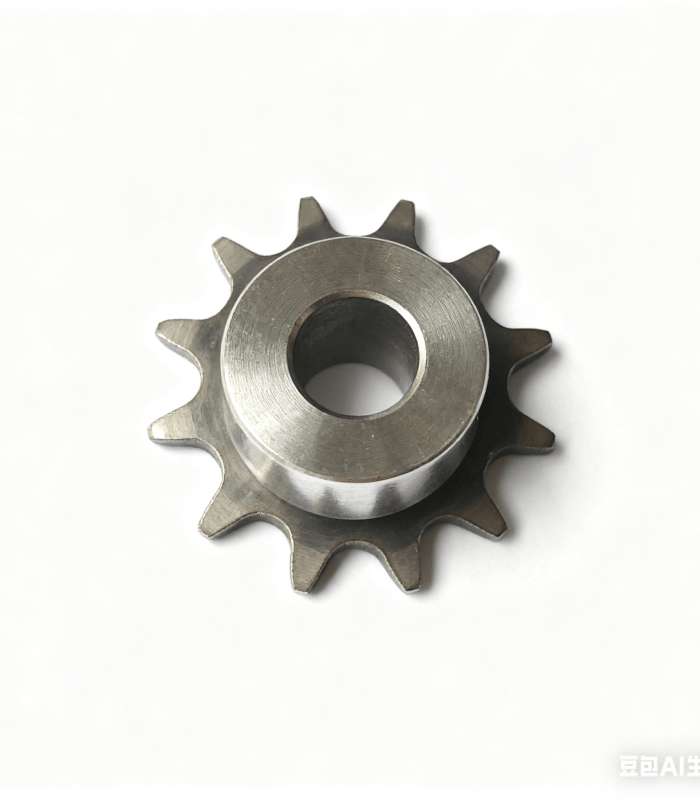
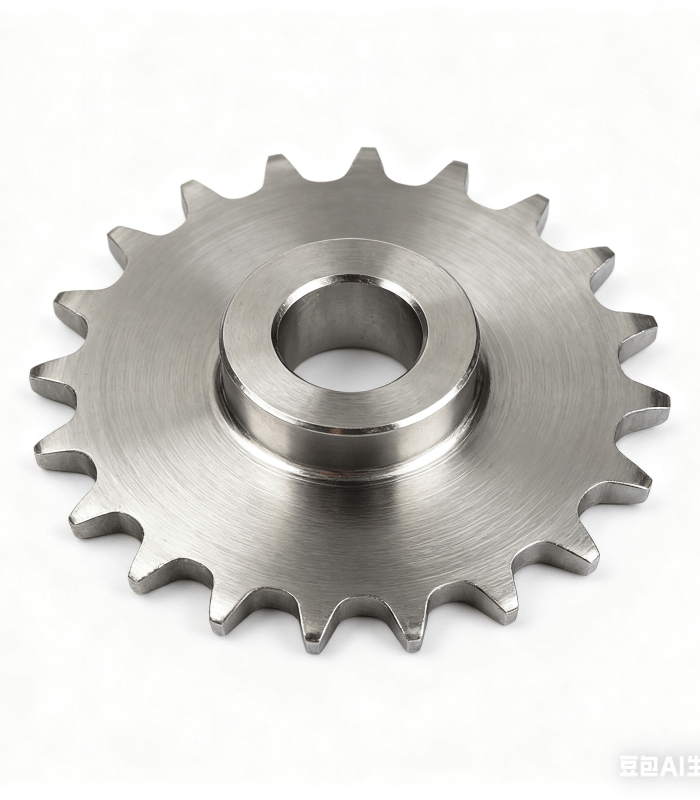
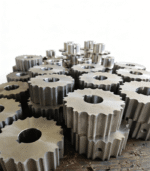
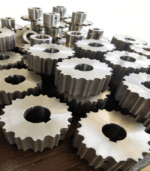
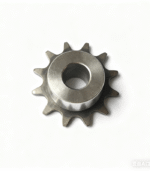
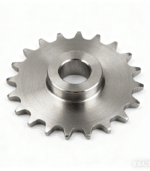
Metal sprockets, stainless steel gears, drive sprockets
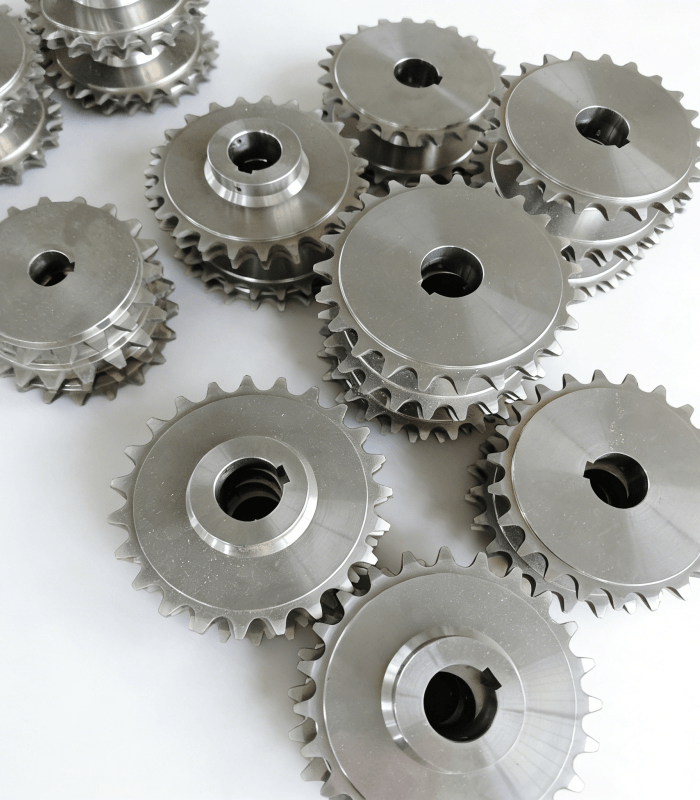
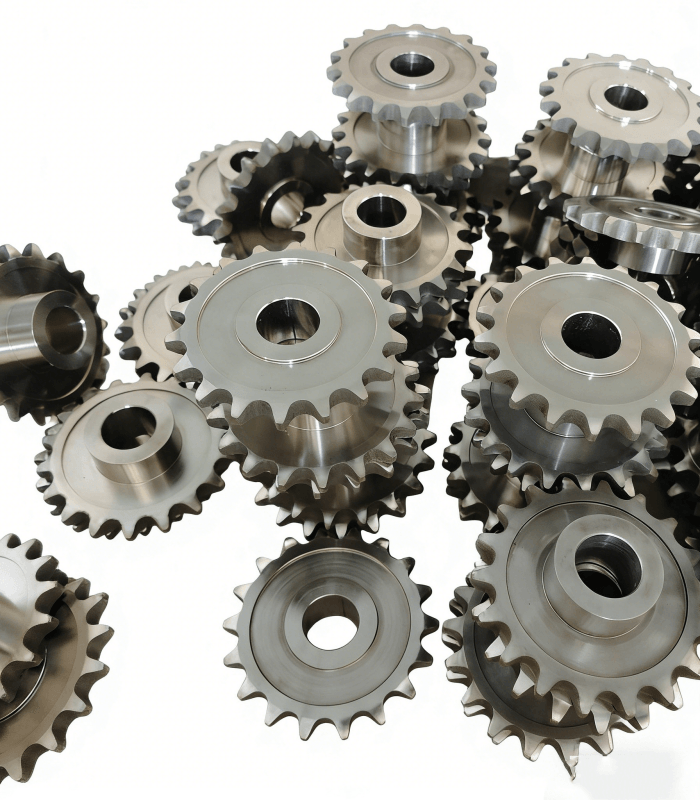
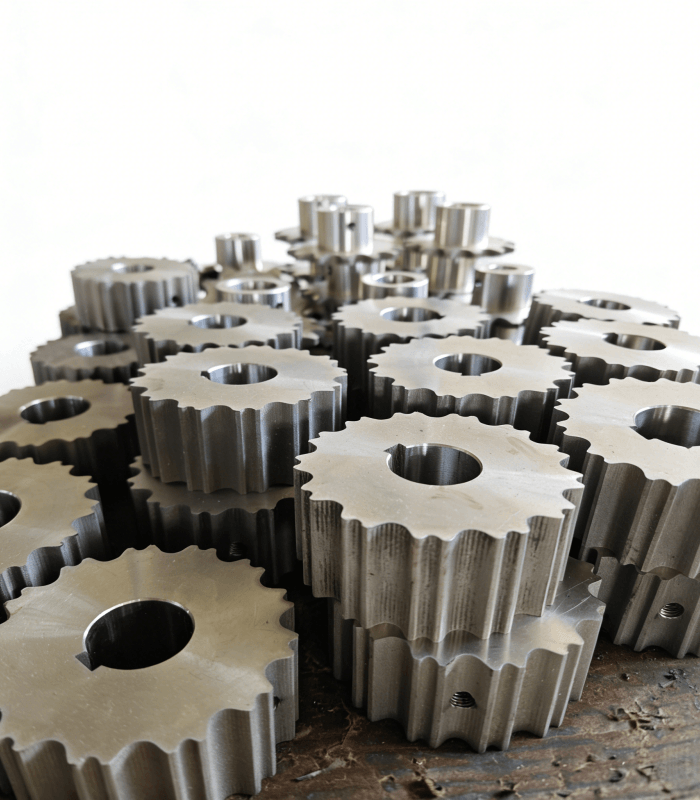
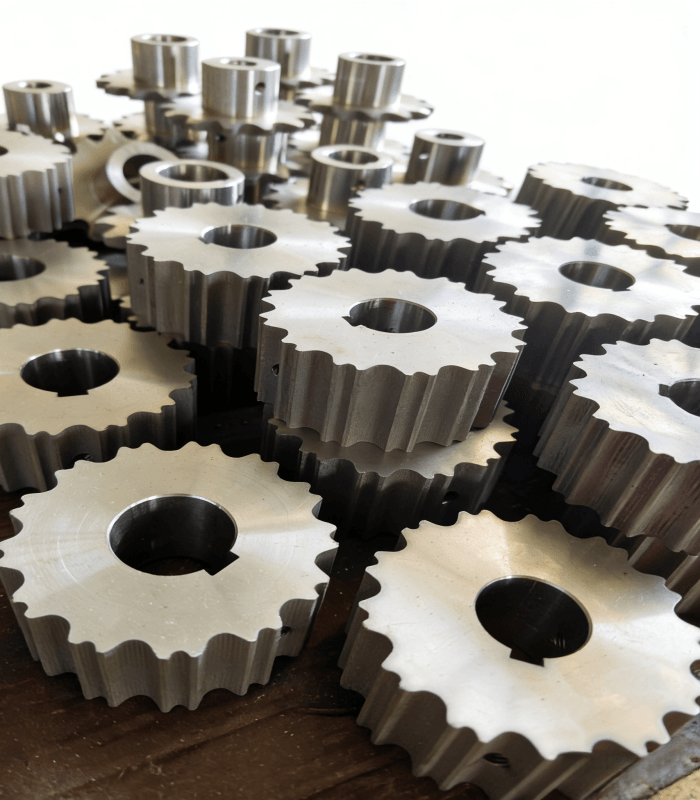
Stainless steel sprockets are manufactured from 304 or 316 stainless steel. Their key advantages include corrosion resistance, rust prevention, and non-magnetic properties, making them ideal for power transmission in humid or hygienic environments such as the food, chemical, and cleaning industries.
Stainless steel sprockets are manufactured from grades such as 304 and 316. Their core advantages include corrosion resistance (resistance to moisture, acids, alkalis, and chemicals), resistance to high and low temperatures (–20°C to 400°C; specially designed models can withstand up to 1,200°C), and the fact that they are non-magnetic and hygienic. They are widely used in humid and corrosive environments such as food processing, pharmaceuticals, chemical manufacturing, and cleaning equipment.
There are two primary manufacturing processes:
· Forging: The stainless steel is heated and forged into shape, followed by machining. Sprockets produced using this process offer high strength and long service life, but are more expensive, making them suitable for heavy-duty or high-speed applications.
· Welding: The teeth are cut from steel plates and then welded to the turned hub. This process saves material and is more cost-effective, making it suitable for large-sized or custom sprockets.
The key to selecting a stainless steel sprocket lies in matching the chain model and ensuring tooth profile accuracy. Below are the key parameters and details:
1. Basic Matching Parameters
· Chain Specifications: Correspond to chain models, such as 08B (pitch 12.7 mm), 10A (pitch 15.875 mm), or 4-inch (12.7 mm), 6-inch (19.05 mm). Incorrect selection will result in improper meshing.
· Number of Teeth: Directly affects smoothness.
· Common Range: 12–35 teeth.
· Few Teeth (≤17 teeth): High gear ratio but noticeable vibration; suitable for low speeds.
· Many Teeth: Suitable for high speeds; 19 teeth or more is recommended to reduce noise.
· Pitch: A fundamental dimension of the sprocket; must match the chain pitch exactly. Common ranges are 12.7 mm to 50.8 mm.
2. Materials and Performance
· 304 Stainless Steel: General-purpose grade, resistant to acids and alkalis and suitable for food contact; ideal for food, pharmaceutical, and humid environments.
· 316 Stainless Steel: Contains added molybdenum, resistant to chloride ion and seawater corrosion; suitable for chemical and salt spray environments.
· Hardness and Wear Resistance: Base hardness is approximately HRC 22–28 (lower than carbon steel). High-frequency quenching can increase tooth surface hardness to HRC 45–50, significantly extending service life.
3. Structural Details
· Hub Configuration: Depending on the mounting method, available as an integrated sprocket-and-hub design (for small sizes) or a separate hub and sprocket assembly (welded/assembled, for large sizes).
· Mounting Holes: Custom pre-drilled holes (circular keyway holes) or finished holes (for direct mounting on a motor shaft) are available. It is recommended to provide the shaft diameter and keyway dimensions.
· Pitch Circle Diameter: Determined by the number of teeth and pitch, used to verify machining accuracy and assembly interference.
4. Precision Grade
Common standards include Chinese National Standard GB/T 1243 or International Standard ISO 606. We recommend selecting Grade B (for general transmission) or Grade A (for precision transmission). Testing for tooth profile tolerance and runout can be requested.
5. Quick Selection Guide
Food washing lines: Select 304 stainless steel + high-frequency quenching (rust-proof and wear-resistant).
Chemical plants: Select 316 stainless steel (highly corrosion-resistant); no quenching required (to avoid high-temperature scale affecting rust prevention).
Heavy-duty, low-speed applications: Select 15–21 teeth + reinforced hub.


评价
目前还没有评价