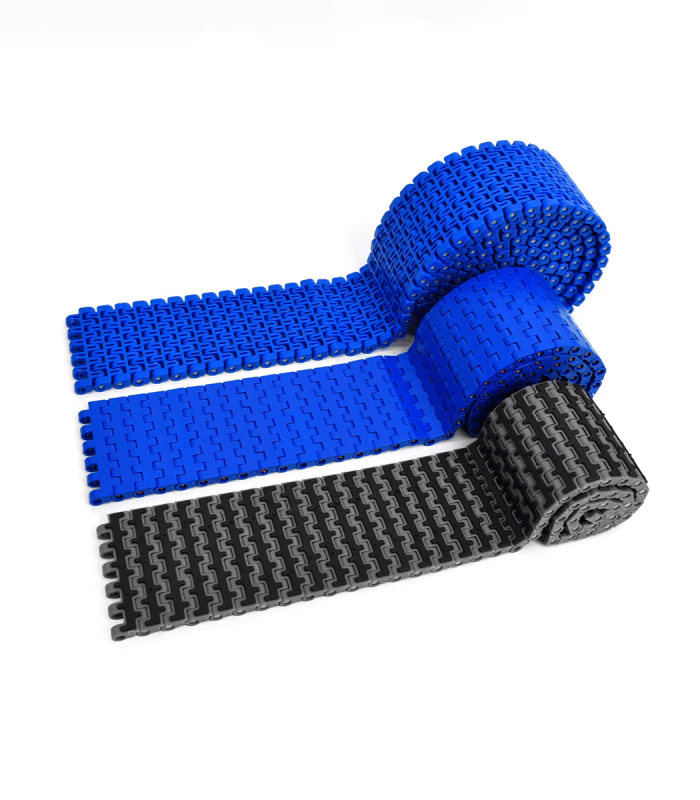
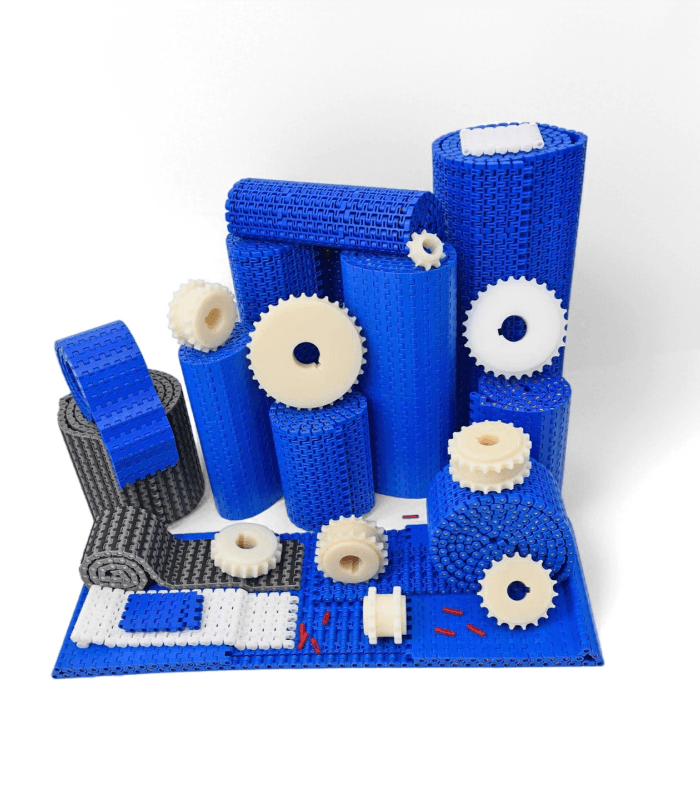
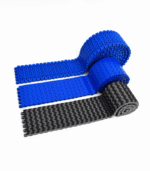
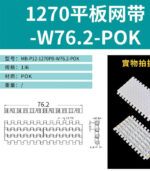
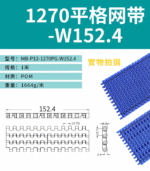
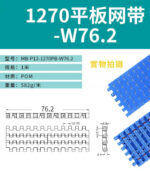
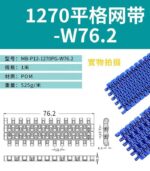
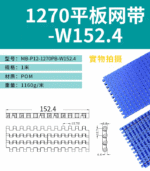
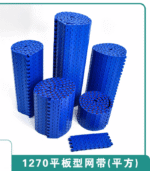
Plastic modular conveyor belt, PP conveyor belt, POM conveyor belt
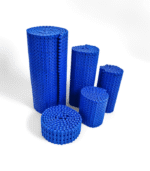
A plastic modular conveyor belt is a modular conveyor belt constructed by interlocking engineering plastic modules via pins. It features high wear resistance, corrosion resistance, and ease of cleaning, and effectively prevents belt misalignment.
Plastic modular conveyor belts (also known as modular mesh belts) are conveyor belts assembled from engineering plastic modules. Compared to traditional belts, they are more durable, hygienic, and easier to maintain.
The following is a detailed explanation of their core applications, advantages, and manufacturing processes:
1. Product Applications
Plastic modular conveyor belts are widely used in industries requiring durable, easy-to-clean environments:
· Food Processing: Suitable for conveying meat, poultry, seafood, fruits, vegetables, baked goods, and frozen foods. They are particularly effective in fresh meat slaughter lines due to their high corrosion resistance and ease of cleaning.
· Beverage and Canning: Commonly used for conveying PET bottles, cans, and glass bottles, featuring good water and air permeability along with moderate friction.
· Industrial and Manufacturing: Used in production lines for automotive manufacturing (e.g., stamping, final assembly), electronics, batteries, and tires; capable of carrying heavy loads and resistant to oil and wear.
· Logistics and Packaging: Suitable for postal sorting, warehousing, and automated packaging lines; operates smoothly and withstands impacts.
2. Product Advantages
Compared to traditional belts, its core advantages lie in its structure and materials:
· Reliable Structure: Utilizes sprocket drive, effectively solving the “snaking” and misalignment issues common with belts; modular splicing allows for quick replacement of damaged sections without disassembling the entire machine.
· Weather and Chemical Resistance: The material withstands temperatures ranging from -50°C to 100°C and resists acidic and alkaline cleaning agents, performing exceptionally well in cold storage or high-temperature sterilization environments.
· Hygiene and Safety: The surface is non-porous, preventing the absorption of grease or blood, and inhibits bacterial growth. It complies with FDA standards and is suitable for direct food contact.
· Energy Efficiency and Noise Reduction: Lightweight with a low coefficient of friction, it operates quietly and requires no lubrication.
3. Manufacturing Process
The production process primarily relies on precision injection molding and modular assembly:
· Material Selection: Common materials include PP, PE (corrosion-resistant), and POM (high hardness); specific materials are selected for food-grade applications.
· Injection Molding: Modules are formed as a single unit via injection molding to ensure dimensional consistency. Advanced techniques include sandwich molding (using recycled material as the core and new material as the outer layer) to reduce costs, as well as the blending of antimicrobial materials.
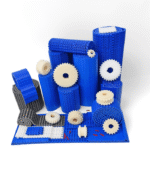
· Assembly Structure: Standard modules are interlocked and assembled using pins (typically stainless steel), allowing for any width to be configured as needed, offering exceptional flexibility.
4. Reference Guide for Common Material Selection
· PP: Acid and alkali resistant, cost-effective, suitable for initial food processing.
· POM (Polyoxymethylene): High rigidity and wear resistance, suitable for high-speed operation or heavy loads.
· PE: Excellent low-temperature resistance, suitable for frozen environments.
The core parameters of plastic modular conveyor belts primarily revolve around four dimensions: pitch, open area ratio, surface pattern, and material. Below is a detailed explanation of the parameters for mainstream products:
1. Core Geometric Parameters
These parameters determine the basic specifications and scope of application for the conveyor belt:
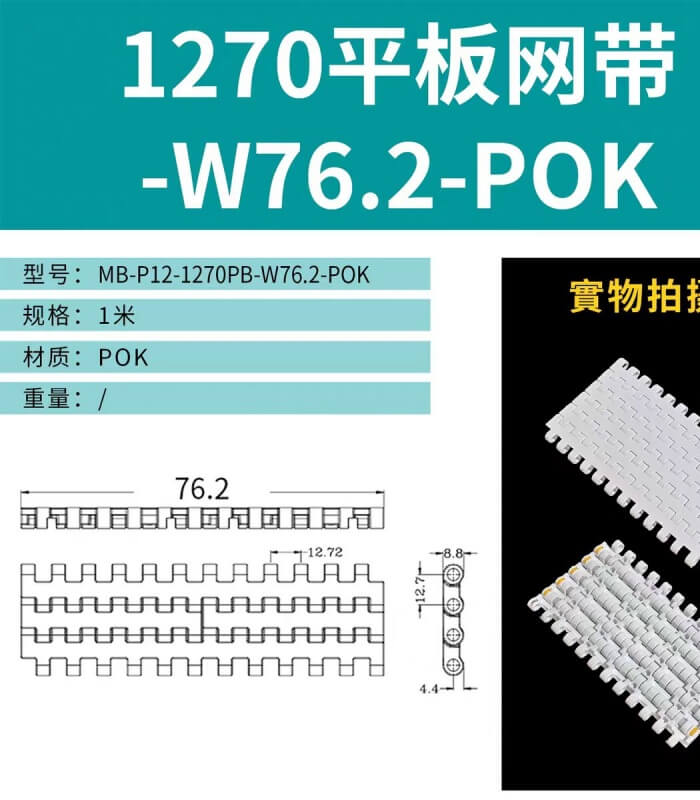
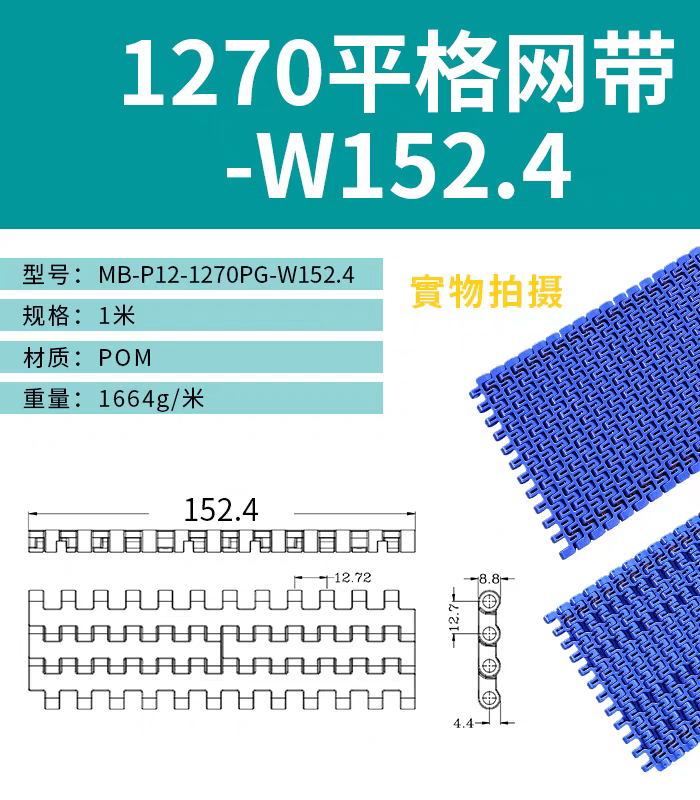
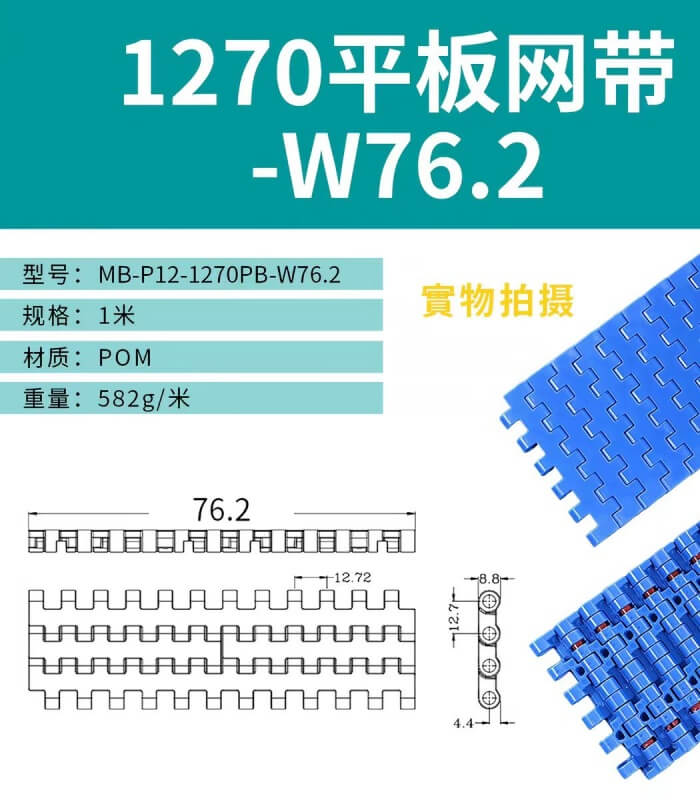
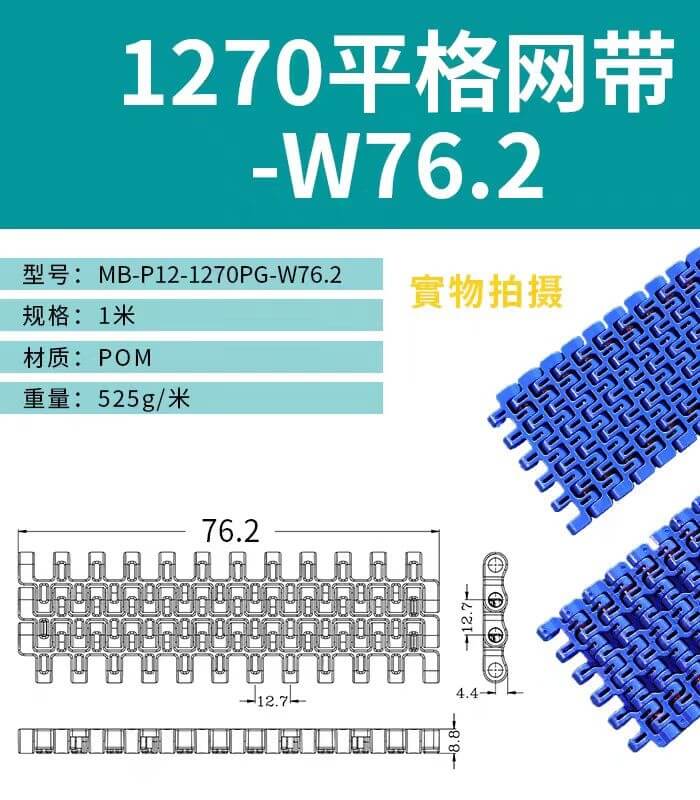
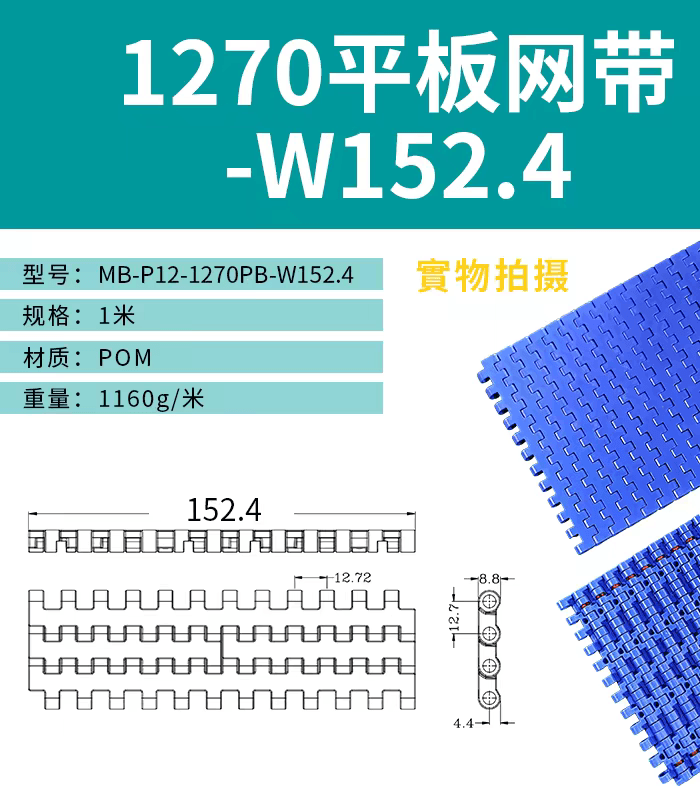
· Pitch: The distance between the hinge centers of two adjacent module links, which is the most fundamental dimensional parameter of the conveyor belt.
· Small/Standard Pitch (approx. 12.7–27 mm): Provides smooth transitions, suitable for bottling lines and small-item conveyance, and can operate on narrower troughs (minimum approx. 19 mm).
· Long Pitch (approx. 50–76 mm): High strength and good airflow; suitable for heavy-duty applications and fresh meat processing; facilitates the flushing of debris.
· Minimum Belt Width and Width Increments: Belt widths typically increase in set increments. For example, in one series, the minimum width is 40 mm with 20 mm increments; in the heavy-duty series, the minimum width is 150 mm with approximately 25 mm increments.
· Thickness and weight: Significant variations exist across different specifications, ranging from lightweight (approx. 4.5 kg/m²) to extra-thick heavy-duty (31.8 mm) at 52.5 kg/m².
2. Key Functional Parameters
· Open Area Ratio: Refers to the percentage of the surface area covered by holes, which directly determines air permeability and drainage capacity.
· 0% (Solid): Suitable for fragile cookies and electronic products, providing full support.
· 21%–36% (Medium): General-purpose, balancing support and drainage; suitable for meat, fruit, and vegetable processing.
· 45%–57% (High Open Area): High breathability and drainage, suitable for washing and drying, reducing product sticking.
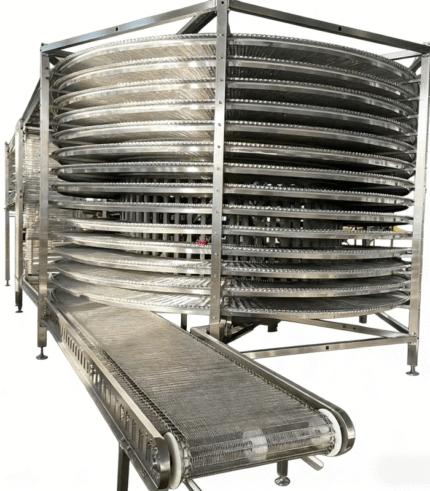
· Turning Capability (Minimum Turning Radius): A key parameter for turning conveyor belts, typically expressed as “1.4 x belt width” (e.g., for a belt with a 25mm pitch, the turning radius requires only 1.4 times the belt width).
· Operating Temperature:
· Polyoxymethylene (POM)/Polypropylene (PP): Typically -46°C to 93°C (cold storage/ambient temperature).
· Strength (Tensile Strength): The maximum tensile force that can be withstood per unit width. Lightweight grades range from approximately 8,000–10,000 N/m, while heavy-duty POM materials can reach up to 180,000 N/m (suitable for car wash machines and heavy-duty assembly lines).
3. Surface Pattern Design
· Flat Top: Smooth surface, easy to clean, suitable for most general-purpose applications.
· Micro-protruding/Conical (NTP/CTP): Reduces contact area, prevents sticky products from adhering in wet conditions, and improves product release.
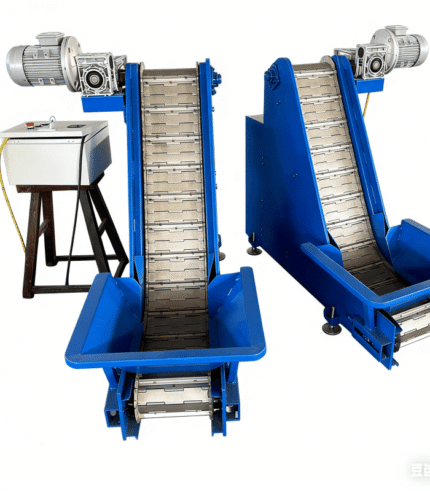
· Rubber Anti-Slip (FRT): Surface covered with rubber pads or special textures, providing high friction, suitable for incline conveying or inclined sorting.
· Anti-Slip Tread (Diamond Tread): Features a diamond-shaped pattern to improve worker safety in wet or oily environments (used in human-machine collaboration zones).
· Ribbed: Used in conjunction with comb plates to achieve extremely smooth transitions, suitable for high-speed conveying of very small containers.
4. Pin and Accessory Specifications
· Pin Material: Commonly plastic (PE/PP/PBT) or nylon. Stainless steel pins may be selected for heavy-duty, high-wear, or special hygiene requirements.
· Accessory Systems:
· Side Guards/Skirts: Prevent lateral spillage of bulk materials; available in various heights (e.g., 32mm–120mm).
· Embedded Rollers: Enable accumulation/stacking of products on the belt, reducing backpressure.
· Quick-release fasteners (ProSnap): Tool-free, rapid removal of pins for significantly easier maintenance.
5. Quick Reference Guide for Common Materials
Material Key Properties Recommended Applications
PP (Polypropylene) Resistant to acid and alkali corrosion; best value for money; temperature range approx. 1–104°C Fruit and vegetable processing, slaughterhouses, chemical transport
POM (Polyoxymethylene) High rigidity, wear resistance, dimensional stability, highest strength High-speed heavy-duty applications, PET bottle conveying, automotive assembly
PE (Polyethylene) Excellent low-temperature performance Frozen food conveying
PA (Nylon) High strength, high-temperature resistance (up to 116°C) High-temperature sterilization, heavy-duty incline conveying
Selection Recommendations: If you need to convey glass bottles, we recommend using a ribbed surface with a comb-tooth plate transition; if handling wet meat or poultry, we recommend a high open area ratio (e.g., 36%) paired with a flat surface to facilitate rinsing and drainage.


评价
目前还没有评价