How Do Conveyor Chains Work? Working Principle Tips

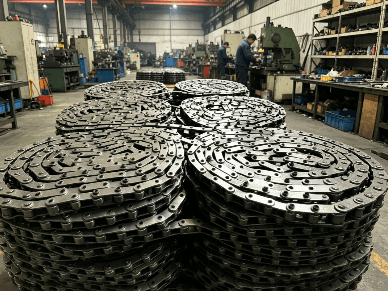
Industrial automation in 2026 relies heavily on the mechanical efficiency of specialized material handling systems. Modern production lines require robust solutions to transport heavy goods across vast factory floors. At the heart of these systems lies the conveyor chain working principle, which converts rotational power into linear motion. This process ensures a continuous flow of materials between different processing stations.
Understanding the conveyor chain working principle allows engineers to optimize throughput and reduce unnecessary downtime. These chains are not merely links of metal; they are precision-engineered tools designed for specific industrial loads. Most industrial chains operate within a closed-loop system, driven by synchronized sprockets and powerful electric motors. The design allows for high tensile strength while maintaining enough flexibility to navigate complex factory layouts.
Efficiency in manufacturing often depends on how well the chosen chain matches the specific operational environment. Factors such as temperature, moisture, and chemical exposure dictate the necessary material composition of the links. By mastering the conveyor chain working principle, facilities can achieve much higher precision in item positioning. This guide explores the fundamental mechanics and practical applications of these essential industrial components for the current year.
How Does the Conveyor Chain Working Principle Facilitate Material Transport?
The primary function of any industrial chain is to provide consistent traction for moving heavy loads. The conveyor chain working principle begins when an electric motor transfers torque to a drive sprocket. As the sprocket rotates, its teeth engage perfectly with the gaps between the chain links. This mechanical engagement pulls the chain forward along a designated track or guide rail system.
The chain acts as a high-strength carrier for various attachments, slats, or buckets. In a typical setup, the conveyor chain working principle utilizes a series of journal bearings held together by constraining plates. These bearings reduce friction as the chain bends around the sprockets at either end of the line. Tension is maintained via a specialized take-up unit to prevent any slipping or jumping during operation.
Precision is a core benefit of this mechanical approach in 2026 industrial standards. Because the teeth and links engage at fixed intervals, the movement is perfectly synchronized with the motor speed. This predictable nature of the conveyor chain working principle is vital for timed assembly lines. It allows robotic arms or sorting machines to interact with items at exact, pre-determined timestamps.
| Component Type | Primary Function in Working Principle | Mechanical Impact |
| Drive Sprocket | Transfers motor torque to the chain | Initiates linear movement |
| Roller Links | Reduce friction against sprocket teeth | Increases energy efficiency |
| Side Plates | Support the tension and load weight | Provides structural integrity |
| Lubricants | Minimize metal-on-metal wear | Extends component lifespan |
Key Components Driving the Conveyor Chain Working Principle
To grasp the conveyor chain working principle, one must examine the internal structure of the individual links. A standard industrial chain consists of five main parts: pins, bushings, rollers, and inner and outer plates. Each part plays a specific role in maintaining the integrity of the loop under heavy stress. The pins act as the pivot points, allowing the chain to flex as it travels.
The Role of Precision Bushings and Pins
The bushings sit over the pins, providing a smooth surface for the rollers to spin. This “roller” design is central to the modern conveyor chain working principle because it minimizes rolling resistance. When the chain meets the sprocket, the rollers rotate rather than slide across the metal teeth. This reduction in friction can lower energy consumption by up to 18% in large-scale systems.
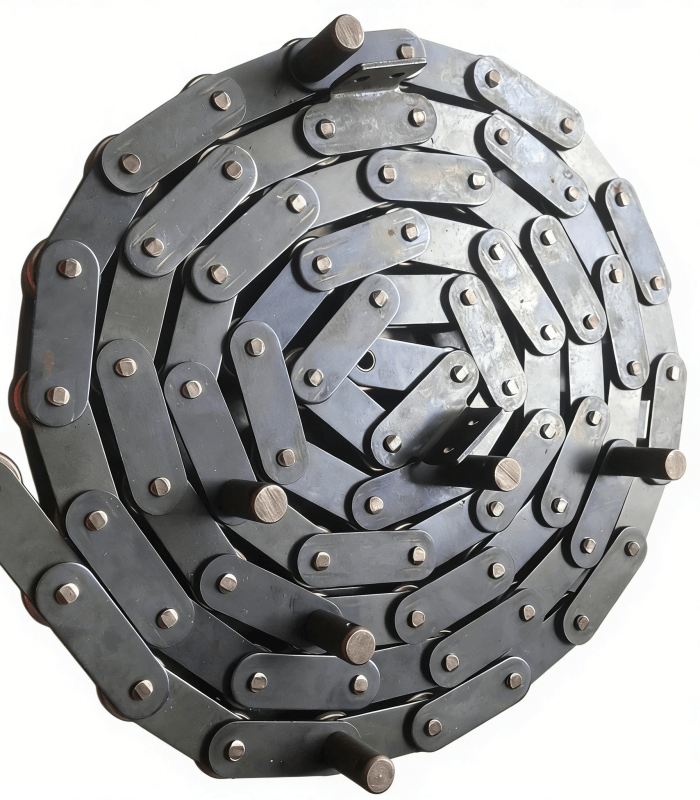
Plate Strength and Load Distribution
Outer and inner plates are responsible for carrying the primary tensile load of the system. In heavy-duty applications, these plates must withstand forces exceeding 65,000 Newtons without any permanent deformation. The conveyor chain working principle relies on the precise fit between these components to prevent “chain stretch.” Stretch is actually the result of microscopic wear between the pin and bushing surfaces.
High-quality materials like carbon steel or specialized stainless steel are typically used in 2026. Carbon steel offers excellent strength for general-purpose dry environments common in many factories. Stainless steel variants are preferred for food processing or chemical plants where corrosion resistance is mandatory. The conveyor chain working principle remains the same, but material selection alters the ultimate durability.
Technical Parameters and Performance Data in 2026
The efficiency of the conveyor chain working principle is measured by several critical technical metrics. One of the most important values is the “pitch,” which is the distance between the centers of two pins. Standard industrial pitches often range from 12.7 mm to over 150 mm for heavy-duty industrial conveyors. Larger pitches allow for bigger rollers and significantly higher load capacities.
| Parameter | 2026 Standard Value Range | Importance to Working Principle |
| Tensile Strength | 15,000 – 300,000 lbs | Defines maximum load limit |
| Speed Limit | 0.8 – 2.5 meters/second | Dictates production throughput |
| Hardness (HRC) | 45 – 55 (Heat Treated) | Determines wear resistance |
| Friction Coeff. | 0.12 – 0.22 (Lubricated) | Affects power requirements |
Data shows that a well-maintained chain operating within its design limits can last over 18,000 hours. However, if the conveyor chain working principle is compromised by 2% elongation, the chain should be replaced. Exceeding this limit leads to poor sprocket engagement and potential catastrophic system failure. This data highlights the need for regular digital monitoring of chain length and tension.
Temperature also significantly impacts the conveyor chain working principle and its overall performance. Standard chains usually operate effectively between -20°C and 180°C in most 2026 factory settings. For extreme heat, specialized alloys or synthetic lubricants are required to prevent metal fatigue. Maintaining the correct operating temperature ensures the chain retains its rated tensile strength during heavy lifting.
Selecting the Right Chain for Industrial Needs
Choosing a chain requires more than just looking at the conveyor chain working principle in a vacuum. Operators must evaluate the specific environment where the chain will serve its purpose. If the application involves direct contact with sensitive food, the chain must be very easy to clean. This often leads to the selection of hollow pin chains or specialized attachment chains.
When professionals evaluate various conveyor chains, they focus on the “working load” versus the “breaking load.” The working load should typically be only 1/7th to 1/12th of the ultimate tensile strength for safety. This safety factor accounts for sudden jolts or surges in the drive motor power. Following this rule ensures the conveyor chain working principle remains stable under variable industrial stresses.
Consider the layout of the facility, including steep inclines and sharp declines. Chains used on slopes require specific attachments like lugs or rubber inserts to prevent product slippage. The conveyor chain working principle is versatile enough to handle vertical lifts when paired with the right carriers. Proper selection prevents premature wear and reduces the total cost of ownership over several years.
Environmental factors like dust or abrasive particles can act as grinding paste between the links. In such cases, sealed-joint chains or “O-ring” chains are the most effective choice. These designs protect the internal lubricant and keep contaminants out of the pin-bushing area. Understanding these nuances helps in applying the conveyor chain working principle to harsh industrial settings effectively.
Maintenance Strategies to Protect the Conveyor Chain Working Principle
Regular maintenance is the only way to sustain the conveyor chain working principle over the long term. Lubrication is the most vital task, as it prevents direct metal-on-metal contact. Statistics from 2026 suggest that nearly 65% of chain failures are caused by improper or insufficient lubrication. Automatic oiling systems can ensure the correct amount of fluid reaches the pins consistently.
Inspection and Alignment Procedures
Inspection routines should focus on identifying signs of uneven wear or metal fatigue. If one side of the chain shows more wear than the other, it indicates a misalignment of the sprockets. Correcting misalignment is essential to keep the conveyor chain working principle functioning smoothly. Even a 0.3-degree deviation can drastically increase the rate of pin wear and energy loss.
Cleaning and Contamination Control
Cleaning the chain is equally important, especially in industries like mining or heavy agriculture. Built-up debris can prevent the rollers from turning, effectively turning them into sliding blocks. This increases the friction coefficient and puts immense strain on the drive motor. By keeping the links clean, you preserve the mechanical integrity of the conveyor chain working principle.
Technicians should use digital gauges to measure elongation at least once every quarter. Recording these measurements helps predict exactly when the chain will reach the end of its service life. This proactive approach prevents unexpected breakdowns during peak 2026 production periods. Consistent maintenance ensures that the conveyor chain working principle continues to provide a high return on investment.
Summary
The conveyor chain working principle is a fundamental mechanical process that drives global industrial production in 2026. By engaging sprockets with precision-engineered links, these systems move heavy loads with remarkable efficiency and synchronization. Successful operation depends on high-quality components, proper lubrication, and choosing the correct materials for the environment. Mastering these principles ensures reliable material handling and long-term system durability for any modern facility.
FAQ
1. How do I know if my conveyor chain is worn out?
You can determine wear by measuring the chain’s elongation over a set number of links using a specialized gauge. If the chain has stretched by more than 2% of its original length, it is usually time for a replacement. This prevents damage to the sprockets and ensures the conveyor chain working principle remains efficient.
2. What is the difference between a roller chain and a conveyor chain?
A roller chain is primarily designed for high-speed power transmission between shafts over short distances. In contrast, a conveyor chain is optimized for carrying heavy loads over long distances at controlled speeds. Conveyor chains often feature larger pitches and specific attachments designed for material handling tasks.
3. Why is lubrication so important for the conveyor chain working principle?
Lubrication reduces the friction between the pins and bushings, which are the primary wear points of the system. Proper oiling dissipates heat generated during operation and prevents the metal surfaces from galling or seizing under high tension. Without it, the conveyor chain working principle would fail rapidly due to extreme heat and abrasion.
4. Can conveyor chains operate in high-temperature environments in 2026?
Yes, they can, but they require specialized materials like high-carbon alloys or heat-treated stainless steel. Additionally, high-temperature synthetic lubricants must be used to ensure the conveyor chain working principle remains effective. Standard oils will break down at high temperatures, leading to accelerated wear and potential chain breakage.
5. What causes a conveyor chain to jump off the sprocket?
This usually happens due to excessive chain slack, sprocket misalignment, or extreme wear on the sprocket teeth. Maintaining proper tension through a take-up unit and ensuring perfect alignment will prevent this dangerous issue. Regular inspections are key to identifying these problems before they cause a total system shutdown.
Reference Sources
Engineering Toolbox Mechanical properties of industrial chains and friction data for 2026 systems