Choosing the Right Spiral Conveyor System

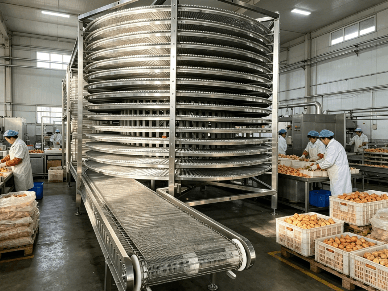
Industrial facilities in 2026 face significant pressure to maximize every square meter of floor space. Moving products vertically between different production levels is a common logistical challenge for modern warehouses. A spiral conveyor system offers a compact and highly efficient solution for these complex vertical transport needs. These systems use a continuous helical belt that winds around a central rotation drum to move goods. This design allows for high-capacity movement without the massive footprint required by traditional straight incline conveyors.
Efficiency in a production line depends heavily on the seamless and uninterrupted flow of materials. A spiral conveyor system eliminates the typical bottlenecks associated with slow freight elevators or reciprocating lifts. Because the movement is continuous, there is no waiting time for a platform to return to its starting position. Manufacturers across many global sectors use these towers to maintain consistently high throughput during 24-hour operations. Understanding the mechanics of this technology is the first step toward optimizing your processing facility.
Selecting the appropriate equipment requires a deep analysis of your specific operational requirements and product types. You must carefully consider the total weight of your products and the necessary vertical elevation height. Environmental factors like extreme temperatures or high humidity also play a role in selecting the right belt material. A well-chosen spiral conveyor system enhances total productivity while significantly reducing long-term energy consumption. It represents a strategic investment in the future scalability of your manufacturing or packaging process.
What is a Spiral Conveyor System and How Does it Function?
A spiral conveyor system operates on a simple but highly effective mechanical principle involving a rotating central drum. It consists of a modular belt that travels in a continuous helical path around this main internal structure. The drum provides the necessary driving force to move the belt at a consistent and predictable speed. This configuration allows products to ascend or descend vertically within a remarkably small diameter. Most 2026 models utilize advanced side-flexing chains to navigate the tight curves of the tower structure.
Why is Continuous Flow Important for Vertical Transport?
One primary reason for their popularity is the continuous flow of materials they provide to the line. Unlike vertical reciprocating conveyors, a spiral tower does not need to stop to load or unload items. This makes it ideal for high-speed packaging lines where every single second counts toward daily quotas. The belt surface remains level throughout the entire journey, which effectively prevents products from shifting. This stability is absolutely crucial for moving fragile items or open liquid containers without spillage.
How Does the Drive Mechanism Work?
The drive system is typically located at either the top or the bottom of the spiral tower. High-efficiency motors power the central drum, which then transfers motion to the belt through friction or direct drive. Because the friction is distributed across the entire length of the spiral, the tension remains relatively low. This low-tension design significantly extends the lifespan of the belt and all associated mechanical components. It also reduces the frequency of emergency repairs that can lead to costly facility downtime.
Primary Benefits of Installing a Spiral Conveyor System
The most significant benefit of a spiral conveyor system is its exceptional space-saving capability within a plant. Traditional incline conveyors require very long horizontal runs to reach high elevations safely without product slippage. A spiral tower can accomplish a 12-meter vertical rise within a small 3-meter diameter footprint. This allows facilities to reclaim valuable floor space for other essential machinery or employee walkways. In many 2026 layouts, it saves up to 80% of the area required by standard systems.
Is Energy Efficiency a Major Factor?
Energy efficiency is another hallmark of these advanced vertical transportation systems used in modern industry. Many spiral towers use a single high-torque motor to drive multiple levels of the conveyor belt. This reduces total power consumption when compared to a series of several individual horizontal belt conveyors. Modern systems in 2026 include variable frequency drives to match the motor speed with real-time demand. This precision control lowers operational costs and reduces mechanical wear on the drive assembly components.
How Does it Improve Product Safety?
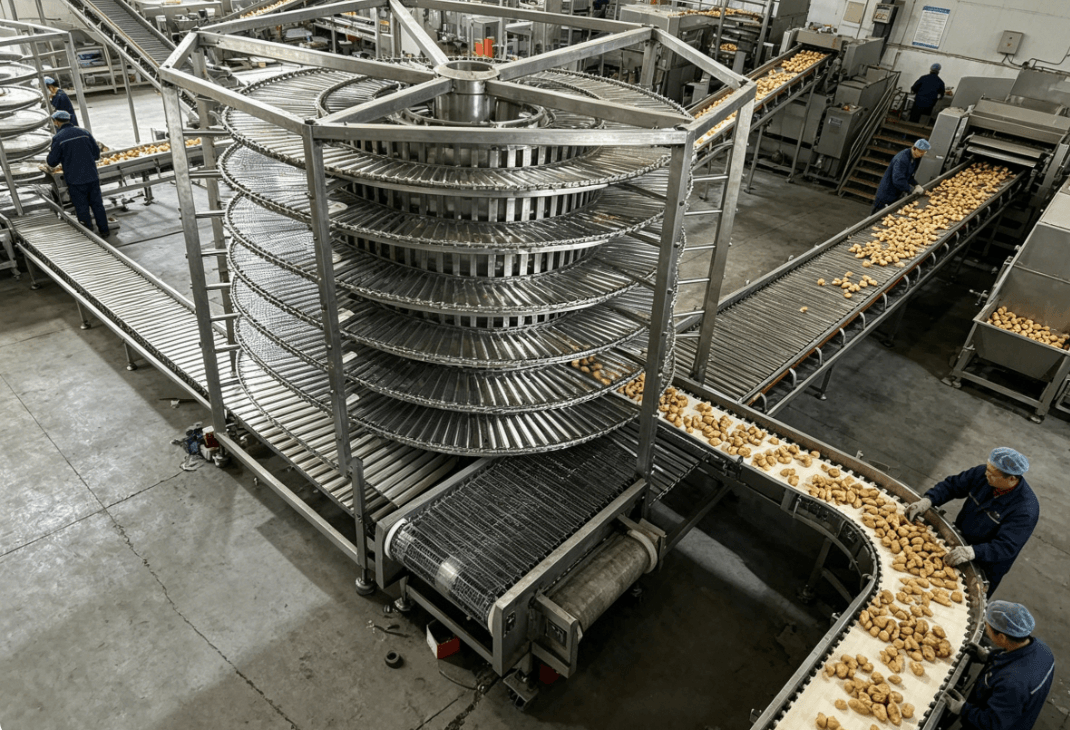
Product safety and integrity are also greatly improved with the installation of a spiral conveyor system. The smooth and continuous motion minimizes the risk of impact or vibration that damages delicate goods. For example, in the food industry, cooled products remain stable as they move to the final packaging area. The belts are often made of food-grade plastic or stainless steel to meet global hygiene standards. These durable materials resist corrosion and are very easy to clean during scheduled maintenance periods.
| Feature | Standard Incline Conveyor | Spiral Conveyor System |
| Footprint Requirement | High (Long horizontal run) | Very Low (Compact vertical tower) |
| Movement Type | Linear Incline | Continuous Helical |
| Product Stability | Moderate (Risk of sliding) | High (Level belt surface) |
| Energy Usage | Multiple motors often required | Single motor capability |
| Throughput Speed | Variable | High (Up to 60m/min) |
Technical Performance Data for Modern Vertical Transport
When evaluating a spiral conveyor system, technical data provides the necessary scientific foundation for an informed purchase. Load capacity is the most critical metric for any facility manager to consider during the design phase. Industrial-grade spirals can typically handle loads ranging from 30 kg to 60 kg per linear meter. This high weight capacity ensures that the system supports heavy crates or bulk material without stalling. The total weight capacity of the entire tower can often exceed five thousand kilograms.
What are the Standard Speed Limits?
Speed is another vital factor that determines the overall efficiency of your 2026 production line. Most high-quality spiral towers offer adjustable speeds, reaching up to 65 meters per minute in standard configurations. This speed is essential for maintaining the pace of modern high-volume bottling or canning operations. Furthermore, the vertical pitch, or the distance between tiers, is carefully engineered for product clearance. A standard pitch might range from 250mm to 600mm, depending on the height of the items.
What are the Environmental Limits?
The environmental limits of the materials used are clearly documented in modern technical specification sheets. Stainless steel components are rated for extreme temperatures, often operating between -45°C and +130°C in 2026. This makes the spiral conveyor system suitable for industrial blast freezers and high-heat drying ovens. Noise levels are another performance metric, with top-tier systems operating at less than 68 decibels. This ensures a much safer and more comfortable working environment for your nearby staff.
| Technical Metric | Typical 2026 Industrial Range |
| Maximum Belt Speed | 35 – 65 m/min |
| Load Capacity | 30 – 60 kg/m |
| Operating Temperature | -45°C to +130°C |
| Standard Belt Widths | 200mm, 400mm, 600mm, 800mm |
| Drive Power | 2.2 kW – 9.5 kW |
How to Determine the Best Spiral Tower for Your Operations?
Determining the right spiral conveyor system for your facility depends on several critical operational variables. You should first analyze your available ceiling height and total floor area for the installation. Because these towers are tall, you must ensure they do not interfere with overhead piping or HVAC. Measuring the exact footprint available helps in selecting the optimal diameter of the spiral tower. Smaller diameters save space but might limit the maximum width of the belt you can use.
How Does Product Type Influence Selection?
The physical characteristics of your product are equally important in the final decision-making process. Consider the dimensions, total weight, and surface texture of the items you need to transport vertically. For instance, very small or unstable items may require a belt with a finer mesh surface. If your products are exceptionally heavy, you will need a system with a more robust drive motor. Understanding these specific details ensures that the spiral conveyor system operates without frequent jams or product spills.
Why is Maintenance Access Important?
Another factor is the long-term maintenance and cleaning requirements of the vertical transport equipment. If you operate in the food or pharmaceutical industry, wash-down capability is a mandatory technical feature. You should look for tower designs that minimize hidden areas where debris can easily accumulate. You can find highly customizable and reliable spiral tower solutions that prioritize both hygiene and ease of access. Choosing a system with modular components allows for faster belt replacements and easier access to the drum.
How Should You Plan for Integration?
Integration with your existing machinery is the final step in the selection journey for a new system. The infeed and outfeed heights of the spiral conveyor system must align perfectly with your conveyors. Most manufacturers offer flexible configurations, such as C-shaped or S-shaped paths to fit your layout. Proper alignment prevents transition issues that could damage fragile products or cause frequent line stoppages. Consulting with a professional engineer during the design phase can help you avoid very costly mistakes.
Maintenance and Longevity of Vertical Spiral Systems
A spiral conveyor system is a significant investment that requires regular care to ensure maximum longevity. Routine inspections in 2026 should focus on the condition of the modular belt and drive sprockets. Over time, belts can stretch or develop wear patterns that affect their overall tracking performance. Most systems include an automatic tensioning device to compensate for slight belt elongation during heavy use. Checking these tensioners monthly helps prevent the belt from slipping off the central drive drum.
How Often Should Lubrication be Applied?
Lubrication is another essential part of the maintenance schedule for many industrial spiral towers. While some modern systems use self-lubricating materials, others require food-grade grease for the main bearings. Keeping the central drum clean of dust and industrial debris ensures optimal friction levels for the belt. If the drum becomes too slick, the belt may lose traction, leading to inconsistent transport speeds. A clean system also reduces the risk of contaminating the products being moved through the tower.
What is the Expected Service Life?
The average lifespan of a well-maintained spiral conveyor system can often exceed 20 years in a 2026 facility. This longevity is achieved through high-quality material selection, such as reinforced carbon steel or 304 stainless steel. Replacing individual plastic belt modules is inexpensive and can be done without replacing the entire belt. This modularity makes the system highly cost-effective over its entire long-term life cycle. Facilities that prioritize preventive maintenance see a much higher total return on their equipment investment.
Summary
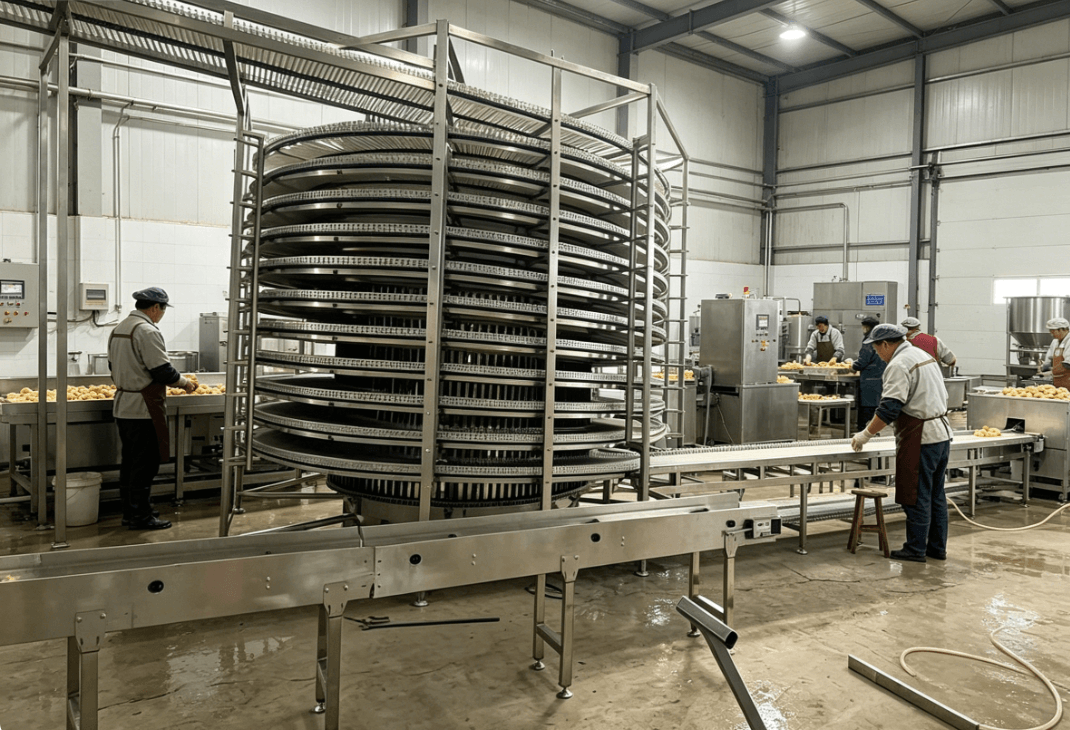
A spiral conveyor system is an essential tool for any facility looking to maximize vertical space and operational efficiency. By providing a continuous flow of goods in a compact footprint, these towers solve the most common logistical challenges. Choosing the right system involves analyzing load capacities, speed requirements, and environmental conditions specific to your industry. When properly maintained, a spiral tower offers a reliable, long-term solution for modern manufacturing needs in 2026. Ultimately, the right system enhances total productivity and ensures the safe, steady movement of your valuable products.
FAQ
1. What industries benefit most from a spiral conveyor system?
Food processing, beverage bottling, and pharmaceutical packaging industries benefit the most from these vertical towers. These sectors require high throughput, gentle handling, and strict hygiene standards that spiral systems provide very effectively. The continuous motion ensures that production lines do not experience the delays common with traditional elevator systems.
2. How much floor space can I save with a spiral conveyor tower?
You can typically save up to 80% of floor space compared to standard incline conveyors. A spiral tower uses vertical height to move products, allowing you to use the saved floor area for other machinery. This is particularly valuable in 2026 as industrial real estate costs continue to rise globally.
3. Can a spiral conveyor handle both cooling and transportation tasks?
Yes, spiral towers are frequently used for cooling, freezing, or drying products while they are being transported. The long belt path within a small area allows products enough dwell time to reach the desired temperature. This dual-purpose functionality makes them a popular choice for large-scale bakery and frozen food operations.
4. What is the maximum weight a spiral conveyor system can carry?
Standard industrial models in 2026 can handle up to 60 kg per linear meter of the belt. The total capacity depends on the motor power, belt width, and the structural integrity of the central drum. Specialized heavy-duty models are available for facilities that need to move heavier bulk items or crates.
5. Is it difficult to clean and maintain a spiral conveyor system?
No, most modern systems are designed for easy cleaning and minimal maintenance through modular components. Models used in food production feature stainless steel frames and open-structured belts that allow for thorough high-pressure wash-downs. Regular inspections of the belt tension and drum friction are usually sufficient to keep the system running.
Reference Sources
PMMI – The Association for Packaging and Processing Technologies
MHI – Material Handling Institute
ASME – American Society of Mechanical Engineers
ISO – International Organization for Standardization (Conveyor Safety)