How to Select the Right Conveyor Chain: Engineering Guide

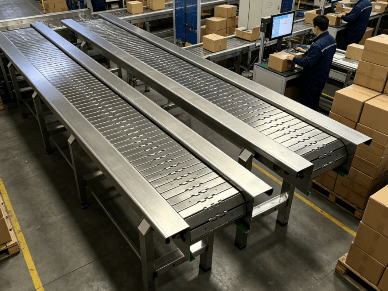
Selecting the correct conveyor chain is a critical engineering decision that dictates the efficiency, safety, and longevity of an automated production line. A mismatch between the chain specifications and the operational environment leads to more than just premature wear. It results in catastrophic downtime, increased energy consumption, and potential safety hazards.
In industrial manufacturing, the “best” chain is rarely the most expensive one. It is the one whose mechanical properties align precisely with the application’s stressors. This guide breaks down the technical variables required to make an informed selection, moving beyond basic pitch measurements into material science and load dynamics.
Key Factors in Conveyor Chain Selection
Before reviewing a catalog, engineers must define the “duty cycle” of the system. This involves calculating the actual working load versus the ultimate tensile strength (UTS) of the chain. Selection must account for both static and dynamic forces.
Analyzing Maximum Working Load
The working load is not just the weight of the product being moved. It must include the weight of the chain itself, any attachments, and the frictional resistance between the chain and the tracks. Engineers should always include a safety factor to account for start-stop shocks.
Understanding Fatigue Limits
Conveyor chains fail more often due to fatigue than tensile breakage. Constant cycling under load creates microscopic cracks in the side plates. Selecting a chain with a higher fatigue strength is essential for high-speed or high-frequency operations.
Environmental Factors and Material Selection
The environment in which the factory operates dictates the metallurgy of the chain. Standard carbon steel is excellent for high-strength, dry environments but fails rapidly in specialized settings. Material selection is the first line of defense against corrosion.
| Environment Type | Recommended Material/Coating | Why? |
| High Humidity / Wash-down | 304 or 316 Stainless Steel | Prevents oxidation and chemical pitting. |
| Abrasive (Dust, Grit) | Hardened Carbon Steel / O-Ring | Prevents particles from entering the bearing area. |
| High Temperature (>200°C) | Specialized Heat-Resistant Alloys | Maintains hardness and prevents thermal expansion issues. |
| Food Processing | FDA-compliant Stainless / Lubricant-free | Ensures zero contamination of the product. |
Specialized Chain Types for Manufacturing
Not every conveyor uses a standard roller chain. The geometry of the chain must match the functional requirement of the transport task. Geometry influences both the load distribution and the stability of the conveyed items.
Attachment Chains for Custom Orientation
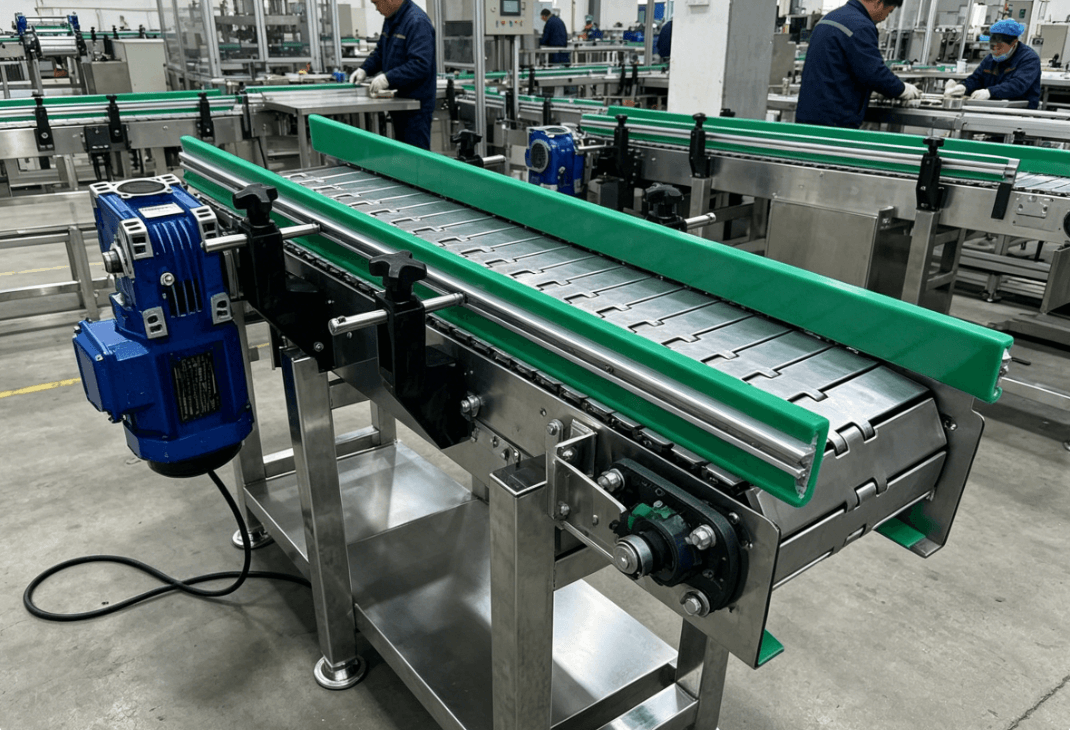
If the goal is to lift, index, or push parts, an attachment chain is required. These feature extended pins or modified side plates, either bent or straight. For high-accuracy indexing, look for “matched and tagged” chains where lengths are identical to within a few microns.
Hollow Pin Chains for Versatility
Hollow pin chains allow for the insertion of cross rods or custom attachments without modifying the chain links. This is a preferred choice in drying ovens or breading lines. It allows the spacing between rods to be adjustable or modular.
Maintaining Chain Integrity and Longevity
A common mistake in conveyor chain selection is ignoring how the chain will be maintained. A chain that requires manual lubrication in a hard-to-reach section is a recipe for failure. Maintenance strategies must be part of the initial selection process.
Self-Lubricating Chains: These utilize oil-impregnated bushings made of sintered metal. They are ideal for “clean” industries like electronics where external oil spray could ruin the product.
Lubrication-Free Stainless Steel: In wash-down environments, lubricants are often washed away. Selecting specialized sleeve bearings can extend life by 3x compared to standard stainless steel running “dry.”
How to Calculate Chain Wear Life?
Selection is also a financial calculation involving wear life. Chain life is generally measured by “elongation” or the increase in pitch over time. Once a chain has elongated by 1.5% to 3%, it will no longer mesh correctly with the sprocket.
To optimize for longevity, engineers should prioritize:
Case-hardened pins: To reduce the rate of material loss at the pivot point.
Seamless rollers: These reduce the impact energy transferred to the sprocket teeth.
Shot-peened parts: This process increases the fatigue resistance of side plates and rollers.
Summary
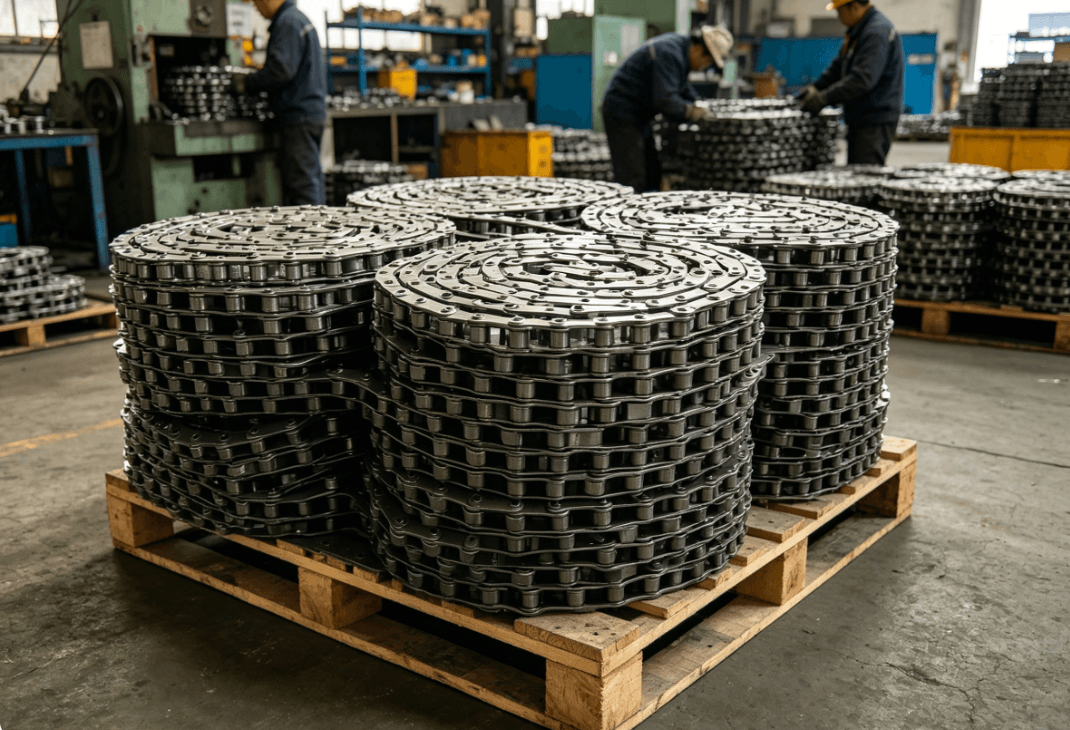
When sourcing components, it is vital to verify that the chain conforms to international standards such as ANSI or ISO. This ensures that replacement parts are accessible and that the chain will fit standard sprockets. Selecting high-quality components, such as the Leyu Conveyor stainless steel series, provides a baseline for corrosion resistance and operational reliability in demanding factory environments.
FAQ
1. Can I use a standard roller chain for a vertical conveyor?
While possible, it is not recommended without careful calculation. Vertical conveyors put significant strain on the pins and require higher safety factors. You should check the “allowable load” rather than just tensile strength and consider reinforced side plates.
2. How do I know if I need 304 or 316 stainless steel?
304 Stainless Steel is sufficient for most water-based environments. However, if your factory uses acids, salts, or chlorine-based cleaners, 316 is necessary. The molybdenum content in 316 provides superior resistance to chemical pitting.
3. What is the most common cause of conveyor chain failure?
Improper lubrication is the leading cause of failure. Over 60% of chain issues stem from a lack of oil reaching the pin-bushing joint. This leads to metal-on-metal friction, excessive heat, and rapid pitch elongation.
Reference Sources
ISO 606:2015 Precision roller and bush chains standard