Conveyor Sprocket Types: How to Match a Sprocket to a Chain

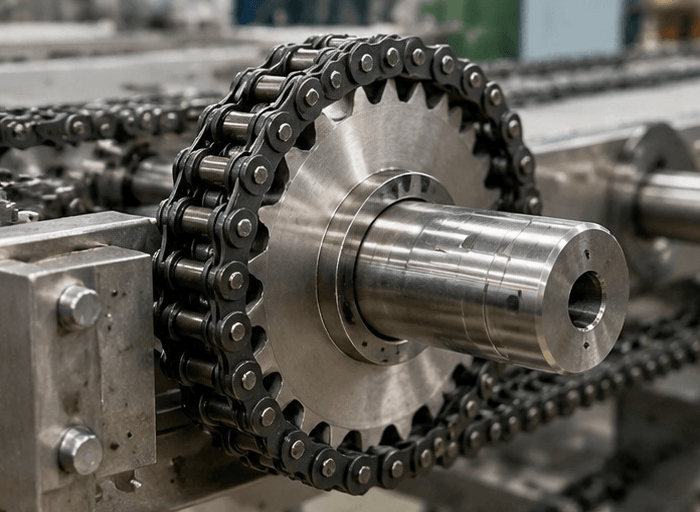
Choosing the right conveyor sprocket requires matching the sprocket to the chain type, pitch, tooth profile, strand configuration, shaft dimensions, and operating conditions. A sprocket that fits the shaft but does not engage the chain correctly can cause uneven wear, noise, poor tracking, and premature component failure. Understanding the main conveyor sprocket types helps maintenance teams and equipment buyers select compatible components rather than relying on appearance or outside diameter alone.
What Are the Main Types of Conveyor Sprockets?
A conveyor sprocket is a toothed wheel that engages with a compatible chain or modular conveyor belt to transmit motion. Its geometry determines how the chain engages, how movement is transferred, and whether the component fits the intended drive arrangement.
Sprockets can be classified by their function, number of chain strands, tooth count, mounting design, and material. These categories overlap, so a single sprocket may be a drive sprocket, double-strand sprocket, stainless steel sprocket, and finished-bore sprocket at the same time.
Drive and Idler Sprockets
Drive sprockets transmit torque from the motor or gearbox to the chain. Their teeth must engage the chain correctly under the intended load and operating conditions.
Idler sprockets guide or redirect a compatible chain and may help maintain the intended chain path. Depending on the design, they can rotate freely on a shaft or be incorporated into a tensioning arrangement. Not every conveyor requires a separate idler sprocket.
When replacing either type, check its function in the assembly. A drive sprocket and an idler sprocket may look similar but have different mounting, hub, bearing, or shaft requirements.
Single-Strand and Multi-Strand Sprockets
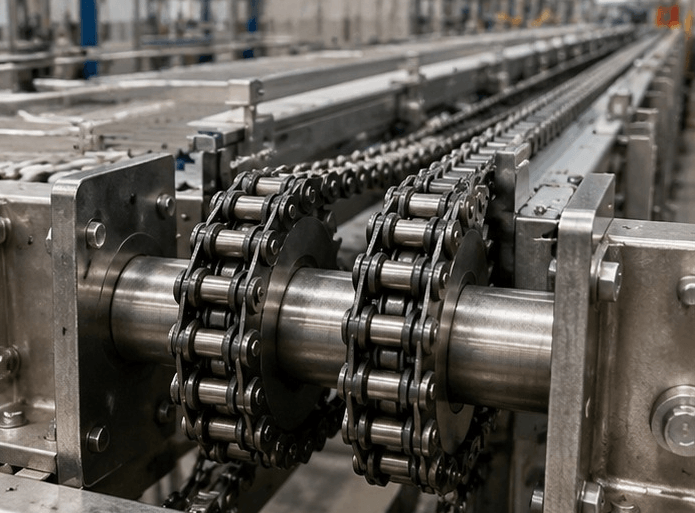
A single-strand sprocket engages one chain strand. Double-strand and other multi-strand sprockets are designed for compatible chains with multiple parallel rows.
Multi-strand arrangements can distribute force across multiple chain rows, but the chain and sprocket must be designed for the same strand configuration. Shaft alignment, spacing, and load distribution also matter. Adding more teeth or wider sprocket faces does not automatically make a component compatible with a different chain.
Standard and Specialized Conveyor Sprockets
Some sprockets are designed for conventional roller chains, while others are made specifically for plastic modular conveyor belts, engineering-plastic chains, or specialized conveyor chain profiles.
These designs are not automatically interchangeable. A modular plastic belt sprocket may engage molded features on the belt underside, whereas a roller-chain sprocket engages chain rollers and link geometry. Always identify the chain or belt series before selecting a replacement.
How Do You Match a Sprocket to a Conveyor Chain?
The correct match depends on more than the sprocket diameter. Chain pitch, tooth profile, strand arrangement, tooth count, mounting dimensions, and the operating duty must all be considered together.
1. Confirm the Chain Type and Pitch
Chain pitch is the distance between corresponding points on adjacent chain links, commonly measured from pin center to pin center on roller chains. The sprocket tooth geometry must be designed for the relevant chain standard and pitch.
For example, ISO-type metric roller chains and ANSI-standard roller chains should not be assumed interchangeable simply because their nominal dimensions appear similar. Differences in roller diameter, inner width, and other dimensions can affect engagement.
Before ordering, identify the chain manufacturer, series, pitch, roller diameter where applicable, and strand configuration. If the identification is missing, measure the existing chain and confirm the dimensions against a reliable chain specification.
2. Select the Tooth Count for the Required Drive Conditions
Sprocket tooth count affects the relationship between shaft rotation and chain travel. For a given chain pitch, a sprocket with more teeth generally has a larger pitch diameter and can produce smoother engagement under otherwise comparable conditions.
When two sprockets drive a chain, their tooth counts also affect the rotational speed ratio. For a simple chain drive without slip, the driven-to-driving shaft speed ratio is inversely proportional to the driven and driving sprocket tooth counts.
However, a higher tooth count is not automatically the best choice. The available space, required speed, torque, chain articulation, and the manufacturer’s design limits must be considered together.
3. Check Bore, Hub, and Shaft Dimensions
The sprocket must fit the shaft and transmit the required torque without unacceptable movement. Check the finished bore, shaft diameter, keyway dimensions, hub length, and any specified locking arrangement.
A sprocket with the correct chain pitch can still be unsuitable if its bore or hub configuration does not match the equipment. For a custom replacement, provide a drawing or the relevant shaft and mounting measurements rather than relying on a photograph alone.
4. Verify Tooth Profile and Alignment
Correct tooth geometry allows the chain to seat and release as the sprocket rotates. A worn, damaged, or incompatible profile can produce uneven contact, vibration, noise, and accelerated wear.
For multi-strand systems, check the alignment of the sprockets and the spacing between chain rows. Misalignment can cause unequal loading and may lead to premature chain or sprocket wear even when the nominal pitch is correct.
Which Sprocket Material Is Suitable for Your Conveyor?
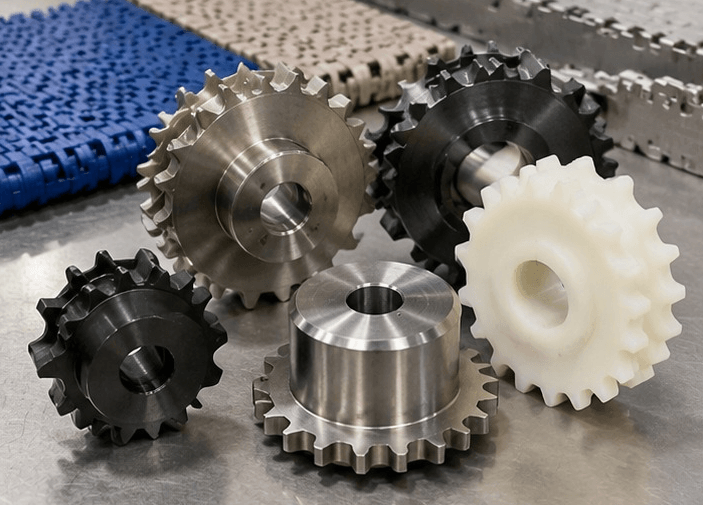
Sprocket material should be selected according to load, wear, moisture, chemical exposure, temperature, cleaning requirements, and the chain material. The material used for one conveyor application should not be assumed suitable for every environment.
| Material | Potential advantages | Points to verify |
|---|---|---|
| Carbon steel | Common choice for general mechanical transmission and suitable industrial duties | Corrosion protection, hardness, load, and wear requirements |
| Stainless steel | Useful where moisture, corrosion resistance, or cleaning requirements influence selection | Grade, chemical exposure, tooth wear, and compatibility with the chain |
| Engineering plastics | Can offer low mass, lower running noise, and suitable sliding characteristics in compatible systems | Temperature, torque, wear, creep, chemical exposure, and chain-series compatibility |
Stainless steel grades are not equivalent in every corrosive environment. For example, 316 stainless steel generally offers better resistance to chloride-related corrosion than 304 stainless steel, but the actual result depends on concentration, temperature, exposure time, and other conditions.
For applications involving washdown or corrosive environments, LEYU’s metal and stainless steel conveyor sprockets provide a starting point for reviewing available product options. Confirm the actual material grade, tooth specification, mounting details, and operating limits before specifying a component.
Common Sprocket Selection Mistakes and Their Consequences
| Selection mistake | Possible consequence | What to check |
|---|---|---|
| Matching only the outside diameter | Incorrect tooth engagement or chain fit | Pitch, tooth profile, and chain series |
| Using a similar-looking chain standard | Interference, uneven wear, or poor engagement | Chain dimensions and applicable standard |
| Ignoring shaft and keyway dimensions | Installation problems or insecure torque transmission | Bore, keyway, hub, and locking method |
| Choosing material by price alone | Corrosion, wear, or reduced service life in the application | Environment, load, material grade, and hardness |
| Replacing a worn sprocket without inspecting the chain | New sprocket may wear prematurely against a worn chain | Chain elongation, roller condition, alignment, and lubrication requirements |
| Ignoring multi-strand alignment | Unequal load sharing and accelerated wear | Shaft alignment, sprocket spacing, and chain tension |
When a conveyor develops noise, vibration, or inconsistent chain movement, replacing the sprocket immediately may not solve the underlying problem. Inspect the chain, shafts, bearings, mounting arrangement, alignment, and lubrication conditions where applicable.
What Should Buyers Confirm Before Ordering Conveyor Sprockets?
A clear technical specification helps prevent ordering errors, especially when the original sprocket has no readable identification or the conveyor has been modified.
- Chain or belt manufacturer and model, if known.
- Chain pitch and relevant roller or link dimensions.
- Number of chain strands and sprocket tooth count.
- Tooth profile and applicable chain standard.
- Sprocket material and required surface treatment.
- Bore diameter, keyway dimensions, hub length, and shaft arrangement.
- Operating speed, load conditions, and working environment.
- Quantity, dimensional drawing, and any required inspection documentation.
For a replacement project, provide photographs alongside measurements and identify whether the component is the drive sprocket or an idler. For a new conveyor, the chain and sprocket should be specified as a matched transmission system.
LEYU’s conveyor sprocket category lists the available sprocket product range. For additional guidance on the chain side of the interface, see the conveyor chain size and type selection guide. These pages can help establish the component family, but the final dimensions and compatibility should be confirmed for the actual application.
Conclusion
Choosing among conveyor sprocket types requires matching the sprocket’s function, tooth geometry, pitch, strand arrangement, mounting dimensions, and material to the chain and operating conditions. Visual similarity or outside diameter alone is not enough to confirm compatibility.
Before ordering, verify the chain specification, measure the shaft and mounting features, and inspect the condition of the chain and drive assembly. A documented match between the chain and sprocket helps reduce installation errors and supports more predictable conveyor maintenance.
Frequently Asked Questions
What is the difference between a drive sprocket and an idler sprocket?
A drive sprocket transmits torque to move the chain. An idler sprocket guides the chain or supports its routing and may be used in a tensioning arrangement. Their mounting and functional requirements can differ.
Can I use a sprocket with the same diameter but a different tooth count?
Not necessarily. Sprocket pitch diameter depends on chain pitch and tooth count, and the tooth profile must match the chain. Select using the chain specification and required drive conditions rather than outside diameter alone.
Are plastic conveyor sprockets interchangeable with metal sprockets?
No, not by default. Compatibility depends on the chain or belt design, tooth geometry, torque, temperature, wear conditions, and mounting arrangement. Use a sprocket designed for the specific conveyor chain or belt series.
When should a conveyor sprocket be replaced?
Replacement may be necessary when teeth are visibly worn, damaged, deformed, or no longer engage the chain correctly. Inspect the chain and alignment at the same time because wear in one component can accelerate wear in the other.
What information should I provide when requesting a sprocket quotation?
Provide the chain model, pitch, strand count, tooth count, sprocket material, bore and keyway dimensions, operating conditions, quantity, and a drawing or clear photographs. Mark any unknown dimensions for supplier confirmation.