Turning Machine Conveyor Applications and Selection Guide

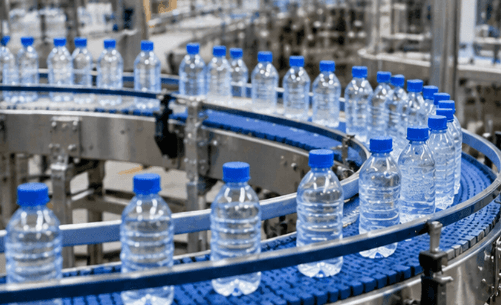
A turning machine conveyor changes the direction of products while maintaining material flow between connected production stages. The right design depends on the products being transported, their weight and stability, the required turning angle, available floor space, and the operating environment. For manufacturers, choosing between a plastic modular belt, metal mesh belt, and metal slat chain conveyor helps prevent transfer problems and creates a more practical production line layout.
What Is a Turning Machine Conveyor and How Does It Work?
A turning machine conveyor is a conveyor system designed to redirect products along a curved path, commonly through 45-degree, 90-degree, or 180-degree turns. It connects production equipment positioned in different directions without requiring every machine to sit along one straight line.
Unlike a simple straight conveyor, a curved conveyor must accommodate different travel distances across its width. The outer edge of a curve follows a longer path than the inner edge. The belt or chain design must account for this difference so that products can move through the turn without excessive sliding, belt stress, or unstable transfers.
How the Turning Mechanism Works
Different conveyor designs manage the curved path in different ways. Some use modular belts designed for curved travel, while certain chain plate systems use different chain pitches or tapered drive arrangements to create the required speed difference between the inner and outer sides.
- Plastic modular belt curves: Use specially configured modular belts and sprocket drives to guide products around a curve.
- Metal mesh belt curves: Provide a metal conveying surface for applications where airflow, drainage, or particular operating conditions matter.
- Metal slat chain curves: Use a chain-driven plate surface and a curved support structure for applications requiring a more rigid conveying surface.
- Conventional belt turning conveyors: May suit particular packaged-product handling requirements, depending on belt construction and the turning mechanism.
The appropriate design depends on product geometry, loading conditions, turning radius, and the required conveying performance. A conveyor that works well for lightweight packages may not be suitable for heavy components or products that require controlled orientation.
Where Are Turning Machine Conveyors Used?
Turning conveyors are useful wherever a production line needs to change direction without disrupting the movement of products. Their practical value depends on the process, rather than the turning angle alone.
Food and Beverage Production
Bottles, cans, packaged foods, and other products may need to move around filling, inspection, labeling, cooling, or packaging equipment. A curved conveyor can connect these stations while making better use of the available floor space.
Plastic modular belt designs may be suitable where cleanability, drainage, or corrosion resistance is important. Metal mesh designs can be considered when the process requires an open conveying surface. Material selection must still account for the actual temperature, cleaning chemicals, product contact requirements, and operating conditions.
For relevant configurations, review the plastic mesh belt curve conveyor and confirm the belt material and design suitability for the intended process.
Automotive and Heavy Manufacturing
Assembly lines may need to redirect engines, metal components, equipment housings, or other workpieces between processing stations. In these environments, the conveying surface, chain system, frame stiffness, and load distribution become important design considerations.
A metal slat chain turning conveyor may be worth evaluating when the product requires a rigid conveying surface or the application involves heavier loads. However, the maximum permitted load must be confirmed for the specific conveyor configuration, not inferred from the general product category.
LEYU’s metal slat curve conveyor uses a chain plate structure designed to support curved conveying paths. Its suitability depends on the workpiece dimensions, weight, turning radius, and production requirements.
Packaging, Warehousing, and Automated Production
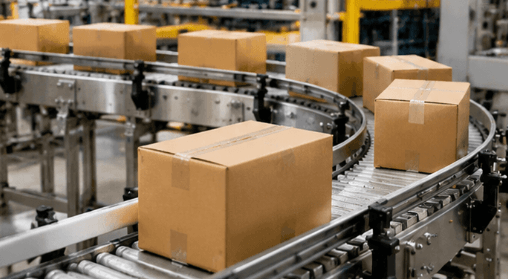
Packaging lines and automated material handling systems frequently need to route cartons, containers, bins, or other unit loads around structural obstacles and connected machines.
A turning conveyor can help connect parallel production sections or redirect products toward inspection, sorting, or downstream packaging. The transfer points must be designed around product dimensions and orientation, particularly when containers are tall, unstable, or sensitive to sudden changes in direction.
Where the layout includes several straight and curved sections, engineers should evaluate the complete conveyor route rather than selecting each section independently.
Which Turning Conveyor Design Should You Choose?
The best conveyor type depends on the relationship between the product, operating environment, and mechanical design. The following comparison provides a starting point for engineering evaluation.
| Conveyor type | Potential applications | Key considerations |
|---|---|---|
| Plastic mesh belt curve conveyor | Suitable food products, bottles, containers, and light industrial products | Belt material, cleanability, turning radius, product stability, and temperature |
| Metal mesh belt curve conveyor | Applications requiring a metal mesh conveying surface, airflow, or drainage | Mesh opening, load support, corrosion resistance, and product retention |
| Metal slat chain curve conveyor | Selected industrial workpieces, containers, and heavier conveying applications | Chain and plate design, load distribution, frame strength, and turning geometry |
| Belt turning conveyor | Specific packaged-product transfer and directional conveying tasks | Belt tracking, product friction, transfer geometry, and allowable load |
These designs are not interchangeable. A metal conveying surface is not automatically better for high temperatures, and a plastic belt is not automatically suitable for every food-contact application. The actual belt material, construction, operating limits, and cleaning requirements must be verified.
For a broader view of the equipment available, consult LEYU’s conveyor systems and turning machine range. Select the specific product based on the application rather than the category name alone.
How Should You Select a Turning Machine Conveyor?
1. Define the Product and Its Stability
Start with the product’s length, width, height, weight, base shape, and center of gravity. These details affect how the product behaves when its direction changes.
Flat, stable packages may move through a curve differently from tall bottles, loosely packed bags, or irregular metal components. If products can slide, tip, collide, or rotate unexpectedly, the design may need suitable side guides, spacing controls, or a different conveying surface.
2. Confirm the Turning Angle and Radius
The turning angle determines the direction change, while the radius influences the footprint and the path followed by the product. A tighter curve may save space, but it can also restrict the belt design or create stability problems for certain products.
Before finalizing a layout, confirm the required angle, inner radius, conveyor width, and connection dimensions. The minimum practical radius depends on the selected belt or chain series and must be confirmed from the relevant technical specification.
3. Match Capacity and Speed to the Production Line
Determine the required product flow per minute or hour, including expected production peaks. The conveyor must handle both the normal operating rate and the maximum anticipated loading condition.
Review product spacing, acceleration, accumulation, and the speed of upstream and downstream equipment. A turning conveyor with adequate nominal capacity can still become a bottleneck if products enter too closely together or the receiving machine cannot accept them at the same rate.
4. Select Materials for the Operating Environment
Material selection should reflect temperature, moisture, cleaning methods, corrosion exposure, and product-contact requirements. Plastic belts, stainless steel components, and coated carbon steel structures each have different advantages and limitations.
For food or pharmaceutical applications, request the relevant material documentation and confirm the cleaning and hygiene requirements. Do not assume that a product is suitable for food contact or complies with a particular regulation solely because it uses plastic or stainless steel.
5. Check Integration and Maintenance Access
Confirm the conveyor height, direction of travel, transfer gaps, drive position, and available maintenance space. These details affect installation, troubleshooting, and the ability to replace wear components.
Where the conveyor connects to automated inspection, labeling, sorting, or packaging equipment, confirm the required control signals and product-transfer sequence before fabrication. A layout drawing is useful for identifying interference and dimensional problems early.
What Should Buyers Confirm Before Ordering?
For commercial projects, a clear technical brief helps suppliers evaluate the application and reduces the risk of comparing proposals based on different assumptions.
- Product dimensions, weight, shape, and orientation.
- Required throughput, operating speed, and production schedule.
- Turning angle, radius, conveyor width, and installation height.
- Preferred conveying surface and material requirements.
- Temperature, humidity, cleaning methods, and corrosion exposure.
- Connection details for upstream and downstream equipment.
- Required guarding, controls, and other site-specific safety provisions.
- Inspection requirements, maintenance access, and replacement-part needs.
- Installation scope, testing requirements, and technical documentation.
When comparing quotations, check whether the proposed equipment includes the required drive, controls, guards, supports, and transfer sections. Also ask which performance values have been confirmed and which still depend on final engineering review.
The initial purchase price is only one part of the decision. Maintenance access, wear-part replacement, cleaning time, and compatibility with the production line can all affect the total cost of ownership.
Conclusion
Turning machine conveyor applications range from bottle handling and packaging to industrial assembly and automated material routing. The right configuration depends on product stability, load, turning geometry, operating environment, and the way the conveyor integrates with the rest of the line.
Before choosing a system, compare the relevant belt or chain designs and verify the actual technical limits with the manufacturer. A well-defined product specification and site layout provide a stronger basis for selecting a turning conveyor that meets production needs without unnecessary redesign or installation delays.
Frequently Asked Questions
What is a turning machine conveyor used for?
A turning machine conveyor redirects products around a curved path to connect production stations positioned in different directions. Common applications include food and beverage packaging, industrial assembly, warehousing, and automated material handling.
How do I choose between a plastic belt and a metal chain turning conveyor?
Consider product weight, conveying surface requirements, cleaning methods, temperature, corrosion exposure, and the required turning radius. Plastic modular belts may suit applications requiring easy cleaning, while metal chain plate designs may be appropriate for selected heavier industrial loads. Confirm the actual equipment specifications before selection.
What determines the minimum turning radius of a conveyor?
The minimum turning radius depends on the belt or chain design, conveyor width, turning mechanism, product dimensions, and load conditions. Confirm the allowable radius for the specific conveyor series rather than relying on a general value.
Can a turning conveyor be integrated into an existing production line?
Yes, provided the conveyor’s height, width, speed, transfer points, and control requirements are compatible with the connected equipment. A layout drawing and product-flow review can help identify integration problems before installation.