What Is a Sprocket? Key Roles in Conveyors

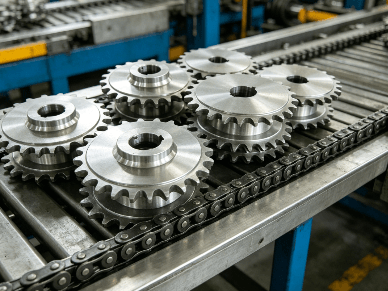
A sprocket is a profiled wheel with radial teeth that engage a chain or belt. In mechanical engineering, understanding what is sprocket geometry is vital for drive efficiency. These components do not mesh directly with other wheels like gears do. Instead, they transfer power through a secondary medium such as a roller chain. This design allows for power transmission over long distances within a facility.
In 2026, sprockets remain the backbone of automated material handling systems. They convert rotational energy from motors into the linear motion of a conveyor. This process is essential for moving bulk goods or heavy components. A high-quality sprocket ensures the system remains synchronized during complex manufacturing cycles. Without this precision, production lines would face constant mechanical interference.
Modern industrial environments demand components that can handle extreme stress levels. What is sprocket durability depends largely on the manufacturing process and design. Engineers often choose sprockets based on their ability to withstand high torque. These wheels are found in sectors ranging from automotive assembly to food packaging. Their role in maintaining constant belt speed is critical for modern automation.
What is a sprocket and how does it function in conveyor systems?
The primary function of a sprocket is to provide a positive drive. This means the teeth lock into the chain links to prevent slippage. Unlike friction-based drives, sprockets maintain a constant speed ratio regardless of load. This reliability is the primary reason why sprockets are preferred in heavy-duty conveyors. A well-designed sprocket reduces the energy required to move heavy materials.
The mechanics of teeth engagement
Sprocket teeth are designed to enter and exit chain links smoothly. This interaction is governed by the pitch, which is the distance between teeth. In 2026, precision machining allows for tolerances as tight as 0.01 millimeters. This level of accuracy reduces mechanical noise and vibration during high-speed operations. Smooth engagement is crucial for protecting the integrity of the conveyor chain.
Torque and power transmission efficiency
The size of the sprocket directly affects the output torque of the motor. A smaller drive sprocket increases the torque but reduces the linear speed. Conversely, a larger sprocket increases speed while decreasing the available pulling force. A typical conveyor system achieves 98% efficiency when the sprocket is correctly aligned. Proper torque management prevents motor burnout and reduces overall electricity consumption.
Key varieties of industrial sprockets used in 2026
Industrial facilities utilize different sprocket designs based on their specific needs. Solid sprockets are the most common choice for standard conveyor setups. They are machined from high-grade steel to provide maximum structural strength. These components are ideal for applications where the drive shaft is easily accessible. Their simplicity makes them a cost-effective solution for many high-volume production lines.
Drive sprockets versus idler sprockets
Drive sprockets are connected to the power source to move the system. Idler sprockets are used to guide the chain and maintain proper tension. Idler sprockets typically feature integrated bearings to minimize rotational friction. They prevent the chain from sagging or jumping off the track during operation. Maintaining the correct balance between these two types is essential for system stability.
The advantages of split sprocket designs
Split sprockets are composed of two halves that bolt together around a shaft. This design allows maintenance teams to replace a sprocket without dismantling the entire conveyor. Using split designs can save up to 6 hours of downtime per replacement. In 2026, these are increasingly popular in 24/7 logistics and distribution hubs. They provide a practical solution for components located in the middle of long drive shafts.
Material Comparison for Industrial Sprockets
| Material Category | Hardness (Rockwell C) | Load Capacity | 2026 Industry Use |
| Hardened Steel | 45 – 55 HRC | Very High | Heavy Machinery |
| Stainless Steel | 20 – 30 HRC | Medium | Food Processing |
| Reinforced Nylon | 70 – 80 R | Low | Lightweight Packaging |
| Cast Iron | 18 – 25 HRC | High | Mining Operations |
Critical technical specifications for sprocket performance
Selecting a sprocket requires a deep understanding of its technical parameters. The most important metric is the pitch diameter, which determines the chain speed. A standard ANSI 60 sprocket has a pitch of 0.75 inches, fitting many industrial chains. Using the wrong pitch will cause the chain to “ride up” on the teeth. This lead to rapid wear and potential catastrophic failure of the drive assembly.
Calculating the optimal tooth count
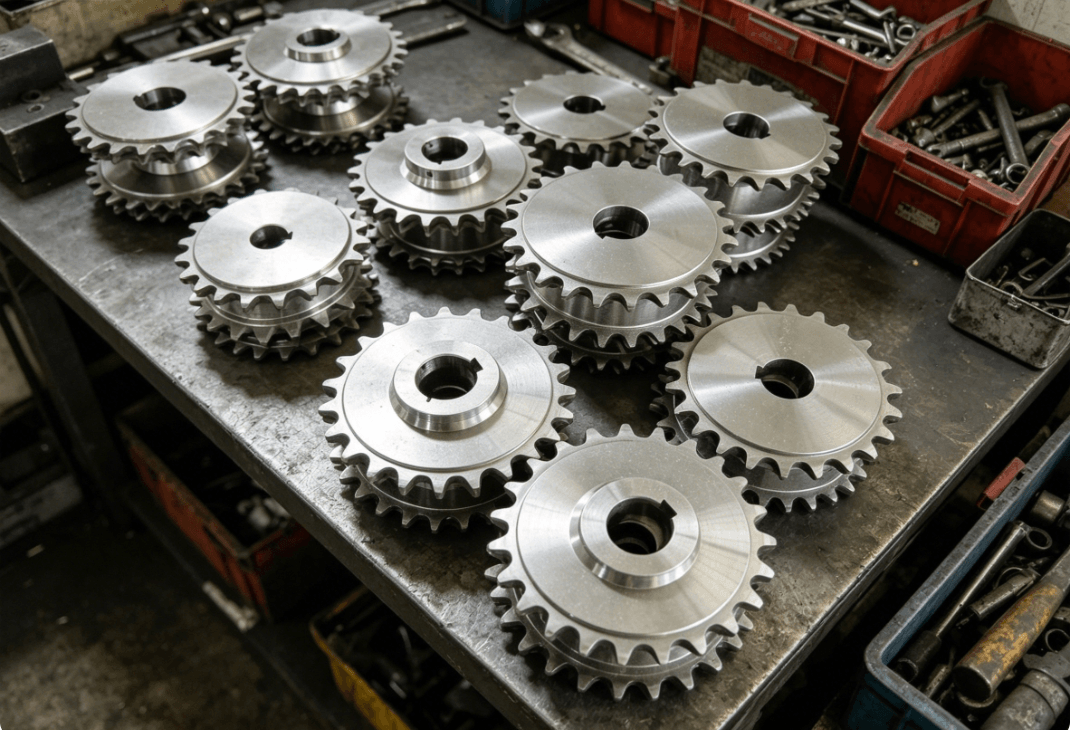
The number of teeth on a sprocket influences the “chordal effect” or vibration. Fewer teeth cause the chain to move in a more pronounced polygonal path. This leads to speed fluctuations that can damage sensitive products on the conveyor. Engineering standards for 2026 recommend at least 17 teeth for drive sprockets. High-speed systems often utilize 21 to 25 teeth to ensure the smoothest possible transition.
Bore sizes and keyway requirements
The sprocket must be securely fixed to the motor or drive shaft. The bore is the central hole, and its diameter must match the shaft exactly. A keyway is a slot cut into the bore to accommodate a metal key. This mechanical lock prevents the sprocket from slipping under high torque loads. For extreme applications, taper-lock bushings are used to provide a friction-fit across the whole shaft.
Relationship Between Tooth Count and Chain Longevity
| Tooth Count | Degrees of Articulation | Vibration Level | Expected Chain Life |
| 11 Teeth | 32.7° | High | 1,500 Hours |
| 15 Teeth | 24.0° | Moderate | 3,000 Hours |
| 19 Teeth | 18.9° | Low | 5,500 Hours |
| 25 Teeth | 14.4° | Very Low | 8,000+ Hours |
The impact of material engineering on service life
The material used in sprocket manufacturing determines how long it will last in the field. Carbon steel is the traditional choice for its excellent balance of cost and strength. Many 2026 manufacturers apply induction hardening to the teeth to improve wear resistance. Hardened teeth can last 3 times longer than non-hardened versions in abrasive environments. This process targets only the contact areas while keeping the hub tough.
Stainless steel for hygienic environments
In food and beverage production, stainless steel is the mandatory material. It resists corrosion from water and the harsh chemicals used in daily wash-downs. While more expensive, stainless steel sprockets prevent rust contamination in consumer goods. They are often paired with plastic conveyor chains for reduced noise. These systems are designed to meet strict 2026 safety and hygiene regulations.
Plastic and composite sprocket solutions
Advanced polymers like UHMW-PE are used for high-speed, low-load applications. These materials offer self-lubricating properties that reduce the need for external grease. Using plastic sprockets can reduce noise by 12 decibels in a quiet facility. They are also significantly lighter, which reduces the inertia the motor must overcome. However, they are sensitive to high temperatures and may deform above 90 degrees Celsius.
How to select the correct sprocket for your needs?
Choosing the right component depends on your specific conveyor configuration and environment. You should first identify the type of chain or belt your system utilizes. Many modern facilities now use specialized sprockets for modular belts to improve throughput. The interface between the sprocket and the belt must be perfectly aligned to avoid tracking issues. Checking the manufacturer’s load ratings is the first step in a successful selection process.
Environmental factors such as dust, humidity, and temperature must be evaluated. If your facility operates in a high-dust environment, hardened steel is usually required. For wet or chemical-heavy areas, plastic or treated metal is the safer choice. A 20% increase in initial material quality can result in a 50% reduction in lifetime maintenance. Always consider the total cost of ownership rather than just the purchase price.
Finally, consider the maintenance accessibility of your conveyor design. If a sprocket is buried deep within a machine, a split design is nearly always better. Ensure that you have the correct tools for installation, such as torque wrenches and alignment lasers. Proper alignment can extend sprocket life by 40% compared to a poorly installed unit. Consulting with technical specialists can help you navigate these complex mechanical decisions.
Summary
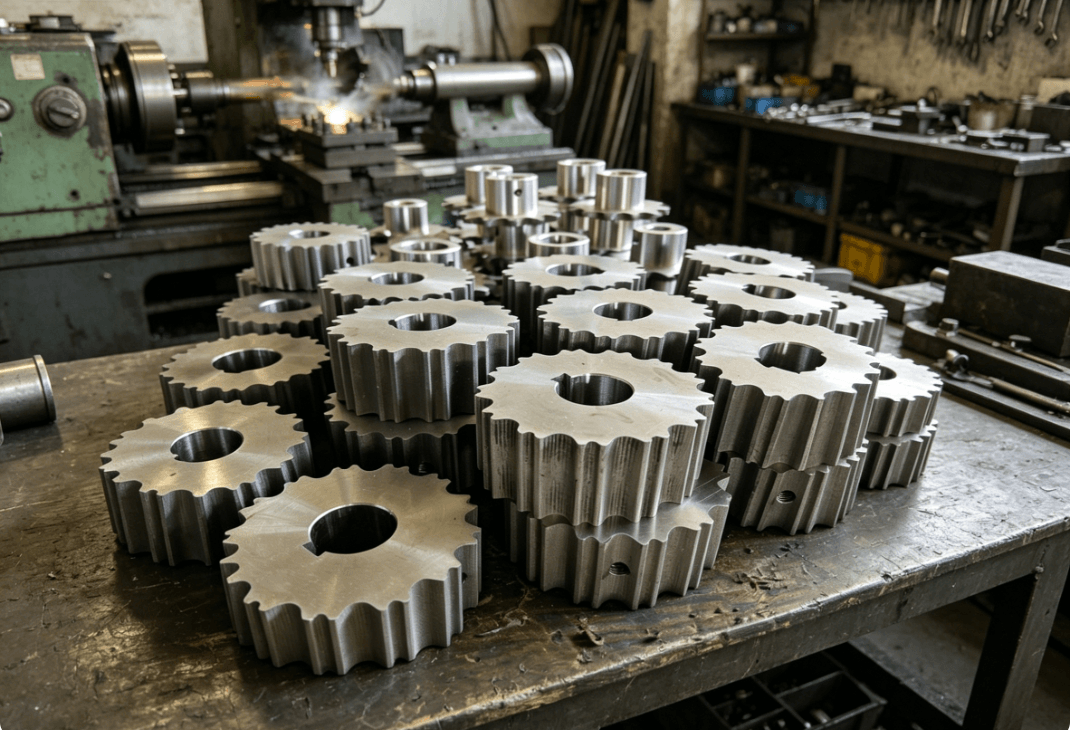
A sprocket is the core mechanical element that enables power transmission in conveyor systems. By answering what is sprocket functionality, we see its impact on industrial productivity and efficiency. Choosing the right material, tooth count, and design is essential for 2026 operations. Proper selection reduces downtime, lowers energy costs, and ensures a longer lifespan for the entire drive system. Investing in high-quality sprockets is a fundamental strategy for any modern manufacturing or logistics facility.
FAQ
1. What is the main difference between a sprocket and a gear?
A sprocket works with a chain to transfer motion, while a gear meshes with another gear. Sprockets are used for greater distances between shafts where direct gear contact is impossible.
2. How can I tell if a sprocket needs to be replaced?
A sprocket needs replacement when the teeth show a “hooked” appearance or thinning. In 2026, most technicians use wear gauges to check if the tooth profile has changed by more than 10 percent.
3. Can I use a new chain with an old sprocket?
You should avoid using a new chain with an old sprocket because the worn teeth will ruin the new chain. The mismatched pitch between the worn sprocket and the new chain causes rapid accelerated wear on both components.
4. What is the benefit of using a sprocket with more teeth?
A sprocket with more teeth provides a smoother motion and reduces the vibration caused by chordal action. This leads to a quieter operation and significantly extends the life of the conveyor chain.
5. Why are idler sprockets important in a conveyor?
Idler sprockets are critical for maintaining the correct tension and preventing the chain from slipping or vibrating. They guide the chain through complex paths and ensure it enters the drive sprocket at the correct angle.