How to Choose: Chain Conveyor vs Belt Conveyor

Selecting the right material handling system is a critical decision for any production facility in 2026. The debate often centers on chain conveyor vs belt conveyor systems for moving goods efficiently. Each technology offers unique benefits depending on the weight and type of items transported.
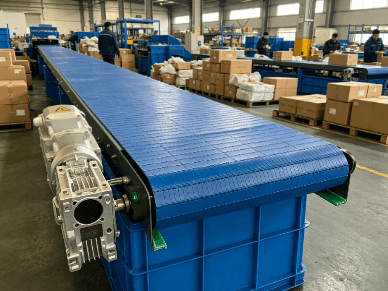
Making the wrong choice can lead to high maintenance costs and operational bottlenecks. A belt conveyor uses a continuous loop of fabric or rubber moved by rollers. In contrast, a chain conveyor utilizes powered chains to move loads directly or via pallets.
Understanding these fundamental mechanical differences is the first step toward optimization. Efficiency starts with choosing a system that matches your specific environmental and logistical challenges. Choosing between a chain conveyor vs belt conveyor involves analyzing your product’s surface and weight.
High-volume industries often prefer the smooth surface of a flexible belt system. Heavy-duty manufacturing sectors usually require the rugged durability of steel or plastic chains. This guide will provide the technical data needed to make an informed investment.
What is the Main Difference Between a Chain Conveyor vs Belt Conveyor?
The primary distinction lies in how power is transmitted to the transported load. A belt conveyor relies on friction between the drive pulley and the flexible belt material. This design allows for extremely smooth movement of small or irregular items across long distances.
However, friction-based systems can slip under extreme weight or in oily industrial conditions. A chain conveyor vs belt conveyor comparison shows that chains use mechanical engagement with sprockets. This positive drive system eliminates slippage entirely, even when carrying several tons of equipment.
Chains are typically constructed from hardened steel or high-strength polymers for maximum tensile strength. They are ideal for harsh environments where heat might degrade a standard rubber belt. Furthermore, the contact surface varies significantly between these two popular material handling systems.
Mechanical Drive Principles and Traction
Belt systems use tension to maintain grip on the drive rollers during operation. If the tension is too low, the belt will slip and cause timing issues. If the tension is too high, it can damage the bearings and the motor.
Chain systems utilize the interlocking of chain links with toothed sprocket wheels for movement. This mechanical lock ensures that every motor rotation translates into precise linear movement. Consequently, chain conveyors provide superior positioning accuracy for automated robotic assembly lines.
Load Capacity and Surface Contact Area
The physical contact between the conveyor and the product defines its utility. A belt provides a solid, continuous platform that supports the entire bottom of a product. This is essential for preventing small parts from falling through the transport mechanism.
Chain conveyors often support the load at specific points, such as the edges. This “open” design allows for specialized tasks like bottom-scanning or cooling during transport. It also makes it easier to integrate lifting modules within the conveyor frame itself.
Environmental Resistance and Durability
Industrial environments in 2026 require equipment that can withstand chemicals and extreme temperatures. Standard belts can fail in temperatures exceeding 80°C or when exposed to sharp metal shards. Metal chains can operate effectively in extreme heat reaching up to 500°C.
Chain conveyors offer better resistance to oil and chemicals compared to traditional rubber belts. This makes them the primary choice for automotive painting and metal forging operations. Belt conveyors are better suited for controlled, clean environments like electronics assembly.
Key Performance Metrics for Industrial Systems in 2026
When evaluating chain conveyor vs belt conveyor systems, load capacity is the deciding factor. Standard belt conveyors are engineered for items ranging from 0.5 kg to 50 kg per meter. Industrial chain systems are built to move heavy pallets exceeding 2,500 kg.
Using a belt for such heavy loads would cause stretching and premature mechanical failure. Operational speed also differentiates these two popular and essential conveyor technologies. Belt conveyors are the superior choice for high-speed sorting and packaging lines.
Speed and Throughput Efficiency
In 2026, modern belt systems can reach speeds of 150 meters per minute effectively. They maintain item stability through high-friction surface coatings that prevent sliding during rapid acceleration. This makes them ideal for the fast-paced e-commerce fulfillment sector worldwide.
Chain conveyors move slower to ensure the safety of heavy or bulky loads. Typical speeds for chain systems range from 10 to 30 meters per minute. While slower, they provide the constant torque required to move massive industrial components reliably.
Energy Consumption and Operating Costs
Energy efficiency is a major concern for modern green manufacturing facilities in 2026. Belt conveyors are typically more energy-efficient for long-range transport of light materials. They have lower self-weight and lower rolling resistance compared to heavy steel chains.
However, the efficiency of a chain conveyor vs belt conveyor changes with heavy loads. A chain’s positive drive prevents energy loss that occurs during belt slippage. This makes chains more cost-effective for heavy-duty applications requiring constant stop-and-go movements.
Noise Levels and Workplace Safety
Modern workplace regulations in 2026 emphasize the reduction of industrial noise for worker health. Belt conveyors operate much more quietly than metal chains clinking against steel guides. Most belt systems operate between 60 and 70 decibels during standard use.
Chain systems can produce noise levels reaching 85 decibels if not properly maintained. Using plastic chains or specialized wear strips can help mitigate this acoustic issue significantly. However, a belt system remains the quietest option for office-adjacent production areas.
Why Choose a Chain Conveyor for Heavy-Duty Applications?
Heavy-duty industries require hardware that can withstand constant stress and high impact. Chain conveyors are engineered for high-impact loading where items are dropped onto the line. The rigid nature of the chain links prevents the “bouncing” effect seen in belts.
This stability is essential for precision assembly tasks in the automotive sector. Furthermore, chain systems offer unparalleled flexibility for multi-strand configurations in large factories. You can run parallel chains to support wide pallets or oversized machinery components.
Stability and Impact Resistance
The structural integrity of a steel chain allows it to absorb significant shocks. In 2026, many foundries use chains to transport heavy castings that are still hot. A belt would melt or tear under the weight and heat of these items.
Chain systems also handle uneven loads much better than flexible belt conveyor systems. If a heavy weight is placed on one side, the chain stays on track. A belt might shift or “track” to the side, causing damage to its edges.
Customization for Pallet Handling
Chain systems facilitate better integration with lifting, rotating, and shifting equipment for pallets. The gap between chains allows for the placement of pneumatic stoppers and sensors. This modularity is why chains dominate the pallet-handling industry in 2026.
A chain conveyor vs belt conveyor comparison reveals that chains allow for easy bottom access. Workers or robots can reach the underside of the product while it is moving. This is nearly impossible on a solid belt without complex and expensive diversion hardware.
Ease of Maintenance and Repair
Maintenance intervals favor chain systems in rugged and demanding industrial environments. While a belt might require frequent tensioning, chains are remarkably stable over time. Lubrication is the primary requirement for maintaining a high-quality steel chain system.
Modern plastic chains offer self-lubricating properties to reduce manual labor and prevent contamination. Chain systems allow for localized repairs by replacing individual links or sections. Replacing an entire conveyor belt is a much more time-consuming and expensive process.
How to Determine the Best System for Your Facility?
Identifying the correct system requires a deep dive into your specific operational requirements. You must first determine if your load requires a continuous support surface. If you are moving pallets or heavy structural steel, the durability of a chain is mandatory.
Chain conveyors are the reliable choice for non-standard load shapes in 2026. Another factor is the integration of specialized modules like stoppers and rotating tables. Quality chain systems are often modular, allowing you to swap sections as needs evolve.
When searching for high-performance components, looking at the industrial chain category at Leyu Conveyor provides excellent insights into modern standards. Their specialized solutions cater to a variety of heavy-duty transport needs across different sectors. Consulting with a technical expert can help you calculate the required motor torque.
You should also consider the ease of replacing individual links versus an entire belt. Evaluating the total cost of ownership over ten years often reveals the hidden value. A robust chain system may have a higher initial cost but lower long-term expenses.
Assessing Product Dimensions and Weight
The physical characteristics of your product should dictate the conveyor type you choose. Small, loose parts will fall through the gaps in a chain conveyor system. These require the solid, flat surface of a high-quality belt for safe transport.
Conversely, very wide or very heavy items benefit from the multi-strand layout of chains. You can adjust the distance between chains to accommodate different pallet widths easily. This versatility is a key advantage of the chain conveyor vs belt conveyor for logistics.
Evaluating Long-Term Operational Costs
In 2026, the initial purchase price is only one part of the financial equation. Belt conveyors are cheaper to install but may require more frequent surface replacements. A single sharp object can ruin an entire belt in seconds, causing downtime.
Chain conveyors are more expensive upfront but offer a much longer service life. They are more resistant to accidental damage from dropped tools or sharp metal parts. Over a five-year period, the maintenance savings of a chain system often outweigh the costs.
Integration with Automation and Robotics
As automation advances in 2026, the precision of your conveyor becomes more important. Chain conveyors provide the “zero-slip” performance needed for high-precision robotic picking and placing. Belts may require expensive encoders and tracking software to achieve similar results.
If your process involves frequent stops and starts, the chain’s mechanical grip is superior. It prevents the product from shifting due to inertia when the motor stops suddenly. This level of control is vital for high-tech manufacturing and complex assembly sequences.
Summary
In the 2026 comparison of chain conveyor vs belt conveyor, the winner depends on your application. Belt conveyors are best for high-speed, lightweight, and fragile items in clean environments. Chain conveyors excel in heavy-duty, high-temperature, and rugged industrial settings involving large pallets. Always prioritize your specific load weight and environmental conditions when making your final equipment selection.
FAQ
1. Which conveyor type is better for the food industry?
Belt conveyors are generally better for food because they offer a smooth, easy-to-clean surface. FDA-approved belts prevent bacteria buildup in crevices that chains might have during processing. However, stainless steel chains are used in high-heat baking or extreme freezing applications in 2026.
2. Can a chain conveyor handle steep inclines?
Yes, chain conveyors are excellent for steep inclines and even vertical lifts in warehouses. Because they use a positive drive with sprockets, there is no risk of the load slipping. Special attachments can be added to the links to secure the product during the steep climb.
3. Is a belt conveyor quieter than a chain conveyor?
Yes, belt conveyors are significantly quieter because they lack the metal-on-metal contact of chains. Most belt systems operate below 70 decibels, making them ideal for areas where staff work nearby. Chains can produce more noise, especially at higher speeds or if they lack proper lubrication.
4. What is the lifespan of a typical industrial chain?
A well-maintained industrial chain can last for 5 to 10 years in a 2026 facility. Regular lubrication and tension checks are essential to maximize this operational lifespan for the user. In contrast, many industrial belts require replacement every 1 to 3 years due to surface wear.
5. Which system is more energy-efficient for heavy loads?
Chain conveyors are more efficient for moving extremely heavy loads over short to medium distances. The mechanical engagement of the sprocket prevents energy loss through friction or belt slippage under weight. Belt conveyors are only more efficient when transporting light goods at high speeds across long distances.
Reference Sources
CEMA (Conveyor Equipment Manufacturers Association):Conveyor Design Standards and Safety 2026
Modern Materials Handling Comparing Conveyor Technologies for Distribution Centers
Industrial Conveyor Selection Guide: Belts vs Chains
OSHA (Occupational Safety and Health Administration):Conveyor Safety Standards for General Industry