What Is a Metal Mesh Belt? Structure and Key Uses

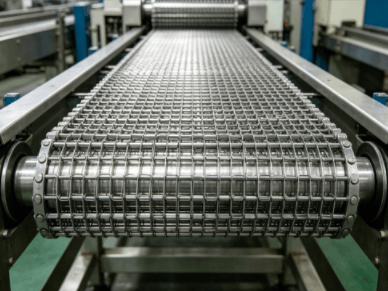
Industrial operations in 2026 require materials to move through increasingly extreme environments. A metal mesh belt serves as a specialized conveying solution for these challenging tasks. It consists of interconnected metal wires designed to provide a stable, flat surface for various goods.
Unlike fabric or rubber belts, these metallic structures withstand high temperatures and corrosive chemicals easily. They allow for the passage of air or liquid through their open apertures. This permeability makes them ideal for drying, cooling, and washing processes in modern factories.
The metal mesh belt is engineered for extreme longevity and mechanical strength. It maintains structural integrity under significant tension and heavy industrial loads. Engineers prioritize these belts in industries where hygiene and durability are absolutely non-negotiable.
What Are the Main Components of a Metal Mesh Belt?
The structural integrity of a metal mesh belt depends on its intricate weaving pattern. Most modern designs utilize spiral coils and transverse cross rods as their foundation. These components work together to distribute tension evenly across the entire belt width.
Spiral wires form the primary surface area of the conveying system. They are often wound in alternating directions to prevent the belt from tracking sideways. This “balanced” construction ensures a straight run during continuous 2026 industrial operations.
The Role of Spiral Wires
Spiral wires define the texture and density of the metal mesh belt surface. They are typically cold-drawn from stainless steel or specialized alloy wires. The thickness of these wires determines the belt’s overall resistance to stretching.
In 2026, precision winding technology allows for tighter tolerances in spiral production. A tighter spiral creates a smoother surface for conveying small or delicate parts. Thicker wires are used when the application involves heavy mechanical impact or high tension.
Cross Rods and Lateral Support
Cross rods connect the spiral coils to provide essential lateral stability. These rods act as the rigid backbone of the metal mesh belt. They prevent the structure from narrowing when pulled through a high-tension drive system.
The diameter of the cross rod is a critical engineering specification. Rods must be strong enough to resist bending under the weight of the product. Modern 2026 manufacturing often uses hardened steel for these rods to extend service life.
Edge Treatments and Selvedges
The edges, or selvedges, are critical for maintaining the operational width of the belt. Manufacturers often use welded or knuckled edges to secure the cross rods permanently. This prevents the mesh from unraveling under heavy lateral pressure or friction.
Some heavy-duty versions include side chains for a positive drive mechanism. The chain-edge design ensures the metal mesh belt moves at a constant speed. This is particularly useful in synchronized 2026 automated assembly lines.
| Structural Component | Primary Function | Common 2026 Material |
| Spiral Coil | Provides the conveying surface | Stainless Steel 304/316 |
| Cross Rod | Adds transverse strength | High Carbon Steel |
| Side Chain | Ensures positive tracking | Hardened Alloy Steel |
| Selvedge | Prevents edge fraying | Welded Stainless Steel |
How Does the Metal Mesh Belt Design Impact Performance?
Industrial requirements vary, leading to several distinct metal mesh belt designs. Each type offers specific benefits for different conveying speeds and load types. Choosing the right weave is essential for maintaining 2026 operational efficiency.
The balanced weave belt remains the most popular choice globally. It features alternating left and right-hand spirals joined by crimped or straight rods. This design offers excellent tracking and very high strength-to-weight ratios for most users.
Balanced Weave vs. Compound Weave
The balanced weave is versatile and handles a wide range of temperatures. It is the standard for most 2026 food processing and glass manufacturing lines. The open structure allows for efficient drainage and air circulation around the products.
Compound balanced weaves use multiple spirals and rods for each pitch. This creates a very dense and smooth surface for carrying tiny industrial parts. It is commonly used in 2026 heat treatment furnaces for small fasteners or electronic components.
Flat Wire and Honeycomb Designs
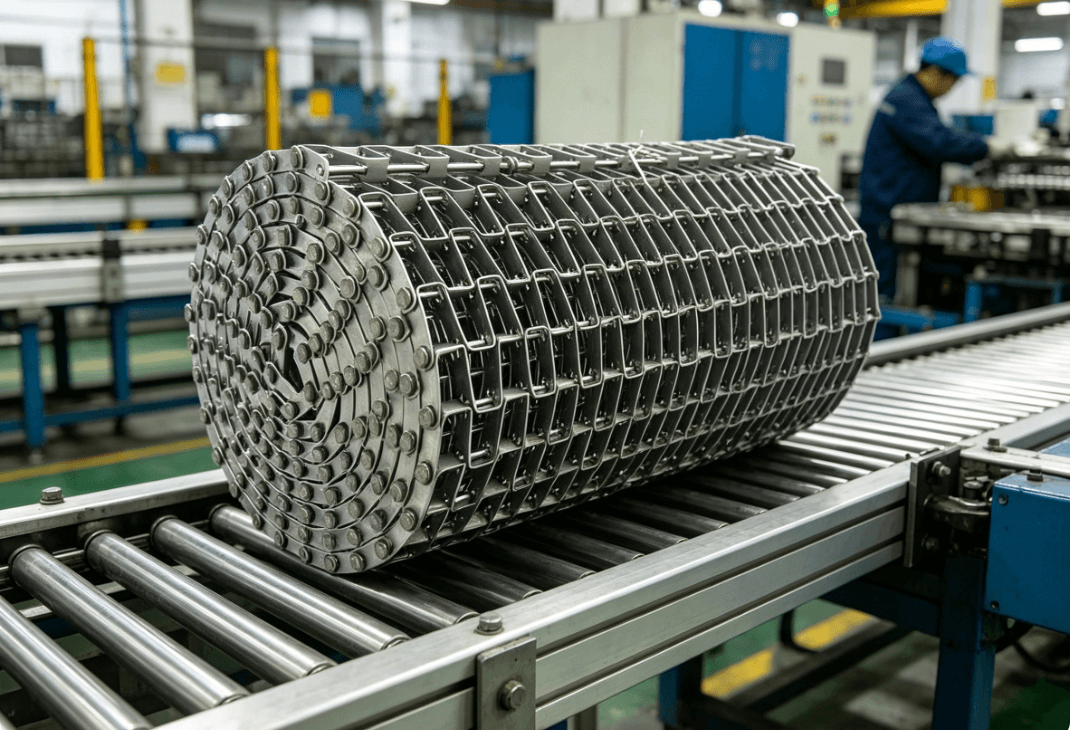
The flat wire belt, often called a honeycomb belt, is constructed from flat strips. These strips are connected by straight cross rods to create large rectangular openings. This type provides a very large open area for maximum airflow or liquid drainage.
Honeycomb belts are extremely easy to clean due to their open geometry. In 2026, they are preferred for heavy-duty washing and drying applications. The flat surface also provides excellent stability for products that might tilt on a round wire mesh.
Eye Link and Modular Systems
Eye link belts consist of eye-shaped wires connected by thick transverse rods. They offer a completely flat surface and are exceptionally easy to maintain. These are frequently used in 2026 freezing and pasteurizing sectors for heavy products.
The modular nature of eye link belts allows for easy repair of damaged sections. If one part fails, operators can replace individual links rather than the whole belt. This reduces downtime significantly in high-volume 2026 production environments.
| Belt Type | Best 2026 Use Case | Key Advantage |
| Balanced Weave | General conveying | Tracking stability |
| Flat Wire | Drainage and cooling | Maximum airflow |
| Eye Link | Heavy-duty freezing | Easy to sanitize |
| Chain Driven | Inclined conveying | No drive slippage |
What Materials Define a High-Quality Metal Mesh Belt?
The performance of a metal mesh belt is dictated by its material composition. Most industrial belts in 2026 utilize various grades of stainless steel or carbon steel. These materials are selected based on the specific chemicals and temperatures they will face.
Stainless steel 304 is the standard material for most general industrial applications. It offers good corrosion resistance and can handle temperatures up to 800°C. This grade is widely used in the 2026 food and beverage industry for its hygiene.
Stainless Steel Grades for Industrial Use
For environments involving high salt or acids, 316 stainless steel is required. It contains molybdenum, which enhances resistance to pitting and crevice corrosion significantly. This material is essential for 2026 marine or pharmaceutical processing plants.
Engineers must consider the chemical compatibility of the belt with cleaning agents. Some sanitizers can degrade lower-grade steels over time. Using 316 stainless steel ensures the metal mesh belt remains structural after years of chemical exposure.
High-Temperature Alloy Performance
In heat-treating furnaces, high-nickel alloys like Inconel or 314 stainless steel are used. These alloys maintain their strength even at 1150°C in 2026 industrial processes. They resist oxidation and carburization during repeated thermal cycles in the furnace.
Thermal expansion is a critical data point for high-heat belts in 2026. Stainless steel expands at a rate of approximately 17.3 x 10⁻⁶ per degree Celsius. Designers must account for this growth to prevent the belt from buckling under heat.
| Material Grade | Max Temperature (°C) | Corrosion Resistance |
| Carbon Steel | 450 | Low to Moderate |
| SS 304 | 800 | Moderate to High |
| SS 316 | 850 | Very High |
| SS 314 | 1150 | High (Heat Resistant) |
What Are the Primary Industrial Applications for These Belts?
The versatility of the metal mesh belt allows it to serve many sectors. Its most prominent use is in the 2026 food processing industry. The belts facilitate baking, frying, and cooling in large-scale commercial production lines.
In the electronics industry, these belts move sensitive components through soldering ovens. The metallic surface allows for effective grounding against static electricity. It also ensures even heat distribution across the circuit boards during the 2026 assembly process.
Food Processing and Hygiene
Food safety regulations in 2026 demand materials that are easy to sterilize. The open mesh design prevents the buildup of food particles or bacteria. Stainless steel belts can withstand high-pressure steam and aggressive cleaning cycles without rusting.
The permeability of the mesh allows for uniform cooking and cooling. For example, in a bread baking oven, heat reaches the bottom of the loaf through the mesh. This results in a consistent product quality across the entire 2026 production batch.
Heat Treatment and Metalworking
The automotive sector uses the metal mesh belt for heat-treating critical metal parts. Forging and sintering processes require belts that can survive intense furnace temperatures. The mesh design allows for uniform cooling after the heating stage is completed.
In 2026, heavy-duty belts are used to carry metal castings through annealing furnaces. These belts must support hundreds of kilograms per square meter. The combination of high-nickel alloys and reinforced cross rods makes this possible.
Electronics and Chemical Industries
Chemical processing relies on the metal mesh belt for drying powders and granules. The chemical-resistant alloys prevent contamination of the final product. These belts also withstand the aggressive drying agents used in 2026 laboratories.
Waste management plants utilize these belts for sorting and dewatering materials. The open mesh allows fluids to drain away while retaining solid waste. The durability of the metal resists abrasion from glass and sharp metal fragments in 2026.
How to Determine the Best Metal Mesh Belt for Your System?
Choosing a metal mesh belt requires a deep understanding of your operational environment. You must first evaluate the maximum temperature the belt will encounter in 2026. Materials that work at room temperature may fail rapidly in a high-heat furnace.
The size of the product being conveyed is another critical factor for your decision. A mesh with large openings will not support small or fragile items properly. Conversely, a very tight weave might limit the necessary airflow for 2026 cooling processes.
Load weight and conveyor speed also dictate the required structural strength. High-speed 2026 lines need belts with superior tracking capabilities to avoid downtime. Heavy loads require thicker cross rods and perhaps integrated side chain drives for stability.
Chemical exposure is a factor that often determines the final alloy selection. If your process involves acidic cleaners, 316 stainless steel is the safest 2026 choice. For dry, non-corrosive environments, carbon steel may be a more cost-effective alternative.
When evaluating a metal mesh belt, consider the ease of maintenance and cleaning. Some weaves are prone to trapping debris, which can be a risk in food production. Open designs are generally much easier to sanitize and inspect in 2026 factories.
To make an informed decision, it is helpful to review detailed technical specifications. When looking for high-quality components, exploring the wide variety of [metal mesh belt options available on specialized product pages] can provide specific technical data for your project. This helps you match the belt to your specific 2026 industrial needs.
Finally, consider the drive system of your existing 2026 conveyor infrastructure. A belt must be compatible with the sprockets or rollers already in place. Consulting with a specialist ensures that the belt’s tension and tracking remain optimal throughout its life.
Summary
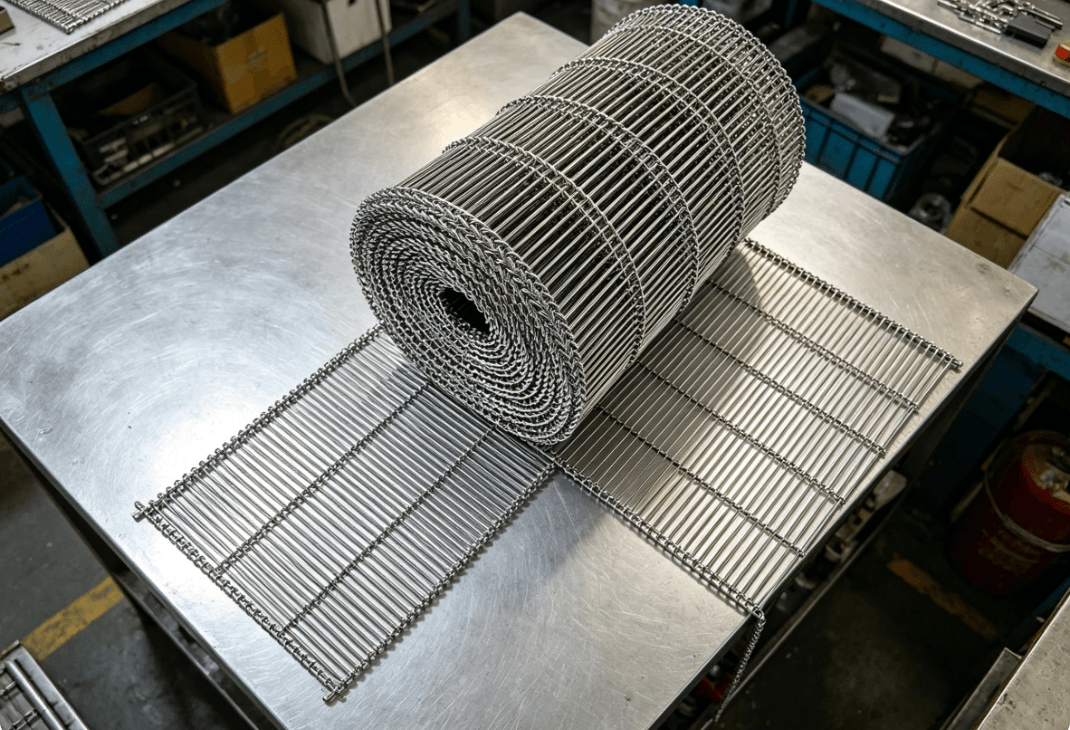
A metal mesh belt is a fundamental tool for 2026 industrial conveying, offering unmatched durability and thermal resistance. By understanding the different weaves, materials, and load capacities, operators can significantly improve production efficiency. These belts provide the reliable performance needed to handle everything from delicate food to heavy automotive parts.
FAQ
1. What are the primary materials used in a metal mesh belt in 2026?
Most belts are made from stainless steel (304, 316, or 314) or carbon steel. The choice depends on the required temperature resistance and the presence of corrosive elements in the facility. Stainless steel is preferred for hygiene and heat resistance.
2. How do I prevent a metal mesh belt from mistracking?
Using a balanced weave design with alternating left and right-hand spirals is the most effective method in 2026. Additionally, ensuring the conveyor rollers are properly aligned is crucial for straight tracking. Side chains can also provide mechanical guidance.
3. Can a metal mesh belt be used in food processing?
Yes, they are widely used in the food industry because they are easy to clean and sanitize. Stainless steel versions meet strict 2026 hygiene standards and are resistant to food acids. Their open structure is ideal for baking and cooling.
4. What is the maximum temperature a metal mesh belt can withstand?
Depending on the alloy, some belts can operate at temperatures exceeding 1150°C in 2026. High-nickel alloys are specifically designed for these extreme furnace environments. Standard stainless steel typically handles up to 800°C effectively.
5. Why would I choose a chain-driven metal mesh belt for 2026 operations?
Chain-driven belts are ideal for heavy loads or applications where the belt might slip on the drive drum. The chains ensure a positive, synchronized movement even in oily or wet conditions. This is essential for precision 2026 automated lines.
Reference Sources
ASM International – Handbook on Stainless Steels and Industrial Alloys.
U.S. Food and Drug Administration (FDA) – Sanitary Design of Food Conveyor Systems.
International Organization for Standardization (ISO) – ISO 10312: Materials for Conveyor Belts.
American Iron and Steel Institute (AISI) – Properties of Carbon and Stainless Steel Grades.