Plastic Chain Plate vs Metal Mesh Belt: High-Performance Selection Guide

Selecting the wrong conveyor surface is a silent profit killer. In high-output manufacturing environments—whether you are moving automotive components or frozen poultry—the interface between your product and the conveyor determines your line’s uptime, sanitation efficiency, and long-term O&M (Operations and Maintenance) costs.
The debate between plastic chain plates (modular plastic belts) and metal mesh belts is not about which is “better” in a vacuum. It is about which material science aligns with your specific environmental stressors: temperature, chemical exposure, and mechanical load.
As an engineer or procurement manager, you must look beyond the initial purchase price. This guide breaks down the technical trade-offs to help you specify the correct surface for your facility.
Material Architecture: How They Function Under Stress
To understand performance, we must first look at how these two surfaces are constructed.
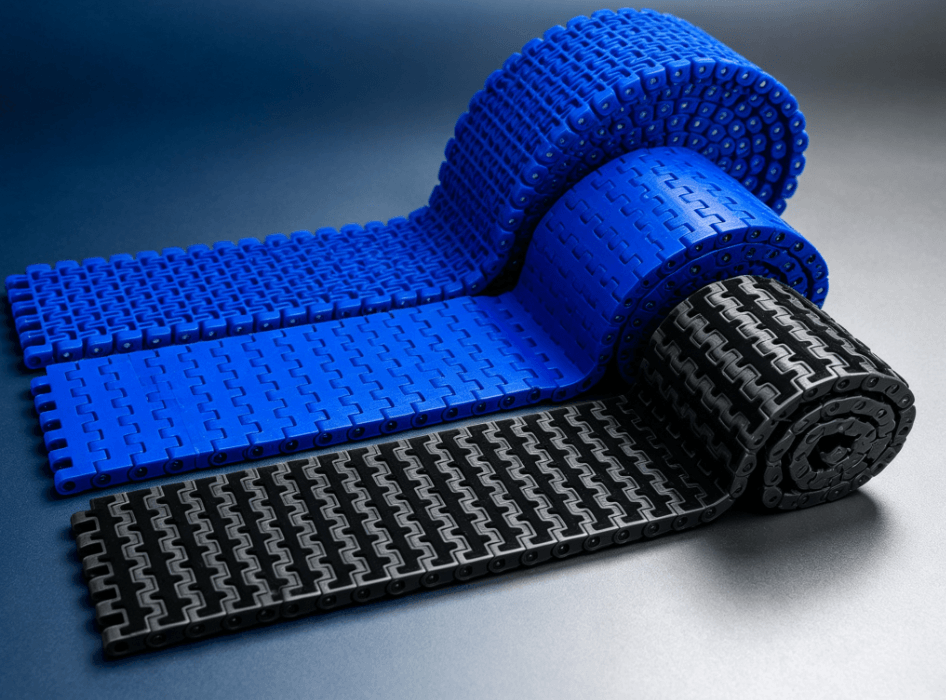
Plastic Chain Plates are modular units linked by hinge pins. Usually made from Polyethylene (PE), Polypropylene (PP), or Acetal (POM), these belts are positively driven by sprockets. This means they do not rely on friction for tension, which eliminates the “tracking” issues common in flat belts.
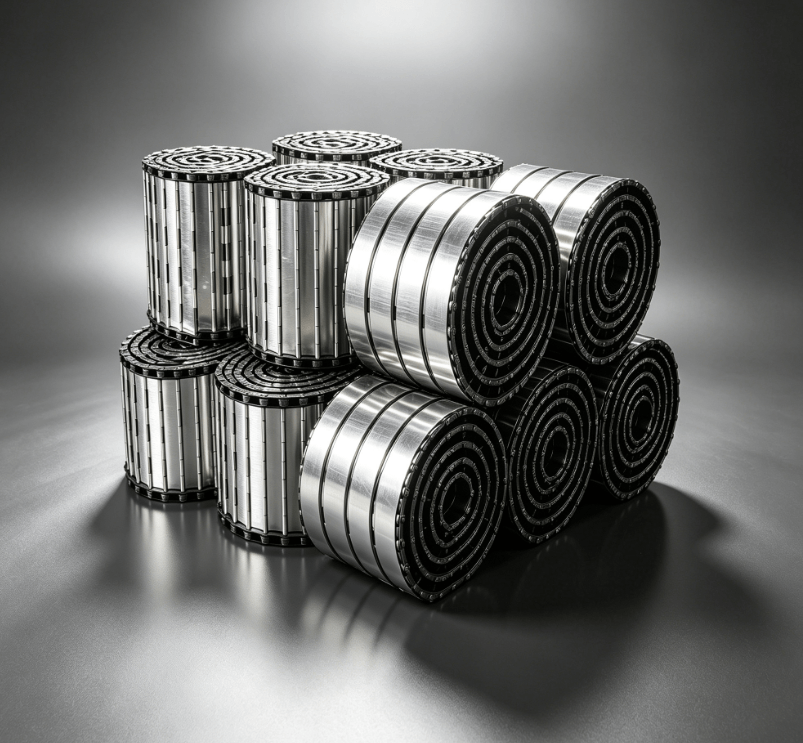
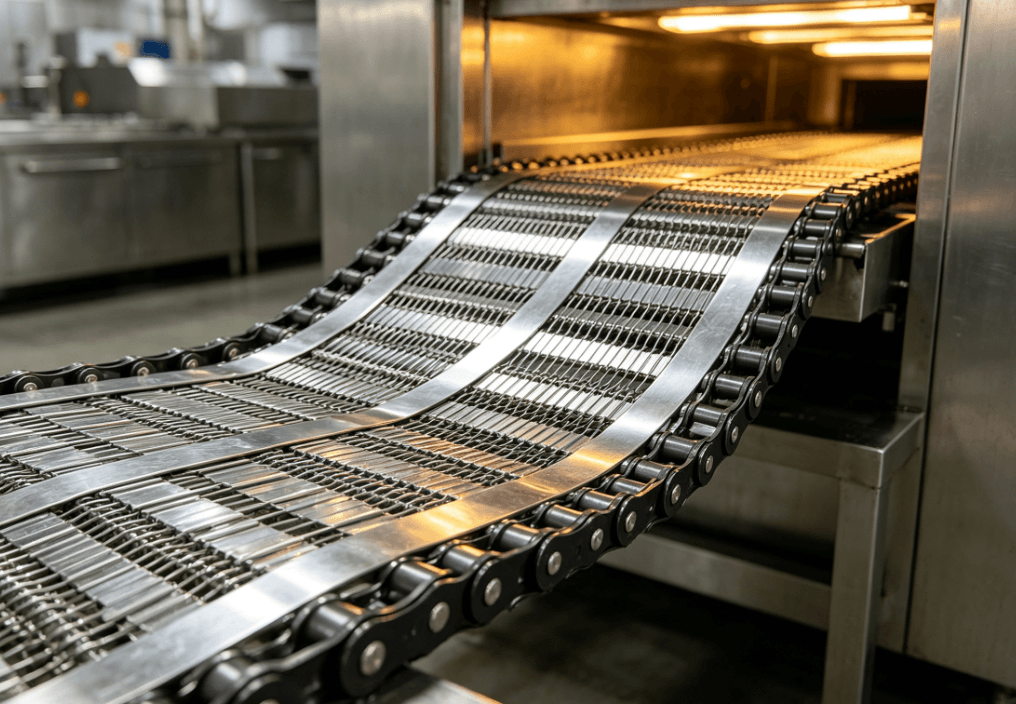
Metal Mesh Belts, conversely, are typically woven from stainless steel or carbon steel wire. They can be friction-driven or chain-driven. Their primary advantage lies in their “open area,” which allows for maximum airflow and fluid drainage.
| Technical Feature | Plastic Chain Plate (Modular) | Metal Mesh Belt (Wire) |
| Temperature Range | -40°C to +100°C (Material dependent) | -50°C to +1100°C |
| Drive System | Positive (Sprockets) | Friction or Chain-edge |
| Open Area | 0% to 50% | Up to 85% |
| Strength-to-Weight | High | Moderate (Heavy self-weight) |
| Chemical Resistance | Excellent (Acids/Bases) | Excellent (Solvents/High Heat) |
When to Specify Metal Mesh Belts: The Thermal Advantage
If your process involves extreme thermal gradients, metal is non-negotiable. Plastic begins to lose structural integrity (creep) as it approaches its glass transition temperature.
Key Use Cases for Metal Mesh:
- Industrial Baking and Ovens: Metal mesh handles the 200°C+ environments of commercial ovens where plastic would melt or outgas.
- Cryogenic Freezing: While some plastics handle cold, stainless steel mesh excels in IQF (Individually Quick Frozen) tunnels because it doesn’t become brittle at -40°C.
- High-Drainage Requirements: In breading, battering, or heavy wash-down stations, the high open-area percentage of a wire mesh belt (like a Balanced Weave or Great Wall belt) prevents “puddling” and ensures the product doesn’t sit in excess fluids.
The Engineering Constraint: Metal belts are prone to “metal fatigue” over time and can be difficult to track if the conveyor frame is not perfectly squared.
When to Specify Plastic Chain Plates: The Versatile Workhorse
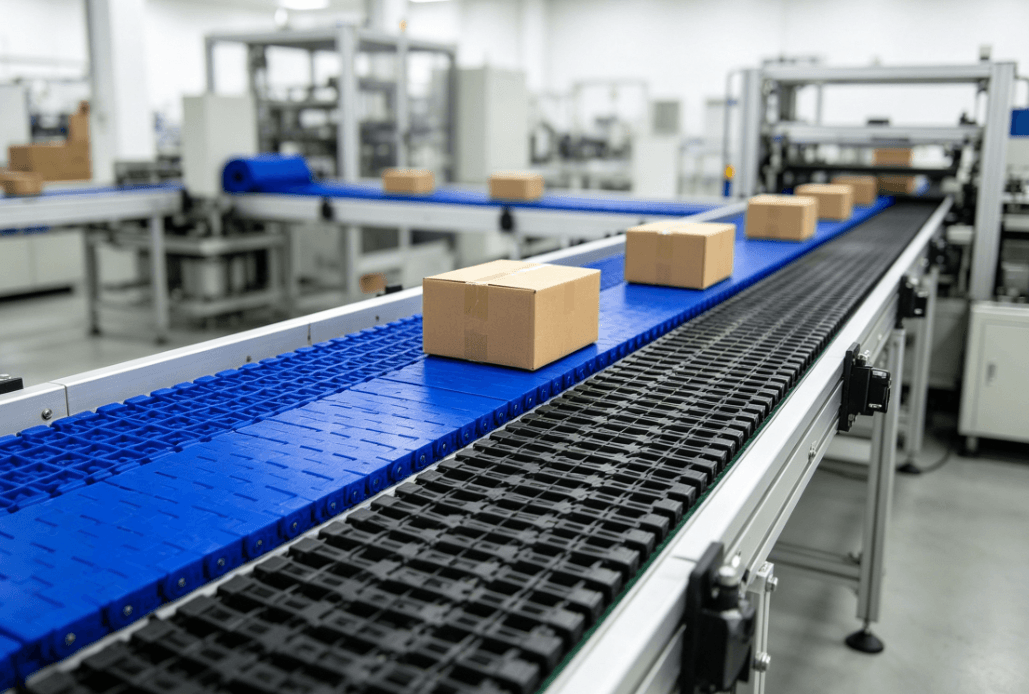
For the vast majority of packaging, bottling, and assembly lines, plastic chain plates have become the industry standard for three reasons: maintenance, hygiene, and noise.
The Hygiene Factor (FDA/USDA Compliance):
Modern plastic chain plates, such as those engineered by Leyu Conveyor, are designed with “clean-in-place” (CIP) capabilities. Unlike woven wire, which has thousands of tiny “knuckle” intersections where bacteria can hide, modular plastic segments are easier to sanitize with high-pressure sprays.
Maintenance and Repairability:
If a metal mesh belt breaks, you often have to replace a large section or perform complex wire weaving/welding. If a plastic chain plate is damaged, you simply pop out the damaged module and snap in a new one. This reduces MTTR (Mean Time To Repair) from hours to minutes.
Friction and Product Handling:
Plastic has a lower coefficient of friction against the conveyor bed than metal. This reduces the energy required to drive the motor, leading to lower utility costs. Furthermore, plastic is “gentler” on finished goods—essential for preventing scratches on consumer packaging or sensitive electronics.
Operational Cost Analysis: Total Cost of Ownership (TCO)
When evaluating conveyor solutions, the “Commercial Intent” often focuses on the quote price. However, a senior project manager looks at the 5-year TCO.
- Energy Efficiency: Plastic belts are significantly lighter than stainless steel. A lighter belt requires less torque to start and less energy to maintain velocity. Over a 24/7 operation, the electricity savings can be substantial.
- Replacement Parts: Metal mesh prices fluctuate with global nickel and chromium markets. Plastic resins are generally more price-stable.
- Lubrication: Many metal belts require lubrication to prevent wear at the joints. Plastic chain plates (especially Acetal/POM) are often self-lubricating, reducing the risk of product contamination.
Application-Specific Logic: Making the Final Call
To decide which is better for your project, answer these three “Filter Questions”:
- Does the environment exceed 100°C? If yes, choose Metal Mesh.
- Is the product fragile or prone to marking? If yes, choose Plastic Chain Plate.
- Is the line layout “Complex” (curves, inclines, side-transfers)? Plastic chain plates excel here because side-flexing modules allow a single continuous belt to turn corners, eliminating the need for “dead plates” or transfer points where products might trip.
Engineering Support and Customization
At the manufacturing level, there is no “off-the-shelf” perfect belt. Factors like belt pull, sprocket engagement, and chemical compatibility with cleaning agents must be calculated.
Leyu Conveyor provides a range of modular plastic and specialized chain solutions designed for high-load industrial automation. For OEM projects where precision is paramount—such as battery manufacturing or high-speed bottling—the ability to customize the chain plate material (e.g., anti-static or flame-retardant additives) provides a level of application-specific performance that standard metal mesh cannot match.
FAQ
Q: Can plastic chain plates handle heavy loads like automotive parts?
A: Yes. High-strength Acetal (POM) chain plates are frequently used in automotive assembly and pallet handling. While metal is perceived as “stronger,” the tensile strength of modern engineering plastics is more than sufficient for most industrial loads when paired with the correct support structure.
Q: Do metal mesh belts rust?
A: If specified as 304 or 316 Grade Stainless Steel, they are highly resistant to corrosion. However, in high-saline (saltwater) or chlorine-heavy environments, even stainless steel can suffer from “pitting.” In these specific cases, certain acid-resistant plastic polymers may actually last longer.
Q: Which belt type is quieter?
A: Plastic chain plates are significantly quieter. Metal-on-metal contact in wire mesh conveyors creates high-frequency noise that may require operators to wear hearing protection in large facilities.
Q: Is it easy to switch a metal belt conveyor to a plastic one?
A: It is possible but usually requires changing the drive sprockets, wear strips, and potentially the motor gear ratio. It is rarely a “drop-in” replacement; a technical consultation is recommended.
Reference Sources:
- ISO 2148: Conveyor belts — Determination of the strength of mechanical fastenings.
- FDA CFR 21: Regulations on Food Contact Substances (Polymer safety standards).
- CEMA (Conveyor Equipment Manufacturers Association): Standardized definitions for unit handling conveyors.