Conveyor Sprocket Selection: Guide to Maximizing Service Life

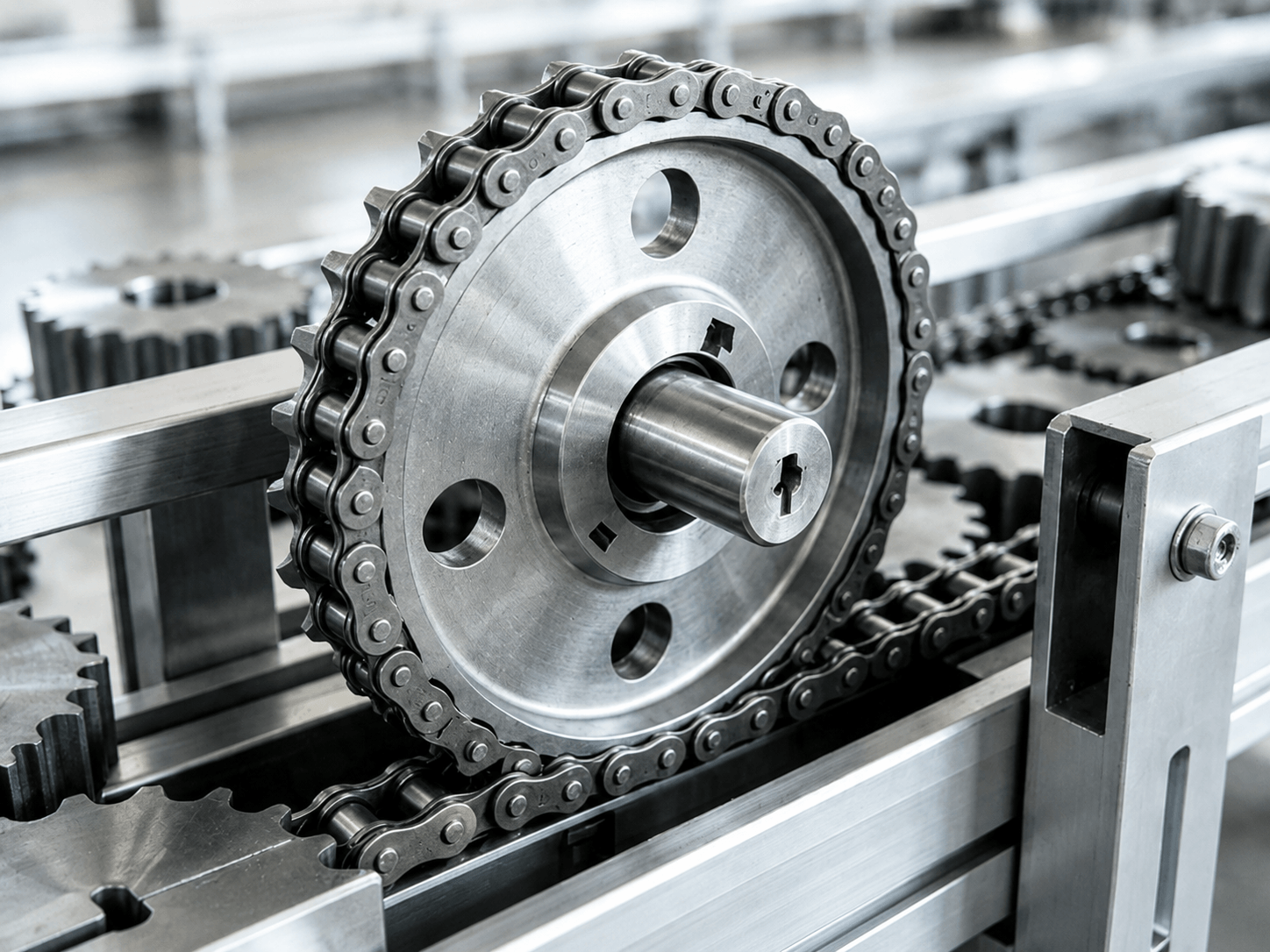
In industrial material handling, a conveyor system is only as reliable as its drive components. The sprocket acts as the heart of this interface, translating motor torque into linear motion. Improper conveyor sprocket selection leads to accelerated belt wear, unexpected downtime, and increased energy consumption.
Choosing the right sprocket requires more than matching a part number. It involves understanding the synergy between the chain or modular belt and the driving teeth. This guide examines the technical variables that determine whether a sprocket lasts six months or six years.
Understanding Geometric Compatibility and Pitch
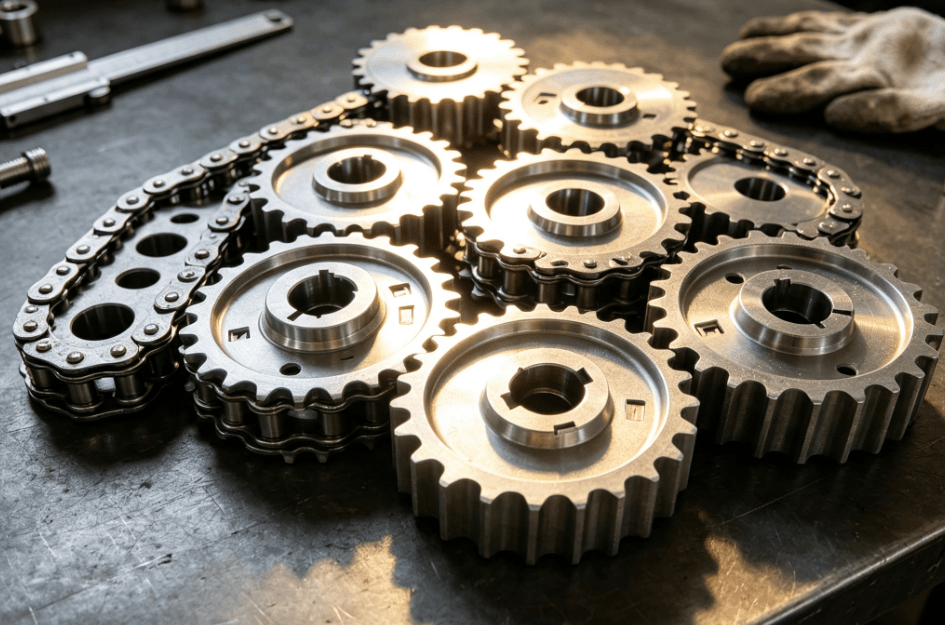
The most critical factor in sprocket selection is pitch compatibility. Pitch refers to the distance between the centers of two adjacent teeth. If the sprocket pitch does not perfectly match the belt or chain pitch, the components will “hunt” for a seating position.
Incorrect pitch alignment causes the belt to climb the sprocket teeth. This results in “chordal action,” a pulsating motion that vibrates the entire conveyor frame. Over time, these micro-impacts fatigue the motor bearings and stretch the conveyor belt beyond its elastic limit.
Engineers must also consider the “number of teeth.” While smaller sprockets save space, they increase the articulation angle of the belt. A larger sprocket provides a smoother transition, reducing friction and heat generation at the hinge points.
Material Selection: Balancing Durability and Environment
Selecting the right material is a balance between mechanical strength and environmental resistance. Leyu Conveyor offers a variety of materials tailored to specific industrial stressors.
- Thermoplastics (PP, PA, POM): Polypropylene (PP) is excellent for chemical resistance in acidic environments. Polyaxymethylene (POM), or Acetal, provides high mechanical strength and low friction, making it ideal for high-speed bottling lines.
- Stainless Steel: For food-processing applications requiring frequent washdowns with caustic agents, 304 or 316 stainless steel is mandatory. These prevent corrosion that could otherwise contaminate the product stream.
- Reinforced Composites: Nylon (PA) sprockets reinforced with glass fibers offer the durability of metal with the weight and noise-reduction benefits of plastics.
| Material | Best For | Temperature Range | Chemical Resistance |
| Polypropylene | Wet/Acidic Areas | 5°C to 105°C | High |
| Acetal (POM) | High-Speed Drive | -40°C to 90°C | Moderate |
| Stainless Steel | Heavy Duty/Hygiene | -70°C to 400°C | Excellent |
| Nylon (PA) | High Abrasion | -40°C to 110°C | Moderate |
The Impact of Tooth Profile on Wear Life
The profile of the sprocket tooth determines how the load is distributed across the belt’s hinge or the chain’s roller. High-quality sprockets feature a precision-machined “root diameter” that allows debris to escape.
In “dirty” environments, such as agriculture or packaging, debris buildup in the sprocket teeth can increase the effective pitch diameter. This “packing” effect forces the belt outward, leading to catastrophic tension spikes. Selecting sprockets with “debris relief” or “dirt-wash” notches allows particles to be pushed out, maintaining consistent engagement.
Split vs. Solid Sprocket Designs
Maintenance efficiency is often overlooked during the initial design phase. Solid sprockets are cost-effective but require the removal of the entire drive shaft for replacement. This can turn a two-hour repair into a full-shift shutdown.
Split sprockets consist of two halves bolted together. These allow for rapid replacement without dismantling bearings or drive motors. For critical production lines where downtime costs thousands of dollars per hour, the slightly higher upfront cost of split sprockets provides a significant return on investment.
Bore Specifications and Shaft Security
A sprocket must be perfectly concentric to the shaft to avoid “run-out.” Standard bores include round, square, or hex shapes. Square bores are common in modular belt systems as they transmit high torque without the need for keyways.
If using a round bore, the keyway must be machined to precise tolerances. A loose keyway creates “backlash,” where the sprocket rocks back and forth during starts and stops. This eventually rounds off the shaft corners, requiring expensive shaft replacement.
Optimizing for Commercial and Operational Efficiency
When sourcing from manufacturers like Leyu Conveyor, customization is key to maximizing service life. Custom bore sizes, specific tooth counts, and specialized materials allow engineers to tailor the drive system to the exact load requirements of the facility.
For procurement managers, evaluating the Total Cost of Ownership (TCO) is more important than the initial unit price. A cheap, low-tolerance sprocket will increase belt wear. Replacing a $5,000 modular belt prematurely because of a $50 sprocket error is a common but avoidable industrial mistake.
FAQ
1. How do I know when my conveyor sprockets need replacing?
Look for “hooked” teeth, where the tooth profile looks curved or sharp. Significant vibration, unusual noise, or the belt “jumping” teeth are also clear indicators of end-of-life wear.
2. Can I run a plastic belt on metal sprockets?
Yes, stainless steel sprockets are often used with plastic modular belts in heavy-load or high-temperature food applications. However, ensure the sprocket face is smooth to prevent “scuffing” the plastic belt.
3. What is the advantage of a square bore over a round bore?
Square bores transmit torque across the four flat surfaces of the shaft. This eliminates the need for keys and set screws, which can loosen or shear under high-torque loads.
4. Does the number of teeth affect the speed of the conveyor?
Yes. For a fixed motor RPM, a sprocket with more teeth will increase the linear speed of the belt. However, it will also decrease the torque delivered to the belt.
5. How does temperature affect sprocket selection?
Plastic sprockets expand and contract significantly with temperature changes. In cold storage or high-heat ovens, you must ensure the bore clearance accounts for thermal expansion to prevent the sprocket from seizing on the shaft.
Reference Sources
- ISO 606: International standard for short-pitch precision roller chains and sprockets.
- ASME B29.100: Precision Transmission Roller Chains, Attachments, and Sprockets.
- CEMA (Conveyor Equipment Manufacturers Association): Guidelines for belt tension and drive component compatibility.
- Technical Specifications from Leyu Conveyor: Sprocket Product Category for material-specific load ratings.