Metal Mesh Belt Applications: A Technical Guide for Industry

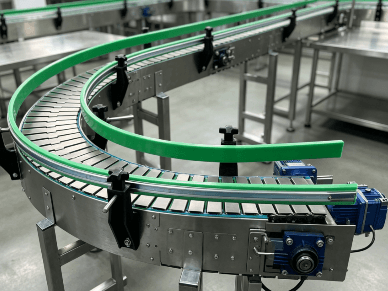
The efficiency of a modern conveyor system often hinges on a single technical choice: the selection of the belt medium. Unlike synthetic or rubber belts, metal mesh belts are engineered for environments where extreme temperatures, chemical exposure, and hygiene requirements make other materials non-viable. From the cryogenic freezing of food products to the high-intensity heat of industrial brazing, these components provide the structural integrity required for continuous flow production.
Selecting the correct metal mesh configuration is not merely a procurement step; it is a critical engineering decision that affects throughput, energy consumption, and the lifespan of the entire conveyor assembly.
What Defines an Industrial Metal Mesh Belt?
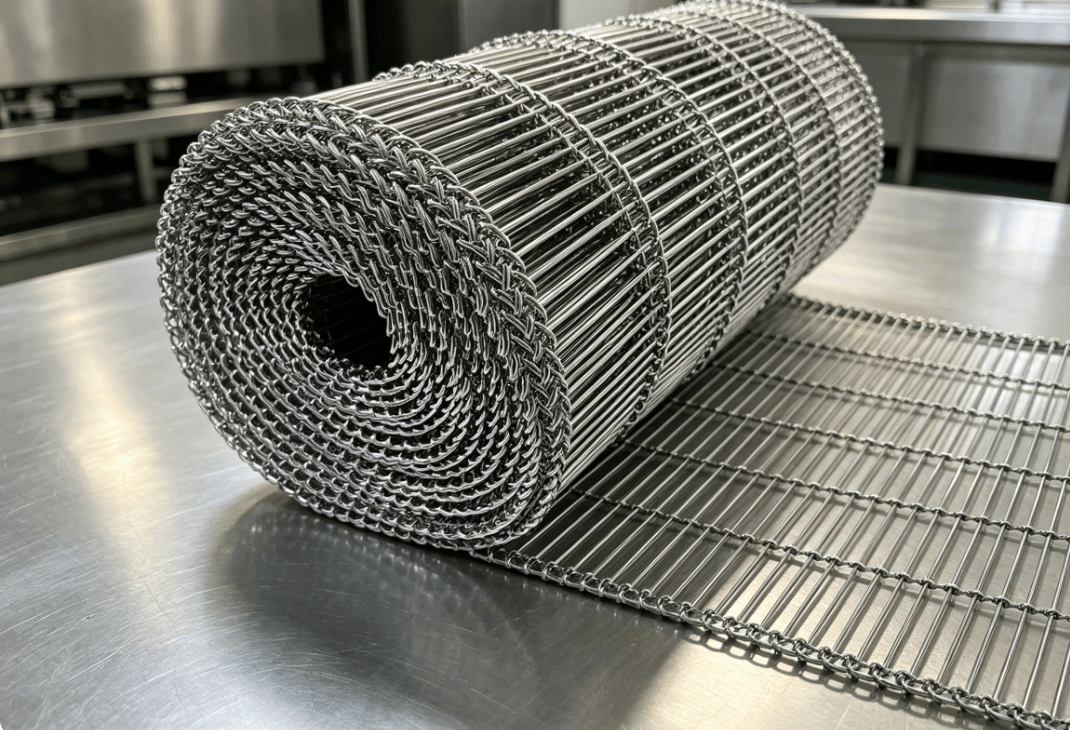
A metal mesh belt is a modular, flexible structure composed of interwoven wires, rods, or links. The primary engineering advantage of these belts is their “open area.” This refers to the percentage of the belt surface that is vacant, allowing for the unrestricted flow of air, liquids, or gases around the product being transported.
Material composition typically ranges from high-carbon steel to specialized stainless steel alloys like AISI 304, 316, or 314. The choice of material dictates the belt’s resistance to oxidation, corrosion, and mechanical creep under high-stress conditions.
Core Metal Mesh Belt Applications by Industry
The versatility of metal mesh technology allows it to span across divergent sectors, each utilizing specific mechanical properties of the weave.
1. Food Processing and Industrial Baking
In the food industry, hygiene and thermal performance are the primary drivers. Metal mesh belts are preferred because they do not harbor bacteria and can withstand rigorous Clean-In-Place (CIP) protocols.
- Baking and Ovens: Balanced weave belts are used in continuous bake ovens. The open mesh allows for uniform heat distribution to the bottom of the product, ensuring consistent browning and texture.
- Cryogenic Freezing: In flash-freezing applications, the belt must remain flexible at sub-zero temperatures without becoming brittle.
- Drainage and Washing: For fruit and vegetable processing, the open area facilitates the rapid drainage of wash water and prevents “pooling” which could lead to contamination.
2. Heat Treatment and Metallurgy
Industrial furnaces operate at temperatures that would incinerate standard conveyor materials. Metal mesh belts, particularly those made from high-nickel alloys, are essential for:
- Annealing and Sintering: Transporting metal parts through controlled-atmosphere furnaces.
- Brazing: Providing a stable, flat surface for joining metal components at temperatures exceeding 1000°C.
- Quenching: Handling the thermal shock of moving parts directly from a furnace into an oil or water cooling bath.
3. Electronics and Semiconductor Manufacturing
Precision and surface stability are paramount in electronics. Metal mesh belts are used in the production of printed circuit boards (PCBs) and solar panels.
- Drying and Curing: Used in conveyorized ovens for curing solder masks or drying protective coatings.
- Static Dissipation: The conductive nature of stainless steel mesh naturally prevents the buildup of electrostatic discharge (ESD), protecting sensitive microchips during transport.
4. Pharmaceutical and Chemical Processing
These sectors require high levels of corrosion resistance and material purity.
- Sterilization Tunnels: Belts transport glass vials or surgical instruments through high-heat sterilization zones.
- Chemical Coating: Mesh belts allow excess chemicals to drip off the product, reducing waste and ensuring an even coat.
Technical Comparison: Belt Type vs. Application Suitability
Different weave patterns offer distinct mechanical advantages. The following table outlines which configuration is best suited for specific industrial demands:
| Belt Type | Primary Characteristic | Ideal Application |
| Balanced Weave | High tensile strength; straight tracking | General conveying, baking, and annealing |
| Chain Driven | Positive drive; prevents slippage | Heavy loads, inclines, and quenching tanks |
| Flat Wire Belt | Maximum open area; easy to clean | Canning, cooling, and washing lines |
| Eye Link Belt | Extremely flat surface; heavy-duty | Heavy-duty freezing and pasteurizing |
| Compound Balanced | Very tight weave; high density | Small parts handling (fasteners, seeds) |
Engineering Considerations for Selection
When evaluating metal mesh belt applications, engineers must account for the Strength-to-Weight Ratio. A belt that is too heavy increases the energy required to drive the motor, while a belt that is too light may fail under the weight of the product or thermal expansion.
Thermal Expansion (The “Creep” Factor):
In high-temperature applications, the metal mesh will physically expand. If the conveyor tensioning system is not designed to accommodate this change in length, the belt may track off-center or undergo permanent deformation.
Airflow Dynamics:
For drying and cooling, the “percentage of open area” is the most critical metric. A higher open area reduces the drying time by allowing more air to contact the product surface, directly impacting production cycle times.
Integrating Specialized Solutions
For operations requiring specific mechanical properties—such as the high-density requirements of Compound Balanced Weave Belts or the tracking precision of Chain Driven systems—it is essential to match the belt geometry to the drive sprocket.
Modern manufacturing allows for the customization of pitch, wire diameter, and edge finish (such as welded or laddered edges) to ensure that the belt integrates seamlessly with existing conveyor frames. This compatibility is vital for reducing downtime during maintenance cycles.
FAQ
Q: Why choose stainless steel over carbon steel for metal mesh belts?
A: While carbon steel is cost-effective, stainless steel (304 or 316) is essential for food-grade applications and environments prone to moisture. 316 stainless steel offers superior resistance to chlorides and acids, making it the standard for chemical and marine-adjacent processing.
Q: Can metal mesh belts handle incline conveying?
A: Yes. For inclines, “Chain Driven” belts or belts with integrated “Flights” (upright metal dividers) are used to prevent products from sliding backward.
Q: How do you prevent a metal mesh belt from tracking off-center?
A: Proper tracking is achieved through accurate alignment of the conveyor rollers and, in some cases, the use of balanced weaves (alternating left and right-hand spirals) which naturally counteract lateral movement.
Q: What is the maximum temperature a metal mesh belt can withstand?
A: Specialized alloys like Grade 314 stainless steel or Inconel can operate in environments reaching up to 1150°C (2100°F).
Reference Sources
- AISI (American Iron and Steel Institute): Standards for Stainless Steel Grades in Manufacturing.
- FDA (U.S. Food and Drug Administration): Guidelines on Food Contact Substances (FCS) for Conveyor Materials.
- ISO 9001:2015: Quality Management Systems for Industrial Component Manufacturing.
- ASTM International: Standard Specification for Stainless Steel Wire Strand.