Understanding Hoist Conveyors: Uses & Benefits

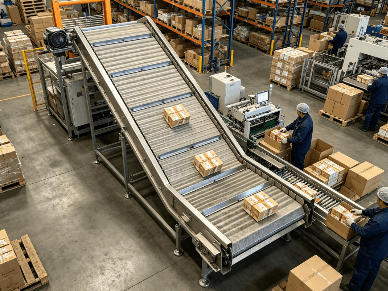
A hoist conveyor represents a critical evolution in material handling technology. It combines the functionality of a traditional conveyor with vertical lifting capabilities. This allows industries to move goods across multiple floor levels efficiently.
Modern facilities in 2026 often face significant space constraints. A hoist conveyor solves this by utilizing overhead or vertical space. These systems are essential for connecting production lines at different elevations.
By integrating a hoist conveyor, companies can automate their vertical logistics. This reduces the need for manual lifting or forklifts. Consequently, the overall workflow becomes smoother and more predictable.
What Is a Hoist Conveyor and How Does It Function?
A hoist conveyor is a mechanical device designed to move items vertically. It usually features a platform or bucket attached to a motorized lifting mechanism. The system transports loads between two or more fixed levels.
The core mechanism typically involves chains, belts, or wire ropes. These components provide the tension required to lift heavy industrial loads safely. Most systems use high-torque electric motors to ensure consistent speed.
Control systems play a vital role in the operation of a hoist conveyor. Sensors detect the arrival of a product at the entry point. The system then automatically cycles the lift to transport the item.
| Component | Function | Material/Type |
| Lifting Drive | Provides the power for vertical movement | Gear motors or hydraulic units |
| Carriage/Platform | Holds the material during transport | Stainless steel or reinforced aluminum |
| Safety Enclosure | Prevents accidents during operation | Steel mesh or polycarbonate panels |
| Sensors | Monitor position and load status | Photoelectric or proximity switches |
Industrial data from 2026 shows that automated vertical lifts can operate at speeds of 30 to 60 meters per minute. This speed is significantly higher than traditional elevator systems. High-speed operation ensures that production bottlenecks are minimized.
Furthermore, a hoist conveyor can handle a wide variety of load types. These range from small boxes to heavy pallets weighing over 2,000 kilograms. This versatility makes them a staple in diverse industrial environments.
What Are the Primary Benefits of Using a Hoist Conveyor?
The primary advantage of a hoist conveyor is the optimization of floor space. Vertical transport allows facilities to reduce their footprint by up to 60% or 80%. This is compared to using long, inclined belt conveyors.
Increased safety is another significant benefit for warehouse operators. Manual lifting is a leading cause of workplace injuries in the logistics sector. A hoist conveyor eliminates the physical strain on human workers.
Research indicates that automation can reduce material handling accidents by nearly 40%. By keeping goods on a fixed vertical path, the risk of collisions is lowered. This creates a more controlled and secure work environment.
Can a Hoist Conveyor Improve Safety and Ergonomics?
Ergonomics are significantly improved by removing the need for manual vertical lifting. Workers no longer need to carry heavy boxes up stairs or ramps. This leads to a 25% reduction in musculoskeletal disorders among staff.
Automated systems also include integrated safety gates and sensors. These features prevent the hoist conveyor from moving if an obstruction is detected. This technological safeguard is essential for busy 2026 production floors.
Furthermore, a hoist conveyor minimizes the use of forklifts in tight spaces. Reducing forklift traffic decreases the likelihood of pedestrian-vehicle accidents. It creates a more predictable and organized flow of materials.
Does a Hoist Conveyor Maximize Vertical Cube Space?
Utilizing the “vertical cube” of a warehouse is a common strategy in 2026. A hoist conveyor allows companies to use high-ceiling areas for storage or production. This can increase a facility’s storage capacity by 150%.
Traditional conveyor ramps take up a vast amount of floor area. In contrast, a vertical hoist conveyor has a tiny footprint. This saved space can be used for additional workstations or inventory.
Efficient space usage translates directly into lower facility overhead costs. Renting or building a smaller footprint is more economical for modern businesses. A hoist conveyor makes these high-density layouts physically possible.
How Do Different Types of Hoist Conveyors Compare?
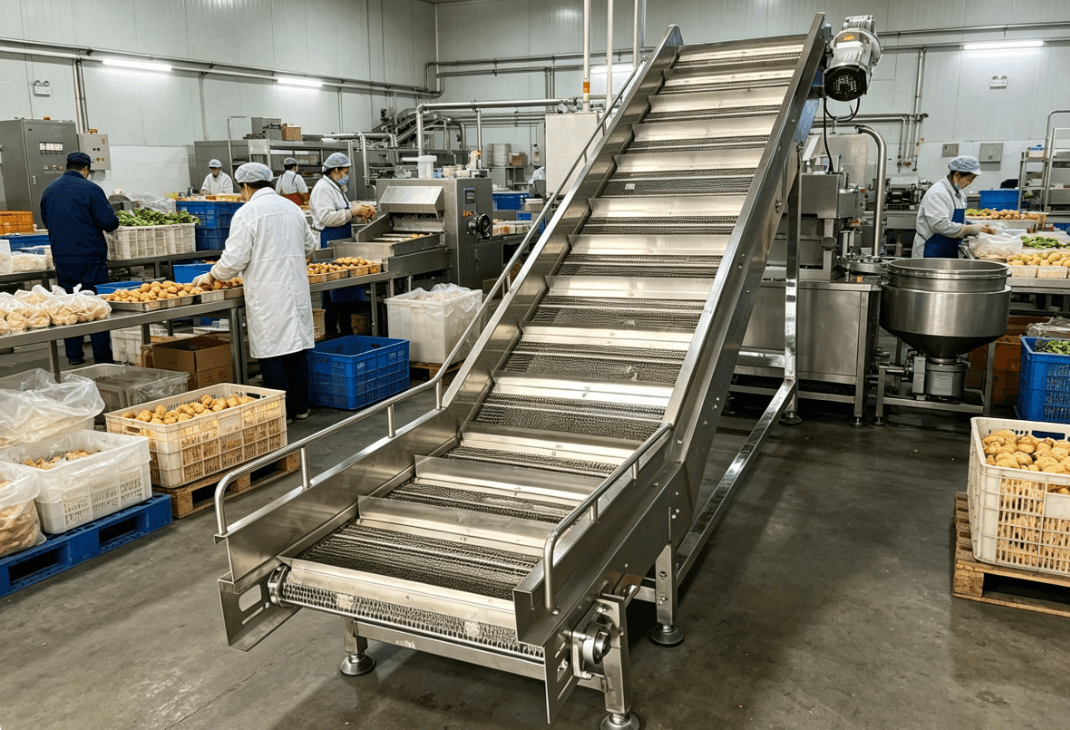
There are several variations of the hoist conveyor tailored for specific tasks. The most common type is the continuous vertical conveyor (CVC). These units move goods in a constant loop without stopping.
CVC systems are ideal for high-volume operations requiring rapid throughput. They can typically handle 20 to 30 loads per minute depending on the size. This makes them perfect for e-commerce fulfillment centers.
Another popular option is the reciprocating vertical lift (VRC). A VRC moves a platform up and down in a single shaft. It is often used for heavy pallets or oversized equipment.
What Are the Features of Continuous Vertical Conveyors?
Continuous systems offer the highest throughput rates available in the market. They use multiple carriers attached to a single drive chain. This allows for simultaneous loading and unloading at different heights.
A hoist conveyor of this type is generally quieter than reciprocating models. In 2026, noise reduction is a key priority for modern workplace environments. These systems operate at levels below 70 decibels in most cases.
These conveyors are also highly reliable for consistent product sizes. They are frequently used in the beverage industry for moving crates. The smooth motion prevents the spilling or damaging of liquid products.
How Does a Reciprocating Hoist Conveyor Work?
Reciprocating systems act more like a traditional freight elevator. The platform moves between levels and then returns to the starting position. This cycle is controlled by advanced PLC software for precision.
A reciprocating hoist conveyor can stop at many different floor levels. This makes them more versatile for multi-story manufacturing plants. They are often chosen for their high weight capacity.
The installation of a reciprocating lift is often simpler than continuous systems. They require less overhead space at the top of the shaft. This makes them suitable for buildings with limited ceiling height.
How to Determine the Best Hoist Solution for Your Operations?
Choosing the ideal hoist conveyor requires a deep understanding of your facility’s needs. You must first evaluate the physical characteristics of the items being moved. Consider the weight, dimensions, and fragility of your products.
The throughput requirement is another essential factor in the decision process. If you need to move hundreds of items hourly, a continuous system is best. For occasional heavy loads, a reciprocating lift is more cost-effective.
It is also important to consider the available vertical and horizontal space. Different configurations offer unique space-saving advantages for unique building layouts. You should consult with experts who understand vertical integration.
When researching reliable equipment, many professionals explore the hoist conveyor options found at the leyuconveyor.com product category for hoist systems to compare technical specifications. These detailed catalogs help engineers identify the exact torque and lift height required for their 2026 projects.
Evaluating the integration with existing horizontal conveyors is the final step. A seamless transition ensures that products do not stall or become damaged. Technical guidance ensures your vertical system operates at peak efficiency.
Selecting the right partner is just as important as the hardware itself. Look for providers who offer comprehensive support and customization options. This ensures that your hoist conveyor serves your business reliably for many years.
Summary
A hoist conveyor is an indispensable tool for modern vertical material handling in 2026. It offers significant benefits in space optimization, worker safety, and operational speed. By understanding the different types and technical specs, businesses can significantly improve their logistics efficiency. Choosing the right system ensures long-term productivity and a safer workplace environment.
FAQ
1. What is the difference between a hoist conveyor and a standard elevator?
A hoist conveyor is designed specifically for industrial material handling rather than passenger transport. It integrates directly with production lines and operates at much higher cycle rates than traditional freight elevators.
2. Can a hoist conveyor handle fragile items safely?
Yes, most modern systems are equipped with soft-start and soft-stop technology. This ensures that delicate goods are moved smoothly without sudden jolts or impacts during the vertical transition.
3. How much space does a vertical hoist conveyor require in a facility?
These systems are highly compact and typically require only a small footprint. A standard hoist conveyor can occupy as little as 2 to 4 square meters of floor space while serving multiple levels.
4. Are hoist conveyors considered energy efficient in 2026?
Modern systems use high-efficiency motors and regenerative braking systems to save power. This helps facilities reduce their overall energy consumption compared to older hydraulic lifting methods.
5. What maintenance is required for a hoist conveyor?
Technicians should inspect chain tension, belt wear, and sensor alignment every quarter. Regular lubrication of moving parts prevents friction-related failures and extends the life of the motor.
Reference Sources
MHI (Material Handling Institute) Vertical Reciprocating Conveyors VRC Safety and Usage
IEEE GlobalSpec Technical Specifications for Vertical Lifting Mechanisms